Home › Animals › Horse Horse anatomy
Equus caballus
Every structure of the Horse model in the app, by body system and region, with a 3D view of where it is.
Integumentary system Head Eyes Eyeballs housed in complete bony orbits on the sides of the head. The horse has one of the largest eyes of any land…
Trunk Skin The organ covering the whole body. In the horse it is thin, with abundant sweat glands that allow profuse sweating…
Limbs Hooves The horn capsule that encloses the end of the single digit of each limb. Made of wall, sole, frog and bars, it grows…
Muscular system Head Masseter Large, multilayered chewing muscle of the cheek; it shapes the lateral surface of the equine head. Temporalis Chewing muscle that fills the temporal fossa and closes the mouth; in the horse it is much smaller than the masseter.
Neck Sternocephalicus Long muscle on the ventral neck, from the sternum to the mandible; it forms the ventral border of the jugular groove.
Trunk Diaphragm Dome-shaped musculotendinous sheet that separates the thorax from the abdomen; the main inspiratory muscle. In the… Epaxial muscles Muscle mass dorsal to the transverse processes along the vertebral column; the longissimus carries the saddle and rider. External abdominal oblique The most superficial muscle of the lateral abdominal wall; its fibres run caudoventrally. Rectus abdominis Ventral muscular band on each side of the linea alba, from the sternum to the pubis. Serratus ventralis Large fan-shaped muscle that suspends the trunk between the thoracic limbs; part of the equine stay apparatus.
Thoracic limb Biceps brachii Muscle on the cranial surface of the arm that flexes the elbow and extends the shoulder; in the horse it is a key part… Brachialis Elbow flexor that spirals down the lateral surface of the humerus. Brachiocephalicus Long muscle joining the arm to the head that forms the dorsal border of the jugular groove; it is the main protractor… Accessory ligaments of the digital flexors (check ligaments) Two ligaments that anchor the forelimb flexor tendons to the skeleton; they let the horse support the fetlock without… Deltoideus Muscle on the lateral surface of the shoulder; flexes the shoulder and abducts the arm. Extensor carpi radialis The largest muscle on the cranial forearm; extends the carpus and receives the lacertus fibrosus of the biceps. Common digital extensor Digital extensor on the craniolateral forearm; its tendon runs down the cannon to the third phalanx. Flexor carpi ulnaris Carpal flexor on the caudal border of the forearm. Deep digital flexor (thoracic limb) Three-headed digital flexor of the forelimb; its tendon passes over the navicular bone and ends on the third phalanx… Superficial digital flexor (thoracic limb) Digital flexor of the forelimb whose long tendon runs down the palmar cannon; with its accessory ligament it is part of… Infraspinatus Fills the infraspinous fossa of the scapula; lateral rotator and stabiliser of the shoulder. Interosseus medius (suspensory ligament) Muscle turned into a strong ligament in the horse; it supports the fetlock in all four limbs and is the core of the… Latissimus dorsi Large triangular muscle of the thoracic wall that draws the thoracic limb caudally. Omotransversarius Strap-like neck muscle joining the cranial cervical vertebrae to the shoulder region; in the horse it is poorly… Pectoral muscles Muscles of the ventral thorax joining the sternum to the thoracic limb; adductors of the limb and part of the thoracic… Supraspinatus Fills the supraspinous fossa of the scapula and extends and stabilises the shoulder. Trapezius Thin triangular muscle sheet joining the dorsal neck and withers to the scapular spine. Triceps brachii Large triangular muscle mass caudal to the humerus; main extensor of the elbow.
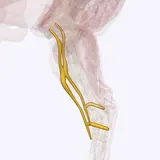
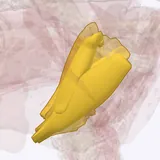
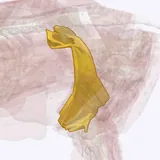
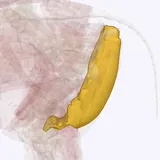
Pelvic limb Biceps femoris Broad muscle on the lateral thigh; in the horse it is separate from the superficial gluteal and has a vertebral head… Deep digital flexor (pelvic limb) Digital flexor of the hind limb made of two muscles in the horse; its tendon crosses the hock through the tarsal canal… Superficial digital flexor (pelvic limb) Digital flexor of the hind limb with almost no muscle tissue in the horse; it caps the point of the hock and is part of… Gastrocnemius Calf muscle that extends the hock through the common calcanean tendon. Gluteus medius The great muscle mass of the equine croup; it reaches cranially over the loin and is the main extensor of the hip. Gluteus superficialis V-shaped croup muscle that in the horse is independent and ends on the third trochanter of the femur. Gracilis Broad, flat muscle on the medial thigh; adductor of the pelvic limb. Peroneus tertius Entirely tendinous cord in the horse; it links stifle and hock at the front and is the cranial component of the… Quadriceps femoris Great extensor of the stifle on the cranial femur; in the horse it engages and releases the patellar locking mechanism. Sartorius Strap-like muscle on the medial thigh, cranial to the gracilis. Semimembranosus Bulky muscle of the caudomedial thigh; in the horse it has a small vertebral head. Semitendinosus Long muscle forming the caudal border of the thigh; in the horse its vertebral head climbs to the tail base. Tensor fasciae latae Muscle of the craniolateral thigh that arises from the coxal tuber and tenses the fascia lata. Tibialis cranialis Hock flexor on the cranial crus; in the horse it is accompanied by the peroneus tertius, the cranial component of the…
Splanchnology (organs) Nervous system Brain The part of the central nervous system inside the cranial cavity. In the horse it is small for the size of the head…
Cardiovascular system Great vessels The aorta and the caudal vena cava, the main arterial and venous trunks of the body. In the horse the brachiocephalic… Heart Four-chambered muscular organ in the middle mediastinum, roughly between the 3rd and 6th ribs and mostly on the left.…
Respiratory system Lungs Organs of gas exchange. In the horse they are large, with poorly marked external lobation and no middle lobe, and reach… Trachea Cartilaginous tube that carries air from the larynx to the principal bronchi. In the horse it is long, runs the whole…
Digestive system Caecum Large comma-shaped fermentation chamber, close to a metre long, filling the right half of the abdomen from the flank to… Oesophagus Muscular tube that carries food from the pharynx to the stomach. In the horse it moves to the left side of the trachea… Large colon The horse's ascending colon, folded into a double horseshoe of four parts and three flexures. Only its right half is… Liver The largest gland in the body. In the horse it lies entirely under the ribs, against the diaphragm, shifted to the… Pancreas Mixed exocrine and endocrine gland, triangular in shape, lying on the roof of the abdomen on both sides of the median… Small colon and rectum The horse's descending colon, long and narrow, with two taeniae and sacculations where the faecal balls are formed, and… Small intestine The segment between the pylorus and the caecum. In the horse the jejunum is long and hangs from a broad, mobile… Stomach Simple stomach, small for the size of the animal and lying entirely under the ribs on the left side. Its mucosa has a…
Urinary system Kidneys Smooth kidneys with fused lobes and a common renal crest. In the horse the right one is shaped like a playing-card… Urinary bladder Hollow organ that stores urine. Empty, it lies on the pelvic floor; when full, it advances into the abdomen.
Genital system Ovaries Large, bean-shaped female gonads lying in the sublumbar region, caudal to the kidneys. In the mare the cortex lies… Uterus Organ of pregnancy. In the mare it is T- or Y-shaped, with a large body and short, straight horns.
Endocrine and lymphatic organs Spleen Large, sickle-shaped lymphoid and haematopoietic organ lying on the left side against the diaphragm and the last ribs.… Thyroid Endocrine gland lying on either side of the first tracheal rings, caudal to the larynx. In the horse its two lobes are…
Skeletal system Axial skeleton Atlas The first cervical vertebra. In the horse its wings are broad, palpable behind the poll, and have three foramina on… Axis The second cervical vertebra, the longest in the horse's spine. Its broad, spade-shaped dens fits into the atlas and is… Mandible The bone of the lower jaw, formed by two halves fused at the symphysis. In the horse it has a wide interdental space… Ribs Eighteen pairs of curved bones forming the lateral walls of the thorax. Eight sternal and ten asternal pairs, whose… Sacrum Bone formed by the fusion of five sacral vertebrae. It joins the spine to the pelvis at the sacroiliac joints; in the… Skull The bones of the head without the mandible. In the horse it is long, with a face much longer than the braincase, a… Sternum Unpaired bone that closes the thorax ventrally and receives the cartilages of the eight sternal ribs. In the horse it… Caudal vertebrae The vertebrae of the tail, between fifteen and twenty-one in the horse. They lose their processes towards the tip and… Cervical vertebrae III–VII The five neck vertebrae caudal to the axis. In the horse they are long, with hardly any spinous processes except on the… Lumbar vertebrae The six vertebrae of the loin, with long horizontal transverse processes. The last ones have synovial joints between… Thoracic vertebrae The eighteen vertebrae of the back, each articulating with a pair of ribs. The spinous processes of the first ones form…
Thoracic limb Carpus Seven or eight short bones arranged in two rows between the radius and the metacarpus. It is the horse's "knee" and one… Humerus The bone of the arm, short and stout in the horse. Its proximal end has an intermediate tubercle that splits the groove… Metacarpus The cannon of the thoracic limb, formed by the large third metacarpal bone, flanked by the two vestigial second and… Phalanges of the thoracic limb The three phalanges of the horse's single digit, with the two proximal sesamoid bones of the fetlock and the distal… Radius The main bone of the forearm, carrying all the weight between the elbow and the carpus. In the horse the ulna fuses… Scapula Flat, elongated bone of the shoulder. In the horse it lacks an acromion and has a low spine with a palpable tuberosity… Ulna The caudal bone of the forearm, much reduced in the horse. It keeps a large olecranon, which forms the point of the…
Pelvic limb Femur The long bone of the thigh. In the horse it has a third trochanter, a greater trochanter divided into two parts and a… Metatarsus The cannon of the pelvic limb, formed by the third metatarsal bone, longer and rounder than that of the thoracic limb… Hip bone The bone of the hip, formed by the ilium, ischium and pubis. In the horse its tuber coxae forms the point of the hip… Patella The large sesamoid bone of the stifle, in the tendon of the quadriceps femoris. In the horse it is joined to the tibia… Phalanges of the pelvic limb The three phalanges of digit III of the pelvic limb, with the proximal sesamoid bones and the navicular bone. They are… Tarsus Six short bones between the tibia and the metatarsus that form the hock. Almost all its movement takes place at the… Tibia and fibula The bones of the leg. The tibia carries all the weight between the stifle and the hock; the horse's fibula is a slender…
See it in 3D on your iPhone
Peel the layers, spin the model, quiz yourself on it and stand it on your desk in AR. AnatomyCompass is coming to iPhone, iPad and Mac: get one email when it’s out.
Text adapted from Vet Atlas (CC BY-SA 4.0). Sources and licences . This veterinary text has not yet been reviewed by a veterinarian.
 AnatomyCompass
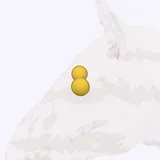 Eyes
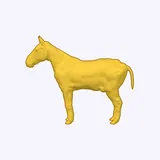 Skin
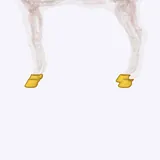 Hooves
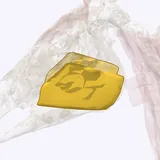 Masseter
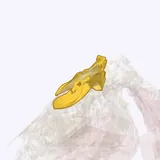 Temporalis
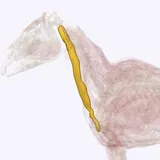 Sternocephalicus
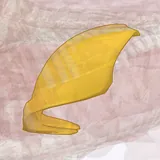 Diaphragm
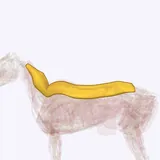 Epaxial muscles
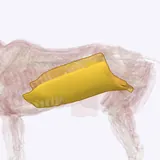 External abdominal oblique
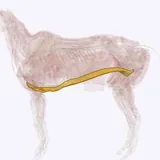 Rectus abdominis
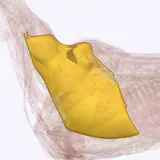 Serratus ventralis
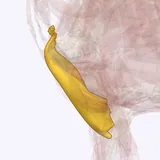 Biceps brachii
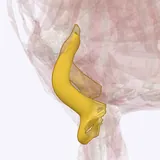 Brachialis
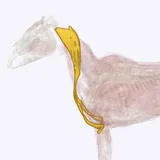 Brachiocephalicus
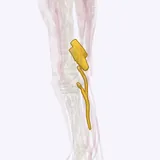 Accessory ligaments of the digital flexors (check ligaments)
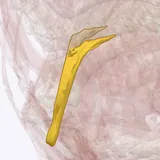 Deltoideus
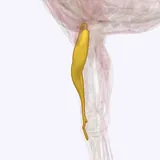 Extensor carpi radialis
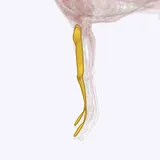 Common digital extensor
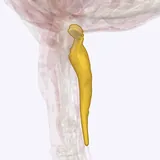 Flexor carpi ulnaris
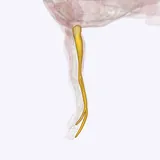 Deep digital flexor (thoracic limb)
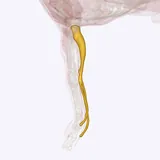 Superficial digital flexor (thoracic limb)
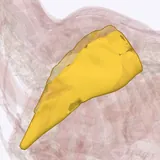 Infraspinatus
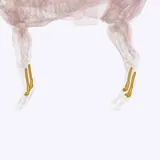 Interosseus medius (suspensory ligament)
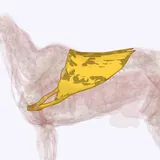 Latissimus dorsi
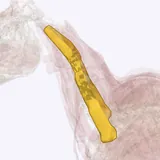 Omotransversarius
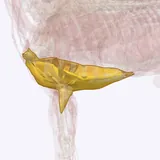 Pectoral muscles
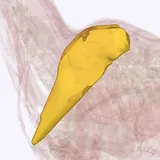 Supraspinatus
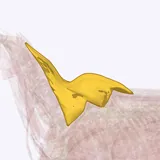 Trapezius
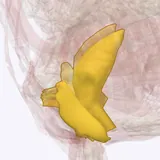 Triceps brachii
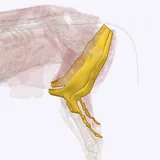 Biceps femoris
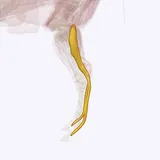 Deep digital flexor (pelvic limb)
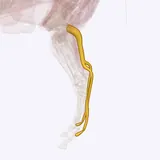 Superficial digital flexor (pelvic limb)
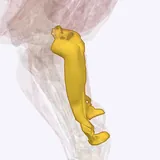 Gastrocnemius
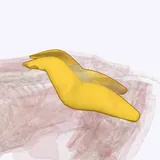 Gluteus medius
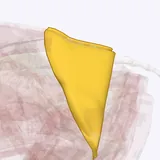 Gluteus superficialis
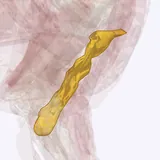 Gracilis
 Peroneus tertius
 Quadriceps femoris
 Sartorius
 Semimembranosus
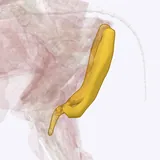 Semitendinosus
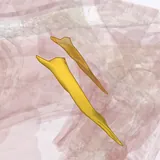 Tensor fasciae latae
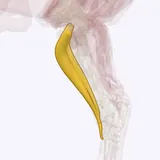 Tibialis cranialis
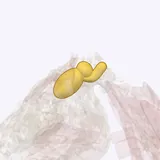 Brain
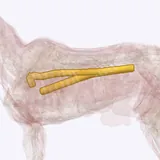 Great vessels
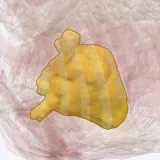 Heart
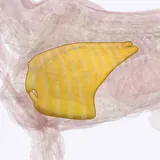 Lungs
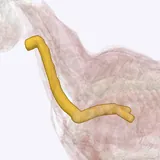 Trachea
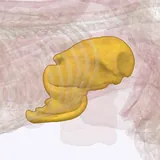 Caecum
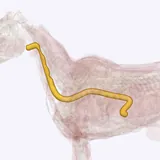 Oesophagus
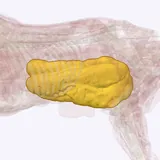 Large colon
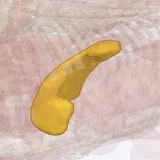 Liver
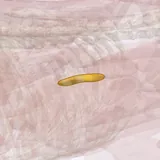 Pancreas
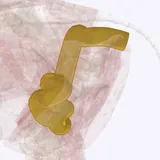 Small colon and rectum
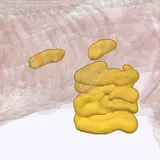 Small intestine
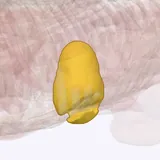 Stomach
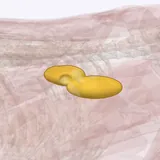 Kidneys
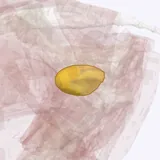 Urinary bladder
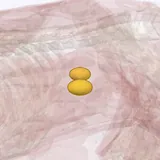 Ovaries
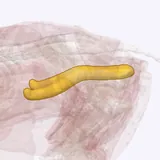 Uterus
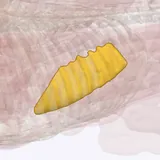
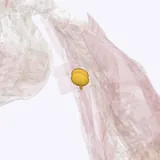
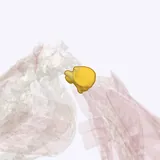 Atlas
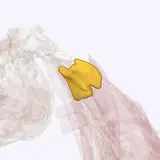 Axis
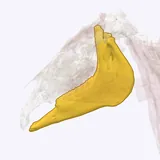 Mandible
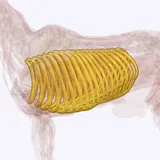 Ribs
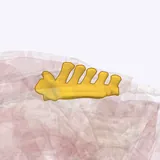 Sacrum
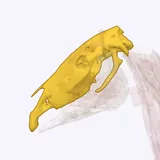 Skull
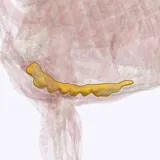 Sternum
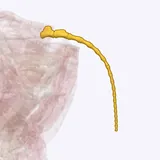 Caudal vertebrae
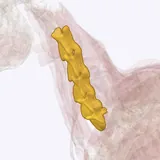 Cervical vertebrae III–VII
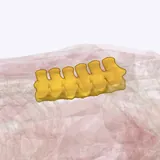 Lumbar vertebrae
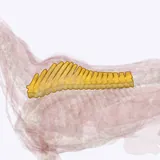 Thoracic vertebrae
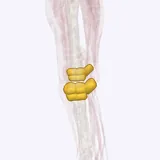 Carpus
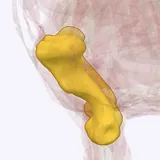 Humerus
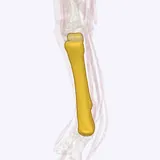 Metacarpus
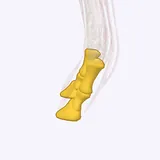 Phalanges of the thoracic limb
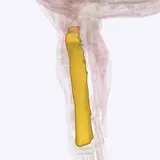 Radius
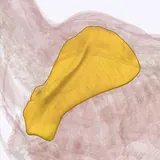 Scapula
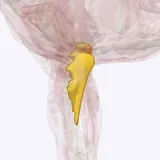 Ulna
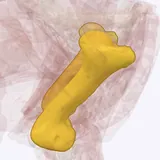 Femur
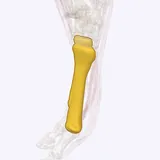 Metatarsus
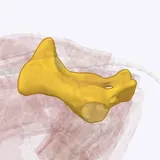 Hip bone
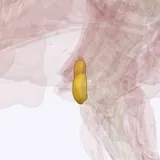 Patella
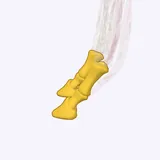 Phalanges of the pelvic limb
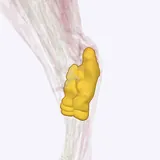 Tarsus
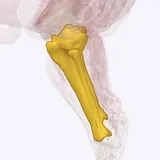 Tibia and fibula