 AnatomyCompass
Equine herpesvirus 1
Infectious · Horse
Virus that infects most horses early in life and can stay latent. It usually causes mild respiratory disease, but also abortion and a severe myeloencephalopathy that occurs in outbreaks.
Key points
- The virus stays latent in the trigeminal ganglion and in lymphocytes, and stress reactivates it.
- Cell-associated viraemia carries it to the endothelium of the uterus and central nervous system.
- Abortion occurs in the last third of pregnancy, without previous signs in the mare.
- Quantitative PCR is run on a nasal swab and whole blood at the same time.
- Biosecurity is the most effective measure; no vaccine is licensed against myeloencephalopathy.
What it is
Equine herpesvirus 1 (EHV-1, Equid alphaherpesvirus 1) is a widespread alphaherpesvirus.
Most horses are infected as foals. The virus becomes latent in the trigeminal ganglion and in lymphocytes of lymphoid tissues. Stress or immunosuppression can reactivate it, and the horse sheds it from the nose again.
The virus first multiplies in the respiratory epithelium. It then enters blood leucocytes (cell-associated viraemia), which carry it to the endothelium of the small vessels of the pregnant uterus and the central nervous system. There it causes vasculitis and thrombosis, and the loss of blood supply produces the severe forms:
- Abortion in the last third of pregnancy, or the birth of weak foals that die within a few days.
- Equine herpesvirus myeloencephalopathy (EHM), with ischaemic lesions mainly in the spinal cord and, to a lesser degree, in the brain.
A variant in the viral polymerase, the D752 genotype, is more often associated with neurological outbreaks. Strains without it also cause myeloencephalopathy.
Who it affects
Most horses are infected.
- Respiratory disease is more common in foals and young horses.
- Abortions affect pregnant mares, sometimes in outbreaks involving several mares on the same farm.
- Myeloencephalopathy is more common in adult and older horses. It occurs in outbreaks where many horses gather, such as competitions and equestrian centres.
Anatomy involved
Central nervous system
Vasculitis and thrombosis of small vessels mainly affect the spinal cord, with discrete lesions that can occur at any level. Caudal involvement explains hindquarter weakness and loss of bladder and tail control. The brain is affected less often.
Uterus
In the pregnant mare the virus damages the vascular endothelium of the uterus, and the resulting vasculitis and thrombosis lead to abortion. The fetus is expelled fresh or barely autolysed, the placenta shortly after, almost always without previous signs in the mare.
Infected fetuses have lesions in the lung, liver, spleen and thymus.
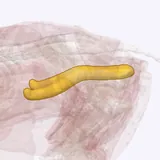
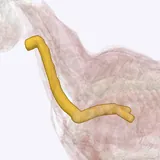
Trachea
Respiratory infection affects the epithelium of the nasal mucosa, pharynx and trachea. From there the virus is shed and enters the blood.
Clinical signs
Respiratory form
Fever, often biphasic, and serous nasal discharge. Sometimes there is cough and enlarged mandibular lymph nodes. In adults with immunity it often goes unnoticed.
Abortion
It is sudden, in the last third of pregnancy, without previous signs in the mare. Foals infected late in pregnancy can be born alive but weak, with breathing difficulty, and die within a few days.
Myeloencephalopathy
It often follows an episode of fever. The signs are:
- ataxia and paresis, more marked in the pelvic limbs
- urinary retention or incontinence
- loss of tail and anal tone
- recumbency in severe cases
Many horses that stay standing, or are recumbent for only 2–3 days, recover. Prolonged recumbency greatly worsens the prognosis.
Diagnosis
- Quantitative PCR on a nasal swab and on whole blood at the same time, to detect nasal shedding and viraemia. In outbreaks, horses without signs should also be sampled.
- In cerebrospinal fluid, increased protein without increased cells (albuminocytological dissociation) and yellow colour (xanthochromia), consistent with vasculitis.
- In abortion, PCR, immunohistochemistry and histopathology of the fetus (lung, liver, spleen, thymus) and placenta.
- Serology is of little help, because most horses already have antibodies.
Myeloencephalopathy outbreaks are notifiable in some countries.
Treatment and prevention
Supportive treatment
Non-steroidal anti-inflammatory drugs, bladder catheterisation and intensive nursing care. Corticosteroids are reserved for recumbent or severely ataxic horses.
Antivirals
Oral valacyclovir reduces viraemia in experimental studies. It is used during outbreaks, including in exposed horses without signs, but evidence that it improves clinical outcome is limited.
Biosecurity
It is the most effective measure:
- isolate horses with fever or signs
- take temperatures twice daily in exposed horses
- stop movements in and out
- maintain quarantine until there are no new cases and PCRs are negative
Pregnant mares should be kept in small, stable groups, apart from horses that travel.
Vaccines
They reduce virus shedding and respiratory signs. Some are licensed to reduce abortions, with doses in the fifth, seventh and ninth months of pregnancy.
None is licensed to prevent myeloencephalopathy, and the protection they give is limited.
Regulations
Drug use in horses is subject to each country's regulations and to withdrawal periods. In the EU the horse is a food-producing species. Its identification document (passport) states whether it is excluded from slaughter for human consumption, and that determines which drugs may be given.
Key studies
- ACVIM consensus (Lunn et al., 2024). It updates the 2009 statement on pathogenesis, strain variation, epidemiology, diagnosis, vaccination, outbreak control and treatment, and is underpinned by 4 systematic reviews. It concludes that evidence that vaccination or treatments work is limited and calls for better-designed studies.
- Osterrieder et al. (2024). Systematic review and meta-analysis of 35 vaccine studies (31 experimental) in horses, with GRADE assessment. Sample sizes were small, heterogeneity was large and the quality of evidence was low to moderate for most outcomes (fever, abortion, neurological disease, viraemia, nasal shedding). Commercial and experimental vaccines reduced clinical disease only minimally.
- Goehring et al. (2024). Systematic review of pharmacological treatments. Of 7,009 studies only 9 met the criteria (valacyclovir, small interfering RNAs, immunomodulators, interferon, heparin and others). Risk of bias was moderate to high and samples were small, and most showed no or minimal benefit. There is no solid evidence that any drug prevents or treats the disease.
- de la Cuesta-Torrado et al. (2025). Retrospective study of the outbreak at a show-jumping event in Valencia in 2021, with 191 horses. 73% had clinical signs and 89 developed myeloencephalopathy, of which 12% died (11 of 89). 73% of horses with myeloencephalopathy and 89% of those infected without it returned to competition. Vaccinated horses were more likely to develop myeloencephalopathy (OR 4.54; 95% CI 2.23–9.27), an observational association that does not show the vaccine causes it. The effective reproduction number started at 4.2 and fell below 1 within 2 weeks.
- Goehring et al. (2006). Retrospective study of 9 myeloencephalopathy outbreaks in the Netherlands over 4 years, with risk factor analysis in 6. There were 2 to 3 outbreaks per year, with a clear seasonal pattern. Females, older horses and some breeds were at greater risk of severe neurological disease, and it was not seen in horses under 3 years old. These are few outbreaks from a single country.
Structures affected

References
- Sellon DC, Long MT. Equine Infectious Diseases, 2nd ed. Elsevier (2014)
- Lunn DP, Burgess BA, Dorman DC, et al. Updated ACVIM consensus statement on equine herpesvirus-1. J Vet Intern Med 38:1290-1299 (2024)
- Osterrieder K, Dorman DC, Burgess BA, et al. Vaccination for the prevention of equine herpesvirus-1 disease in domesticated horses: A systematic review and meta-analysis. J Vet Intern Med 38:1858-1871 (2024)
- Goehring L, Dorman DC, Osterrieder K, et al. Pharmacologic interventions for the treatment of equine herpesvirus-1 in domesticated horses: A systematic review. J Vet Intern Med 38:1892-1905 (2024)
- de la Cuesta-Torrado M, Velloso Alvarez A, Santiago-Llorente I, et al. Risk Factors and Long-Term Outcomes in Horses After the 2021 Outbreak of Equine Herpesvirus 1 Myeloencephalopathy, Valencia, Spain. J Vet Intern Med 39:e70040 (2025)
- Goehring LS, van Winden SC, van Maanen C, et al. Equine herpesvirus type 1-associated myeloencephalopathy in The Netherlands: a four-year retrospective study (1999-2003). J Vet Intern Med 20:601-7 (2006)
- Nugent J, Birch-Machin I, Smith KC, et al. Analysis of equid herpesvirus 1 strain variation reveals a point mutation of the DNA polymerase strongly associated with neuropathogenic versus nonneuropathogenic disease outbreaks. J Virol 80:4047-60 (2006)
- Maxwell LK, Bentz BG, Gilliam LL, et al. Efficacy of the early administration of valacyclovir hydrochloride for the treatment of neuropathogenic equine herpesvirus type-1 infection in horses. Am J Vet Res 78:1126-1139 (2017)
- Merck Veterinary Manual: Equine Herpesvirus Infection
- Merck Veterinary Manual: Abortion in Horses
- Regulation (EU) 2019/6 on veterinary medicinal products, Article 112 (equine species declared not intended for slaughter)
- Commission Implementing Regulation (EU) 2021/963 on the identification and registration of equine animals and establishing model identification documents for those animals (2021)
See it in 3D on your iPhone
Peel the layers, spin the model, quiz yourself on it and stand it on your desk in AR. AnatomyCompass is coming to iPhone, iPad and Mac: get one email when it’s out.
Text adapted from Vet Atlas (CC BY-SA 4.0). Sources and licences. This veterinary text has not yet been reviewed by a veterinarian.