Home › Bones Bones of the body
Every bone card in AnatomyCompass: what the bone is, its landmarks, the joints it makes and the muscles that attach to it. 37 in all, part of a 3D atlas of the whole body: skeleton, muscles, organs, vessels and nerves.
Head and neck Frontal bone The forehead bone; it also forms the roofs of the orbits. Parietal bone A pair of curved bones forming the sides and roof of the skull. Temporal bone Paired bone on the side of the skull holding the middle and inner ear and the jaw joint socket. Occipital bone The back and base of the skull, around the foramen magnum. Sphenoid bone A butterfly-shaped bone in the middle of the skull base, touching most other skull bones. Ethmoid bone A light, air-filled bone between the orbits, forming the roof and much of the walls of the nasal cavity. Maxilla The upper jaw bone (one each side), carrying the upper teeth and forming much of the face, palate and orbit floor. Zygomatic bone The cheekbone, forming the prominence of the cheek and the side of the orbit. Nasal bone A pair of small bones forming the bridge of the nose. Mandible The lower jaw: the only movable skull bone, and the largest and strongest bone of the face. Hyoid bone A U-shaped bone at the top of the neck that touches no other bone; it anchors the tongue and the muscles that raise and… Atlas The first cervical vertebra: a ring with no body that carries the skull. Axis The second cervical vertebra, with the dens (odontoid process) on which the atlas turns. Cervical vertebrae The small, mobile vertebrae of the neck below the axis.
Trunk Thoracic vertebrae Twelve vertebrae (T1–T12) that carry the ribs; long, downward-sloping spinous processes limit extension. Lumbar vertebrae Five large vertebrae (L1–L5) of the lower back, built to carry the weight of the upper body. Sacrum Five fused vertebrae forming the back of the pelvis between the two hip bones. Ribs Twelve pairs of curved bones forming the rib cage. Ribs 1–7 join the sternum directly (true ribs), 8–10 through the… Sternum The breastbone, in three parts: manubrium, body and xiphoid process.
Upper limb Clavicle The collarbone: an S-shaped strut holding the shoulder out from the trunk. It is the only bony link between the upper… Scapula The shoulder blade: a flat triangular bone on the back of the ribs, carrying the glenoid socket and anchoring 17… Humerus The bone of the arm, from the shoulder to the elbow. Radius The lateral (thumb-side) forearm bone. It turns around the ulna in pronation and supination and carries most of the… Ulna The medial (little-finger-side) forearm bone; its hooked upper end makes the main hinge of the elbow. Carpal bones Eight small wrist bones in two rows: scaphoid, lunate, triquetral and pisiform (proximal), trapezium, trapezoid… Metacarpals Five long bones of the palm, numbered from the thumb (I) to the little finger (V). Phalanges of the hand Finger bones: proximal, middle and distal phalanges in each finger, and two in the thumb (14 in all).
Lower limb Hip bone Each hip bone is three fused bones (ilium, ischium and pubis) meeting at the acetabulum; the two with the sacrum form… Femur The thigh bone: the longest and strongest bone in the body. Patella The kneecap: the largest sesamoid bone, inside the quadriceps tendon. It increases the quadriceps' leverage. Tibia The shin bone, the main weight-bearing bone of the leg. Fibula The slender lateral leg bone. It carries little weight but anchors muscles and forms the outer ankle. Talus The ankle bone between the leg and the foot. No muscles attach to it; it moves by the pull on the bones around it. Calcaneus The heel bone, the largest bone of the foot. Navicular, cuboid and cuneiforms The midfoot tarsal bones: navicular, cuboid and the medial, intermediate and lateral cuneiforms. Metatarsals Five long bones of the forefoot, numbered from the big toe (I). Phalanges of the foot Toe bones: two in the big toe and three in each other toe.
See it in 3D on your iPhone
Peel the layers, spin the model, quiz yourself on it and stand it on your desk in AR. AnatomyCompass is coming to iPhone, iPad and Mac: get one email when it’s out.
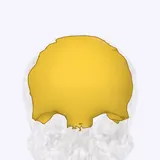 Frontal bone
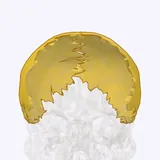 Parietal bone
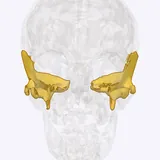 Temporal bone
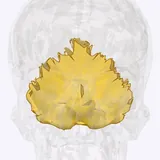 Occipital bone
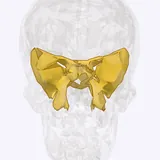 Sphenoid bone
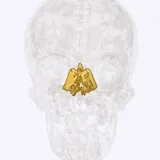 Ethmoid bone
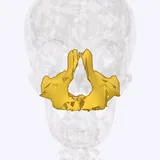 Maxilla
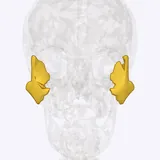 Zygomatic bone
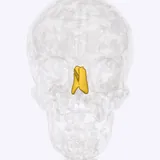 Nasal bone
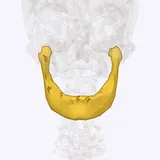 Mandible
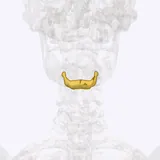 Hyoid bone
 Atlas
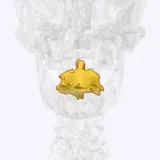 Axis
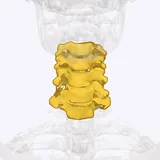 Cervical vertebrae
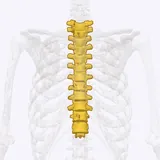 Thoracic vertebrae
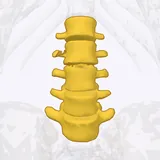 Lumbar vertebrae
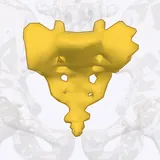 Sacrum
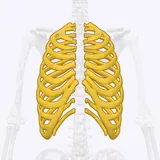 Ribs
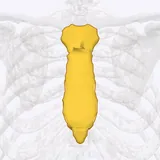 Sternum
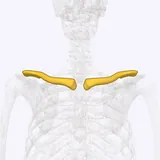 Clavicle
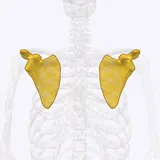 Scapula
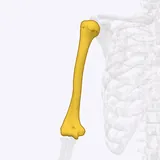 Humerus
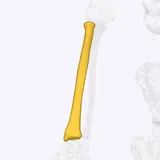 Radius
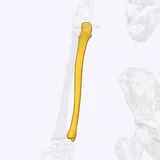 Ulna
 Carpal bones
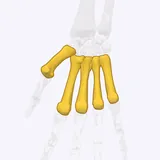 Metacarpals
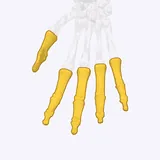 Phalanges of the hand
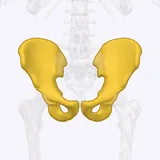 Hip bone
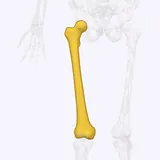 Femur
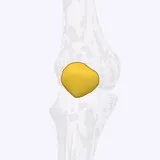 Patella
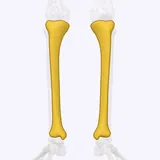 Tibia
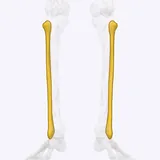 Fibula
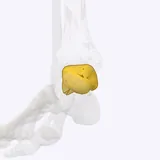 Talus
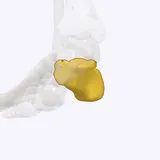 Calcaneus
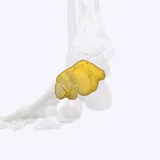 Navicular, cuboid and cuneiforms
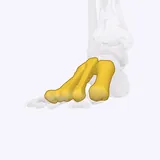 Metatarsals
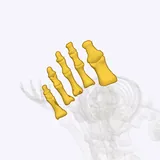 Phalanges of the foot