Thoracic vertebrae
Vertebrae thoracicae · Trunk · Bone
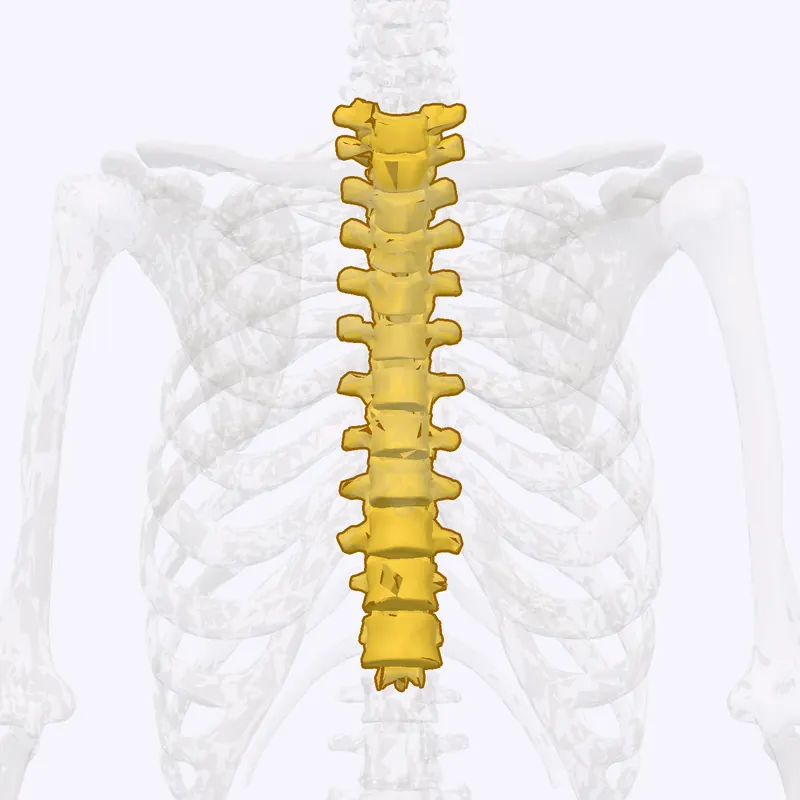
Twelve vertebrae (T1–T12) that carry the ribs; long, downward-sloping spinous processes limit extension.
Quick facts
- Latin name
- Vertebrae thoracicae
- Type
- Bone
- Body area
- Trunk
Landmarks of the thoracic vertebrae
- Costal facets
- On the bodies and transverse processes, where the ribs articulate.
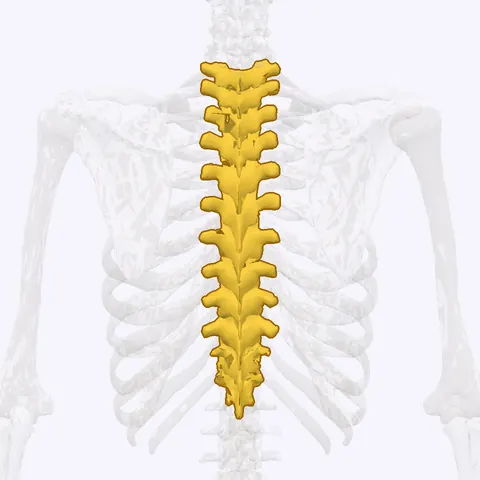
- Spinous processes
- Long and overlapping like roof tiles; T7 lies level with the inferior angle of the scapula.
- Transverse processes
- Point backwards and sideways; rib tubercles meet them.
- Vertebral foramen
- Small and round: the spinal canal is narrowest in the thoracic spine.
Joints of the thoracic vertebrae
- Intervertebral discs and facet joints
- Costovertebral and costotransverse joints (ribs)
3D views
Muscles that attach to the thoracic vertebrae
From the origin and insertion on each muscle’s page.
Questions about the thoracic vertebrae
What is the thoracic vertebrae?
Twelve vertebrae (T1–T12) that carry the ribs; long, downward-sloping spinous processes limit extension.
See the thoracic vertebrae in 3D
Peel the layers, spin the model, quiz yourself on it and stand it on your desk in AR. AnatomyCompass is coming to iPhone, iPad and Mac: get one email when it’s out.
Other bones: trunk
Spotted something wrong? Tell us and we’ll fix it. This page is a study reference, not medical advice.