 AnatomyCompass
Equine influenza
Infectious · Horse
Acute, highly contagious respiratory infection by the H3N8 influenza A virus that spreads within days through yards, racecourses and competitions. It is rarely fatal in adults but takes horses out of work for weeks.
Key points
- The most characteristic sign is a dry, harsh cough that spreads quickly through the group.
- PCR on a nasopharyngeal swab taken in the first 1–2 days confirms it.
- Horses need one week of rest for each day of fever, with a minimum of 3 weeks.
- At-risk adults get boosters every 6 months with updated vaccine strains.
- Vaccinated horses can still be infected and shed virus without showing signs.
What it is
Equine influenza is a respiratory disease caused by equine influenza A virus H3N8, family Orthomyxoviridae.
The viruses circulating today belong to the American lineage, in Florida clades 1 and 2. They change gradually by antigenic drift, so vaccine strains must be updated.
It is transmitted:
- by aerosols when horses cough
- by direct contact
- by contaminated objects, clothing, hands and shared water
The incubation period is short, 1 to 3 days. The virus multiplies in the airway epithelium and destroys it. The epithelium loses its cilia, and mucociliary clearance is impaired for about 3 weeks while it regenerates. This opens the way to secondary bacterial infections.
It is endemic in many countries; New Zealand and Iceland are free. It is a WOAH-listed disease.
Who it affects
Horses, donkeys and mules of any age. Risk is highest:
- in unvaccinated horses
- in horses 1 to 5 years old
- where horses of different origins come together, such as racecourses, fairs, sales and competitions
Vaccinated horses can also be infected if immunity has waned or the vaccine strain does not match the circulating one well. They usually become less ill and shed less virus, and they can shed it without showing signs.
Disease is rare in foals under 9 months. The infection is rarely fatal except in donkeys, zebras and debilitated horses.
Anatomy involved
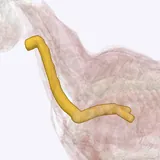
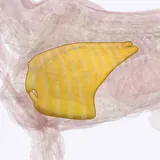
The virus destroys the ciliated epithelium of the trachea and bronchi, causing tracheobronchitis. The dry, harsh cough comes from this inflammation, and the loss of cilia explains why it lasts weeks after the fever.
While the epithelium regenerates, the horse is prone to the main complications of influenza:
- secondary bacterial pneumonia
- pleuropneumonia
- chronic bronchitis
Clinical signs
Onset is sudden, with high fever, depression and inappetence.
The most characteristic sign is a dry, harsh cough, which spreads quickly through the group.
There may also be:
- serous nasal discharge that becomes mucopurulent with bacterial infection
- slightly enlarged submandibular or retropharyngeal lymph nodes
- infrequently, distal limb oedema, myositis or myocarditis
Mildly affected horses recover in 2 to 3 weeks, although the cough can last several weeks. Severely affected horses may take up to 6 months.
Diagnosis
- PCR on a nasopharyngeal swab taken soon after the onset of illness, at about 1–2 days. Stall-side antigen tests are also available.
- Paired serology, with one sample shortly after the signs appear and another about 2 weeks later.
- Epidemiology helps a great deal: fever and cough in several horses at once after an arrival or an event.
It must be distinguished from equine herpesvirus 1 and 4 and other respiratory infections. Cough is more common in influenza.
Treatment and prevention
Treatment
The mainstay is rest: one week for each day of fever, with a minimum of 3 weeks. This lets the mucociliary apparatus regenerate and avoids complications.
Also:
- non-steroidal anti-inflammatory drugs for fever, used judiciously
- good ventilation, dust control and stable hygiene
- antibiotics only for secondary bacterial infection
Vaccination
Mostly inactivated adjuvanted vaccines given intramuscularly are used; an intranasal modified-live vaccine also exists. Strains are updated following WOAH recommendations to cover Florida clades 1 and 2.
Schedules follow the manufacturer, with boosters every 6 months for at-risk adult horses. Equestrian federations such as the FEI require recent vaccination for competition.
Biosecurity
- isolate sick horses
- isolate new arrivals for 2 weeks
- restrict movements during an outbreak
- tighten hygiene of people and equipment
Regulations
Drug use in horses is subject to each country's regulations and to withdrawal periods. In the EU the horse is a food-producing species, and its identification document (passport) states whether it is excluded from slaughter for human consumption. This determines which drugs may be given.
Key studies
- Elliott et al. (2023). Systematic review of 43 vaccination and experimental challenge articles in equids without prior immunity, with meta-analysis of 38. Efficacy, measured as the reduction in virus shedding, averaged 50.03% (95% CI 23.35–76.71%) with commercial vaccines and 40.37% with experimental ones, ranging from 0 to 100%. Only 5 studies achieved complete protection. Most studies come from a few centres and their designs differ widely.
- Cowled et al. (2009). Spatial and temporal analysis of the 2007 Australian epidemic, with nearly 10,000 infected premises in a population without immunity. Long-distance spread dropped immediately after national movement restrictions, and the epidemic peak had passed before emergency vaccination could induce immunity. The effective reproduction number between premises was 2.04 in peri-urban areas and 1.99 in rural ones. It is a descriptive study.
- Firestone et al. (2011). Case-control study of 200 premises in New South Wales during the first weeks of the 2007 epidemic, before vaccination. Proximity to an infected premises was the factor most associated with infection. Having a footbath in place before the virus arrived reduced the odds of infection (OR 0.27; 95% CI 0.09–0.83), probably reflecting better overall biosecurity. Data were collected by interview about two years later.
- Barquero et al. (2007). Study of an outbreak in vaccinated racehorses in Newmarket (UK) in 2003. Two-year-olds were less affected than older horses, mainly because they had been vaccinated more recently, despite similar antibody levels. The data supported vaccinating the whole group as soon as the outbreak is confirmed and suggested that vaccine adjuvanted with aluminium hydroxide alone protected less well. It is a single outbreak.
- Whitlock et al. (2023). Descriptive study of the 2019 epidemic in Great Britain, with 412 confirmed cases on 234 premises. 72% of cases were unvaccinated and 18% vaccinated. 42% of affected premises had received a new horse in the previous 2 weeks, only 23% quarantined new arrivals and only 57% of resident horses were vaccinated. Data were collected once per premises.
Structures affected
References
- Sellon DC, Long MT. Equine Infectious Diseases, 2nd ed. Elsevier (2014)
- Elliott S, Olufemi OT, Daly JM. Systematic Review of Equine Influenza A Virus Vaccine Studies and Meta-Analysis of Vaccine Efficacy. Viruses 15:2337 (2023)
- Cowled B, Ward MP, Hamilton S, et al. The equine influenza epidemic in Australia: spatial and temporal descriptive analyses of a large propagating epidemic. Prev Vet Med 92:60-70 (2009)
- Firestone SM, Schemann KA, Toribio JA, et al. A case-control study of risk factors for equine influenza spread onto horse premises during the 2007 epidemic in Australia. Prev Vet Med 100:53-63 (2011)
- Barquero N, Daly JM, Newton JR. Risk factors for influenza infection in vaccinated racehorses: lessons from an outbreak in Newmarket, UK in 2003. Vaccine 25:7520-9 (2007)
- Whitlock F, Grewar J, Newton R. An epidemiological overview of the equine influenza epidemic in Great Britain during 2019. Equine Vet J 55:153-164 (2023)
- Merck Veterinary Manual: Equine Influenza
- Merck Veterinary Manual: Equine Influenza (horse owner version)
- WOAH Terrestrial Animal Health Code: Chapter 1.3, Diseases, infections and infestations listed by WOAH (2024)
- Regulation (EU) 2019/6 on veterinary medicinal products, Article 112 (equine species declared not intended for slaughter)
See it in 3D on your iPhone
Peel the layers, spin the model, quiz yourself on it and stand it on your desk in AR. AnatomyCompass is coming to iPhone, iPad and Mac: get one email when it’s out.
Text adapted from Vet Atlas (CC BY-SA 4.0). Sources and licences. This veterinary text has not yet been reviewed by a veterinarian.