 AnatomyCompass
Exercise-induced pulmonary haemorrhage
Degenerative · Horse
Bleeding from the pulmonary capillaries during intense exercise, very common in racehorses. Blood at the nostrils is rarely seen, but severe forms impair performance.
Key points
- Bleeding comes from capillary stress failure during maximal exercise.
- Lesions are concentrated in the caudodorsal regions of the lungs.
- Epistaxis is rare, and most horses show no visible signs.
- It is diagnosed by tracheobronchoscopy 30 to 120 minutes after exercise, graded 0 to 4.
- Pre-race furosemide is the only treatment with solid evidence.
What it is
During maximal exercise, pressure in the pulmonary artery, the pulmonary capillaries and the left atrium rises sharply. The pressure across the wall of the pulmonary capillaries becomes high enough to rupture it, and blood escapes into the interstitium, the alveoli and the airways. This is capillary stress failure.
Repeated episodes leave lesions:
- haemosiderin-laden macrophages
- fibrosis
- pulmonary vein remodelling, which in turn raises capillary pressure and favours further bleeding
It is therefore regarded as a progressive disease.
Who it affects
Horses doing high-intensity exercise: Thoroughbred and Standardbred racehorses, Quarter Horses, polo ponies and horses in other speed disciplines.
On endoscopy after a race, about half to three quarters have some blood in the trachea. Bronchoalveolar lavage detects bleeding in more than 90% of racehorses.
Epistaxis, by contrast, is rare.
Anatomy involved
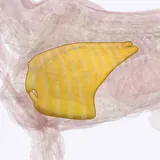
Bleeding and lesions are concentrated in the caudodorsal regions of the lungs and never occur cranioventrally. At necropsy the pleural surface there is discoloured by haemosiderin.
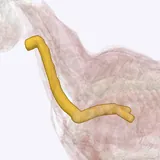
Blood leaving the bronchi runs down the trachea. There it is seen and graded by tracheobronchoscopy after exercise.
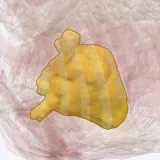
During intense exercise, left atrial pressure rises. It is transmitted to the pulmonary veins and capillaries and contributes to the capillary pressures that cause bleeding.
Clinical signs
- Most horses show no visible signs.
- Poor performance: the horse stops or loses speed at the end of the race.
- Epistaxis after exercise, in a minority.
- Sudden death during or shortly after racing is rare. Pulmonary haemorrhage is found in some of these horses, but its relationship with exercise-induced haemorrhage is unclear.
Diagnosis
- The reference test is tracheobronchoscopy 30 to 120 minutes after exercise. The amount of blood is graded on a 0 to 4 scale.
- On bronchoalveolar lavage, red cells and haemosiderin-laden macrophages show recent or past bleeding for weeks.
- Thoracic radiography and ultrasonography add little and serve to rule out other diseases.
- Epistaxis must be confirmed by endoscopy, because it can also come from the guttural pouches or the nasal cavities.
Treatment and prevention
Intravenous furosemide a few hours before racing reduces the incidence and severity of bleeding by lowering pulmonary vascular pressures. It is the only treatment with solid evidence.
It is also associated with better race results, so its use is controversial. It is banned on race day in many jurisdictions outside the United States, and regulated in others.
Nasal dilator strips and other proposed treatments have scarce or conflicting evidence.
Drug use in horses is subject to each country's regulations, to withdrawal periods and to racing anti-doping rules. In the EU the horse is a food-producing species. Its identification document (passport) states whether it is excluded from slaughter for human consumption, which determines which drugs may be given.
Key studies
- ACVIM consensus (Hinchcliff et al., 2015). Systematic review using the GRADE method by a panel of 7 experts. Much of the evidence was of low or very low quality. There was moderate to high quality evidence that the haemorrhage is progressive, is associated with lung lesions and impairs performance, that the severe form (grade 4) shortens racing careers, and that furosemide reduces its incidence and severity and is associated with better race results. It strongly recommends regarding it as a disease, and weakly recommends the use of furosemide.
- Hinchcliff et al. (2009). Randomised, crossover, blinded, placebo-controlled trial in 167 Thoroughbreds that raced twice under real conditions in South Africa, once with furosemide and once with saline. With placebo, the odds of bleeding were 3.3 to 4.4 times higher and the odds of moderate or severe bleeding 6.9 to 11.0 times higher. Of the horses that bled with placebo, 67.5% (81 of 120) dropped at least one grade with furosemide. The races were organised for the study.
- Morley et al. (2015). Prospective cross-sectional study of 1,000 Thoroughbreds in South Africa, without furosemide or nasal strips, examined by endoscopy after one race and graded blind. 68% had some degree of haemorrhage. Horses without bleeding were more than twice as likely to win (OR 2.3; 95% CI 1.4–3.7) and finished on average one length ahead, although there was no difference in finishing in the top three. It is a single examination per horse.
- Crispe et al. (2017). Prospective observational study in Australia with 3,794 examinations of 1,567 Thoroughbreds. Haemorrhage was detected in 55.1% of examinations. Only severe haemorrhage (grade 4, and in a second model grades 3 and 4) was associated with a worse finishing position, a greater distance behind the winner and lower earnings; mild or moderate haemorrhage did not impair performance on that day. Enrolment was voluntary.
- Takahashi et al. (2001). Retrospective study of 251,609 race starts in Japan (1992–1997), with veterinary examination of every horse after racing. Epistaxis from pulmonary haemorrhage occurred in only 0.15% of starts and was more common in steeplechases, in older horses, in short races and in females. Of the horses that bled, 4.64% did so again. It records only epistaxis, not bleeding without blood at the nostrils.
Structures affected
References
- Reed SM, Bayly WM, Sellon DC. Equine Internal Medicine, 4th ed. Elsevier (2018)
- Hinchcliff KW, Couetil LL, Knight PK, et al. Exercise induced pulmonary hemorrhage in horses: American College of Veterinary Internal Medicine consensus statement. J Vet Intern Med 29:743-58 (2015)
- Hinchcliff KW, Morley PS, Guthrie AJ. Efficacy of furosemide for prevention of exercise-induced pulmonary hemorrhage in Thoroughbred racehorses. J Am Vet Med Assoc 235:76-82 (2009)
- Morley PS, Bromberek JL, Saulez MN, et al. Exercise-induced pulmonary haemorrhage impairs racing performance in Thoroughbred racehorses. Equine Vet J 47:358-65 (2015)
- Crispe EJ, Lester GD, Secombe CJ, et al. The association between exercise-induced pulmonary haemorrhage and race-day performance in Thoroughbred racehorses. Equine Vet J 49:584-589 (2017)
- Takahashi T, Hiraga A, Ohmura H, et al. Frequency of and risk factors for epistaxis associated with exercise-induced pulmonary hemorrhage in horses: 251,609 race starts (1992-1997). J Am Vet Med Assoc 218:1462-4 (2001)
- Merck Veterinary Manual: Exercise-Induced Pulmonary Hemorrhage in Horses
- Commission Implementing Regulation (EU) 2021/963 on the identification and registration of equine animals and establishing model identification documents for those animals (2021)
See it in 3D on your iPhone
Peel the layers, spin the model, quiz yourself on it and stand it on your desk in AR. AnatomyCompass is coming to iPhone, iPad and Mac: get one email when it’s out.
Text adapted from Vet Atlas (CC BY-SA 4.0). Sources and licences. This veterinary text has not yet been reviewed by a veterinarian.