 AnatomyCompass
Gluteus superficialis
M. gluteus superficialis · Horse · Muscular system · Pelvic limb
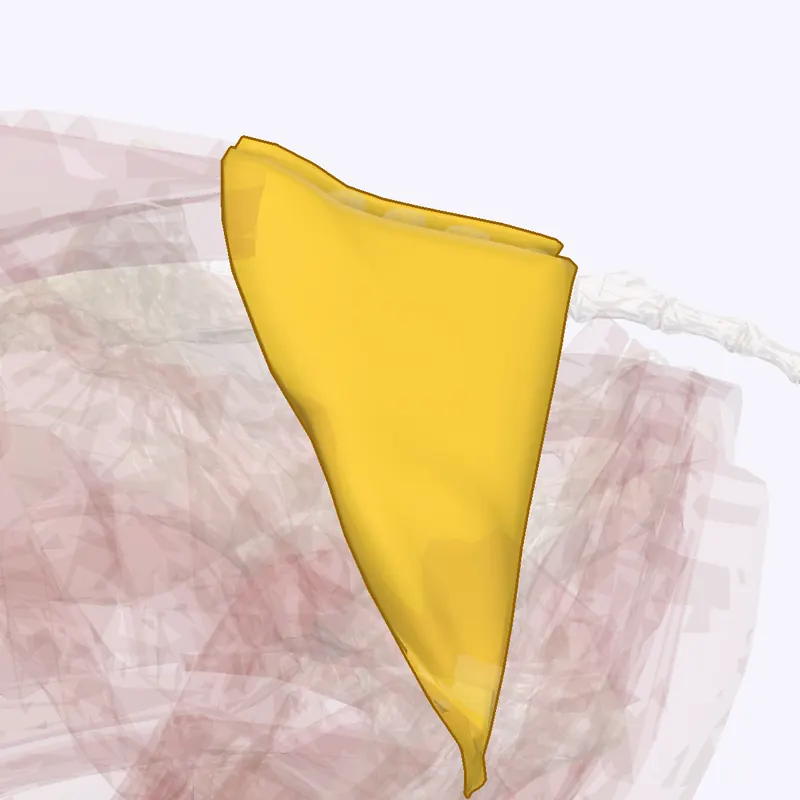
V-shaped croup muscle that in the horse is independent and ends on the third trochanter of the femur.
Key points
- It has two heads, cranial and caudal, that converge on one tendon.
- The cranial head arises from the coxal tuber, joined to the tensor fasciae latae.
- It flexes the hip, abducts the pelvic limb and tenses the fascia lata.
- It is supplied by the cranial and caudal gluteal nerves.
Overview
Unlike in ruminants, in the horse the superficial gluteal is a separate muscle, independent of the biceps femoris.
It is fairly thin and V-shaped, with two heads:
- Cranial head. It arises from the coxal tuber and is joined to the tensor fasciae latae.
- Caudal head. It arises from the gluteal fascia.
Both converge on a tendon that ends on the third trochanter (trochanter tertius), a prominence on the lateral surface of the femur that is typical of the horse.
Origin
Coxal tuber (tuber coxae) and gluteal fascia.
Insertion
Third trochanter of the femur (trochanter tertius).
Action
Flexes the hip, abducts the pelvic limb and tenses the fascia lata.
Innervation
Cranial and caudal gluteal nerves (nn. glutei).
Related structures
See it in 3D on your iPhone
Peel the layers, spin the model, quiz yourself on it and stand it on your desk in AR. AnatomyCompass is coming to iPhone, iPad and Mac: get one email when it’s out.
More of the Horse: Muscular system
Text adapted from Vet Atlas (CC BY-SA 4.0). 3D model: Vet Atlas procedural musculature (CC BY-SA 4.0). Sources and licences. This veterinary text has not yet been reviewed by a veterinarian.