 AnatomyCompass
Abomasum
Abomasum · Cow · Splanchnology (organs) · Digestive system
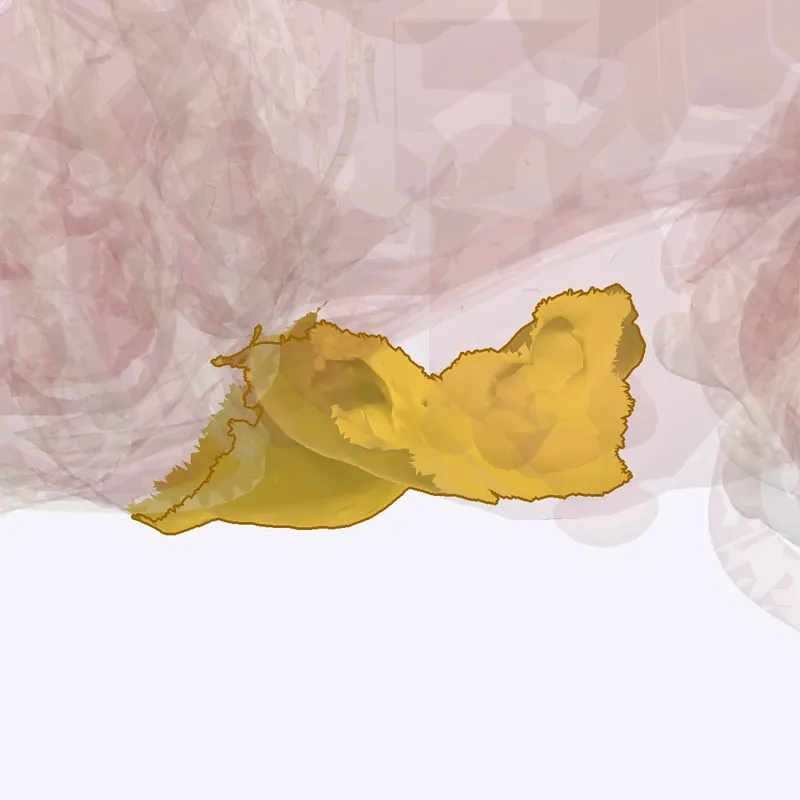
The glandular or true stomach of ruminants. It lies on the abdominal floor, mostly to the right of the median plane; in the newborn calf it is the largest compartment of the stomach.
Key points
- In the suckling calf it secretes chymosin, which clots milk.
- A left displaced abomasum gives a ping over the dorsal third of the last left ribs.
- Left displacement is typical of high-yielding dairy cows after calving.
- Abomasal volvulus is an emergency with hypochloraemic, hypokalaemic metabolic alkalosis.
- The abomasum is a usual site of lymphoma in enzootic bovine leukosis.
Overview
The abomasum (abomasum) is the only compartment with a glandular mucosa. It is equivalent to the stomach of monogastric animals.
It secretes hydrochloric acid and pepsin. In the suckling calf it also secretes chymosin, which clots milk.
In the newborn it is the largest compartment, because the forestomachs have not yet developed. In the adult it is much smaller than the rumen.
Topography
- Fundus and body. They begin at the omasoabomasal orifice and rest on the abdominal floor. They lie ventral to the omasum and caudal to the reticulum, slightly to the left and mostly to the right of the median plane.
- Pyloric part. Runs caudally and dorsally on the right, along the right costal arch. It ends at the pylorus, which opens into the duodenum.
- Omenta. The greater omentum attaches to the greater curvature and the lesser omentum to the lesser curvature. These attachments hold it in place, but the abomasum keeps considerable mobility.
Mucosa
- Fundic region. It has large spiral folds (plicae spirales abomasi) that enlarge the secretory surface.
- Pyloric region. Smoother mucosa. At the pylorus a prominence of the wall, the pyloric torus (torus pyloricus), helps close the outlet.
Clinical relevance
Left displaced abomasum (LDA)
The abomasum, distended with gas and with reduced motility, moves between the rumen and the left abdominal wall.
It is typical of high-yielding dairy cows in the first weeks after calving, often with hypocalcaemia, ketosis or metritis.
It is diagnosed by the metallic ping heard on simultaneous percussion and auscultation over the dorsal third of the last left ribs.
It is corrected surgically by fixing the abomasum, with omentopexy or abomasopexy.
Right displacement (RDA) and volvulus
The ping is on the right side.
Volvulus is a surgical emergency. The twisted abomasum distends, loses its blood supply and sequesters hydrochloric acid. It causes dehydration and hypochloraemic, hypokalaemic metabolic alkalosis.
Abomasal ulcers
They can bleed, with dark faeces or melaena, or perforate, with local or diffuse peritonitis.
They occur in adult cows after calving and in calves.
Ostertagiosis
Ostertagia ostertagi develops in the glands of the mucosa. It causes nodules, protein loss and diarrhoea, mainly in young grazing cattle.
Lymphoma
The abomasum is one of the usual sites of lymphoma in enzootic bovine leukosis.
Diseases
- Displaced abomasumThe abomasum, distended with gas and hypomotile, leaves its position on the abdominal floor and moves to the…
- Enzootic bovine leukosisInfection with bovine leukaemia virus, a retrovirus that persists for life in B lymphocytes. Most infected…
- Neonatal calf diarrhoeaDiarrhoea of calves in their first month of life caused by rotavirus, coronavirus, Cryptosporidium parvum and…
Related structures
See it in 3D on your iPhone
Peel the layers, spin the model, quiz yourself on it and stand it on your desk in AR. AnatomyCompass is coming to iPhone, iPad and Mac: get one email when it’s out.
More of the Cow: Splanchnology (organs)
Text adapted from Vet Atlas (CC BY-SA 4.0). 3D model: "Bovine Rumen" by OVCanatomy, Ontario Veterinary College (Sketchfab) (CC BY 4.0). Sources and licences. This veterinary text has not yet been reviewed by a veterinarian.