 AnatomyCompass
Displaced abomasum
Metabolic · Cow
The abomasum, distended with gas and hypomotile, leaves its position on the abdominal floor and moves to the left or to the right, where it can twist on itself (volvulus). Typical of dairy cows in the weeks after calving.
Key points
- It is a transition period disease, mostly in the first month after calving.
- The left displaced abomasum is the most common form and progresses slowly.
- In LDA a ping is heard on auscultation and percussion over the last left ribs.
- Volvulus causes hypochloraemic, hypokalaemic metabolic alkalosis and is a surgical emergency.
- Preoperative L-lactate helps establish the prognosis of volvulus.
What it is
In the adult, the abomasum rests on the abdominal floor, mostly to the right of the median plane. When it loses motility (abomasal atony) and accumulates gas, it rises and is displaced.
Left displaced abomasum (LDA)
The most common form. The abomasum passes under the rumen and rises between the rumen and the left abdominal wall.
It obstructs transit only partially and does not compromise blood supply, so it progresses slowly.
Right displaced abomasum (RDA)
The dilated abomasum rises on the right side, next to the right abdominal wall.
Abomasal volvulus
The right-displaced abomasum rotates, usually counterclockwise when viewed from the rear and the right side. It often rotates together with the omasum (omasal-abomasal volvulus).
Transit and blood supply are obstructed. The abomasum fills with fluid and sequesters hydrochloric acid, chloride and potassium. This leads to:
- dehydration
- hypochloraemic, hypokalaemic metabolic alkalosis
- ischaemia of the wall
It is a surgical emergency.
Predisposing factors
It is regarded as a transition period disease. Abomasal motility is reduced by:
- the drop in feed intake around calving
- a ration rich in concentrate and poor in effective fibre
- hypocalcaemia
- ketosis
- postpartum inflammatory diseases, such as metritis and mastitis
In addition, the position of the abdominal organs changes around calving.
Who it affects
Mainly high-yielding dairy cows, especially deep-bodied cows, in the first month after calving.
RDA and volvulus are less common than LDA and can occur at any stage of lactation.
It is rare in beef cattle.
Anatomy involved
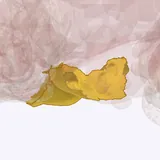
- Abomasum. It rests on the ventral abdominal floor, mostly on the right. It is held only by the greater omentum, on the greater curvature, and the lesser omentum, on the lesser curvature, so it is quite mobile. When it moves to the left it becomes trapped between the ventral sac of the rumen and the abdominal wall. At surgery it is fixed in its normal position through the omentum (omentopexy) or the abomasal wall itself (abomasopexy).
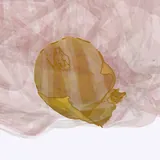
- Omasum. It lies next to the abomasum and opens into it through the omaso-abomasal orifice. In volvulus it can be dragged along, with its blood supply occluded, which worsens obstruction and ischaemia.
Clinical signs
LDA
- reduced appetite, often more marked for concentrate than for forage
- drop in milk yield
- secondary ketosis
- scant and sometimes pasty faeces
Simultaneous auscultation and percussion over the dorsal third of the last left ribs reveals a high-pitched metallic sound, the "ping". General condition is usually only mildly affected.
RDA
Similar signs, with the ping on the right side.
Volvulus
- sudden onset
- complete anorexia
- tachycardia
- dehydration
- distended right abdomen
- scant faeces
On rectal palpation a distended viscus may be felt in the right caudal quadrant. Without surgery the cow deteriorates quickly.
Diagnosis
- Auscultation with percussion, for the ping, and auscultation with succussion, for the fluid splashing sound.
- Ultrasonography of the flank. It shows the abomasum, with its contents and folds, between the rumen and the left abdominal wall.
- Laboratory. Blood or milk ketone bodies (β-hydroxybutyrate) and calcium. In RDA and volvulus, acid-base status and electrolytes, with hypochloraemic, hypokalaemic alkalosis.
The ping is not specific to the abomasum. On the left it can also come from rumen gas or pneumoperitoneum, and on the right from caecal dilatation or gas in the colon or duodenum.
Preoperative L-lactate helps establish the prognosis of volvulus.
Treatment and prevention
LDA
The abomasum is repositioned and fixed.
- Closed techniques: rolling the cow, with or without percutaneous toggle fixation. They avoid a laparotomy, but they are blind, and rolling without fixation has a high recurrence rate.
- Open techniques: right flank pyloric omentopexy, left flank omentopexy and right paramedian abomasopexy.
- Laparoscopy-assisted techniques.
RDA and volvulus
Right flank laparotomy, emptying of the abomasum, repositioning and omentopexy. It goes with fluid therapy to correct dehydration, hypochloraemia and hypokalaemia.
Concurrent diseases
Ketosis, hypocalcaemia, metritis and mastitis must be treated at the same time.
Prevention
It relies on transition cow management:
- maintain dry matter intake around calving
- provide enough effective fibre in the ration
- avoid cows calving overconditioned
- prevent hypocalcaemia
- monitor subclinical ketosis
Monensin reduces the risk, where its use is authorised.
Drug use in food animals is subject to each country's regulations and to withdrawal periods for milk and meat.
Key studies
- Duffield et al. (2009). Cohort of 1010 Holstein cows from 25 Ontario farms. Serum β-hydroxybutyrate ≥ 1200 µmol/L in the first week postpartum was associated with a higher risk of displaced abomasum (OR 2.60). In the second week, at a threshold of ≥ 1800 µmol/L, the risk was higher (OR 6.22). The farms were mainly tie-stall herds feeding concentrate separately, which limits extrapolation.
- Duffield et al. (2008). Meta-analysis of 16 studies with about 9500 cows. Monensin reduced the risk of displaced abomasum (RR 0.75) and of ketosis (RR 0.75). Monensin is not authorised for dairy cows in every country.
- Sterner et al. (2008). Cohort of 810 Holstein cows with LDA. At 60 days, 79% of those corrected by a veterinarian with roll-and-toggle, 71% of those corrected the same way by farm staff and 73% of those operated by laparotomy were still in the herd. Mastitis, a previous LDA, a high preoperative risk and correction by farm staff were associated with leaving the herd. Groups were not randomised.
- Seeger et al. (2006). Randomised trial in 120 cows with LDA: laparoscopy-assisted abomasopexy versus right flank omentopexy. Success was almost equal (59 of 60 versus 60 of 60). Laparoscopy was shorter (median 27.5 versus 38 minutes) and intake and milk yield recovered faster over the first 5 days. There were 2 relapses and 5 wound complications, versus no relapses and 2 complications with omentopexy.
- Canatan and Aslan Canatan (2026). Systematic review and meta-analysis of 10 studies with 2900 cows (3 randomised trials). Overall, minimally invasive surgery was associated with lower mortality (RR 0.65) and more milk (1.76 kg/day more). When the analysis was restricted to the randomised trials there was no difference in mortality (RR 1.27; 95% CI 0.39–4.07). There were no differences in recurrence, complications or surgical time. The supposed survival advantage of minimally invasive techniques rests on observational studies. Volvulus was not evaluated.
- Boulay et al. (2014). Cohort of 102 cows operated on farm for RDA or volvulus. Preoperative plasma L-lactate predicted a poor 30-day outcome better than heart rate (area under the curve 0.92 versus 0.77). At a cut-off of 2 mmol/L, sensitivity was 76.2% and specificity 82.7%; a value of 6 mmol/L or more had a specificity of 97.5%. The outcome was based partly on the farmer's satisfaction reported by phone.
Structures affected
References
- Constable PD, Hinchcliff KW, Done SH, et al. Veterinary Medicine: A Textbook of the Diseases of Cattle, Horses, Sheep, Pigs, and Goats, 11th ed. Elsevier (2017)
- Fubini SL, Ducharme NG. Farm Animal Surgery, 2nd ed. Elsevier (2017)
- Duffield TF, Lissemore KD, McBride BW, et al. Impact of hyperketonemia in early lactation dairy cows on health and production. J Dairy Sci 92:571-80 (2009)
- Duffield TF, Rabiee AR, Lean IJ. A meta-analysis of the impact of monensin in lactating dairy cattle. Part 3. Health and reproduction. J Dairy Sci 91:2328-41 (2008)
- Sterner KE, Grymer J, Bartlett PC, et al. Factors influencing the survival of dairy cows after correction of left displaced abomasum. J Am Vet Med Assoc 232:1521-9 (2008)
- Seeger T, Kümper H, Failing K, et al. Comparison of laparoscopic-guided abomasopexy versus omentopexy via right flank laparotomy for the treatment of left abomasal displacement in dairy cows. Am J Vet Res 67:472-8 (2006)
- Canatan U, Aslan Canatan V. Open versus minimally invasive surgical techniques for displaced abomasum in dairy cattle: A systematic review and meta-analysis. Vet Surg 55:1177-1187 (2026)
- Boulay G, Francoz D, Doré E, et al. Preoperative cow-side lactatemia measurement predicts negative outcome in Holstein dairy cattle with right abomasal disorders. J Dairy Sci 97:212-21 (2014)
- Merck Veterinary Manual: Abomasal Displacement and Volvulus in Cattle
See it in 3D on your iPhone
Peel the layers, spin the model, quiz yourself on it and stand it on your desk in AR. AnatomyCompass is coming to iPhone, iPad and Mac: get one email when it’s out.
Text adapted from Vet Atlas (CC BY-SA 4.0). Sources and licences. This veterinary text has not yet been reviewed by a veterinarian.