 AnatomyCompass
Neonatal calf diarrhoea
Infectious · Cow
Diarrhoea of calves in their first month of life caused by rotavirus, coronavirus, Cryptosporidium parvum and enterotoxigenic Escherichia coli, alone or combined. Dehydration and acidosis are what kill; colostrum feeding and hygiene are the basis of prevention.
Key points
- The main risk factor is inadequate transfer of passive immunity.
- ETEC causes secretory diarrhoea in calves a few days old, without damaging the villi.
- Rotavirus, coronavirus and C. parvum cause villous atrophy and malabsorptive diarrhoea.
- Milk is not withheld from the diarrhoeic calf.
- Antimicrobials are not indicated routinely.
What it is
Neonatal diarrhoea is the most important cause of death in calves in their first weeks.
The main agents are:
- enterotoxigenic Escherichia coli (ETEC), with F5 or K99 fimbriae
- rotavirus
- bovine coronavirus
- the protozoan Cryptosporidium parvum
Mixed infections are common. Other causes are Salmonella, Clostridium perfringens and errors in milk feeding.
Secretory diarrhoea
ETEC adheres to the small intestinal epithelium and produces an enterotoxin that causes secretion of water and electrolytes without damaging the villi. It mainly affects calves a few days old.
Malabsorptive diarrhoea
Rotavirus, coronavirus and C. parvum destroy the mature enterocytes of the villi, which shorten (villous atrophy). Absorptive surface and enzymes such as lactase are lost. Undigested milk reaching the colon ferments and draws water.
They usually affect somewhat older calves, during the first weeks of life.
Consequences
- dehydration
- metabolic acidosis
- electrolyte disturbances
- hypoglycaemia
C. parvum is also a zoonosis for people who handle calves.
Who it affects
Dairy and beef calves under one month of age.
The most important risk factor is inadequate transfer of passive immunity, from colostrum that is scarce, of poor quality or given late. Other factors are:
- poor hygiene in calving and calf-rearing areas
- inadequate protection from the weather
- an insufficient or inappropriate diet
- mixing older calves with newborns
Anatomy involved
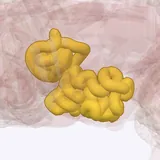
Small intestine
The main site of infection.
- ETEC colonises the villi.
- Rotavirus and coronavirus destroy the villous enterocytes.
- C. parvum lodges in the brush border of the enterocytes, mainly in the distal small intestine.
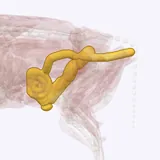
Large intestine
Coronavirus and C. parvum can also affect the caecum and colon, which worsens the diarrhoea. Poorly digested milk reaching the colon ferments and increases osmotic diarrhoea.
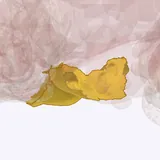
Abomasum
In the suckling calf, milk passes through the reticular groove directly into the abomasum.
Milk should not be withheld from the diarrhoeic calf. Although it can increase faecal volume, it provides the energy the calf needs and can promote gut healing.
Clinical signs
Loose to watery faeces, sometimes with mucus or blood. Depending on severity:
- dehydration
- dullness and weakness
- loss of the suckle reflex
- inability to stand and recumbency
Severely dehydrated and acidaemic calves become comatose. Body temperature is often normal or low.
In ETEC diarrhoea, death from hypovolaemic shock can occur within 12–24 hours.
Diagnosis
- The calf's age points to the agent. Dehydration and acidaemia can be estimated with reasonable precision by physical examination.
- Faeces are tested with on-farm rapid tests for the common pathogens and with laboratory tests. Samples come from several untreated calves early in the disease.
- Severely affected calves need blood gases and electrolytes.
Enteropathogens are also found in healthy calves, which complicates the interpretation of faecal tests.
Herd diagnosis
- necropsy of dead calves
- monitoring of transfer of passive immunity, by measuring serum total protein or Brix in calves 1 to 7 days old
Treatment and prevention
Treatment is based on correcting dehydration, acidosis and hypoglycaemia.
- A calf that still suckles receives oral rehydration solutions with alkalinising agents and glucose, while continuing to drink milk.
- A calf that cannot stand or has lost the suckle reflex needs intravenous fluid therapy with bicarbonate.
- Antimicrobials are not indicated routinely. They are reserved for calves with systemic illness, because of the risk of bacteraemia.
- Non-steroidal anti-inflammatory drugs may improve welfare.
Drug use in calves intended for consumption is subject to national regulations and withdrawal periods.
Prevention
- Colostrum in sufficient quantity, of good quality and within the first hours of life, with routine monitoring of transfer of passive immunity.
- Hygiene in the calving and calf-rearing areas, separate maternity, calf-rearing and hospital pens, no mixing of older calves with newborns, and plain clean water from the first day.
- Vaccination of dams before calving against rotavirus, coronavirus and ETEC, to increase colostral antibodies.
- On farms with cryptosporidiosis, preventive treatment with halofuginone in the first days of life, where authorised.
Key studies
- Lombard et al. consensus (2020). A United States expert group that proposes four categories of passive immunity based on serum IgG: excellent (≥ 25 g/L), good (18–24.9), fair (10–17.9) and poor (less than 10). As a herd goal it proposes more than 40% of calves in the excellent category and less than 10% in the poor one, with equivalents in serum total protein and Brix for use on farm. It rests mainly on United States dairy heifer data and expert opinion.
- Raboisson et al. (2016). Meta-analysis of adjusted associations between failure of passive transfer and calf health. Failure multiplied the risk of death by 2.12, of respiratory disease by 1.75, of diarrhoea by 1.51 and of any disease by 1.91. The estimated mean cost was €60 per dairy calf and €80 per beef calf in European systems.
- Bernal-Córdoba et al. (2022). Systematic review of trials of antimicrobials for calf diarrhoea. Of 2899 studies, only 11 met the criteria, with designs and outcomes so different that a meta-analysis was not possible, and with poor reporting of the trials. It concludes that there is insufficient evidence for the efficacy of antimicrobials in this disease, despite their widespread use.
- Brainard et al. (2021). Systematic review and meta-analysis of 25 experiments, mostly European randomised trials, on halofuginone for cryptosporidiosis. Started before 5 days of age, it significantly reduced oocyst shedding, diarrhoea and mortality. Publication bias is possible, especially for diarrhoea outcomes.
- Higgs et al. (2025). Systematic review and meta-analysis of dam vaccination against ETEC, with 22 publications. In field trials there was no evidence that vaccination reduced diarrhoea or death in calves under 14 days; in experimental challenge trials, the vaccine prevented death. Field trials were few and of limited quality, and very few reported randomisation, blinding or funding.
Structures affected
References
- Constable PD, Hinchcliff KW, Done SH, et al. Veterinary Medicine: A textbook of the diseases of cattle, horses, sheep, pigs, and goats, 11th ed. Elsevier (2017)
- Lombard J, Urie N, Garry F, et al. Consensus recommendations on calf- and herd-level passive immunity in dairy calves in the United States. J Dairy Sci 103:7611-7624 (2020)
- Raboisson D, Trillat P, Cahuzac C. Failure of Passive Immune Transfer in Calves: A Meta-Analysis on the Consequences and Assessment of the Economic Impact. PLoS One 11:e0150452 (2016)
- Bernal-Córdoba C, Branco-Lopes R, Latorre-Segura L, et al. Use of antimicrobials in the treatment of calf diarrhea: a systematic review. Anim Health Res Rev 23:101-112 (2022)
- Brainard J, Hammer CC, Hunter PR, et al. Efficacy of halofuginone products to prevent or treat cryptosporidiosis in bovine calves: a systematic review and meta-analyses. Parasitology 148:408-419 (2021)
- Higgs C, Van Noord M, Nagle JGC, et al. Dam vaccination for the prevention of neonatal diarrhea caused by enterotoxigenic E. coli in calves-a systematic review and meta-analysis. Vet Anim Sci 30:100546 (2025)
- Merck Veterinary Manual: Diarrhea in Neonatal Ruminants
- Merck Veterinary Manual: Reticuloruminal Milk Accumulation (Ruminal Drinking) in Calves
See it in 3D on your iPhone
Peel the layers, spin the model, quiz yourself on it and stand it on your desk in AR. AnatomyCompass is coming to iPhone, iPad and Mac: get one email when it’s out.
Text adapted from Vet Atlas (CC BY-SA 4.0). Sources and licences. This veterinary text has not yet been reviewed by a veterinarian.