 AnatomyCompass
Lateral pectoral nerve
Nervus pectoralis lateralis · Thorax · Nerve
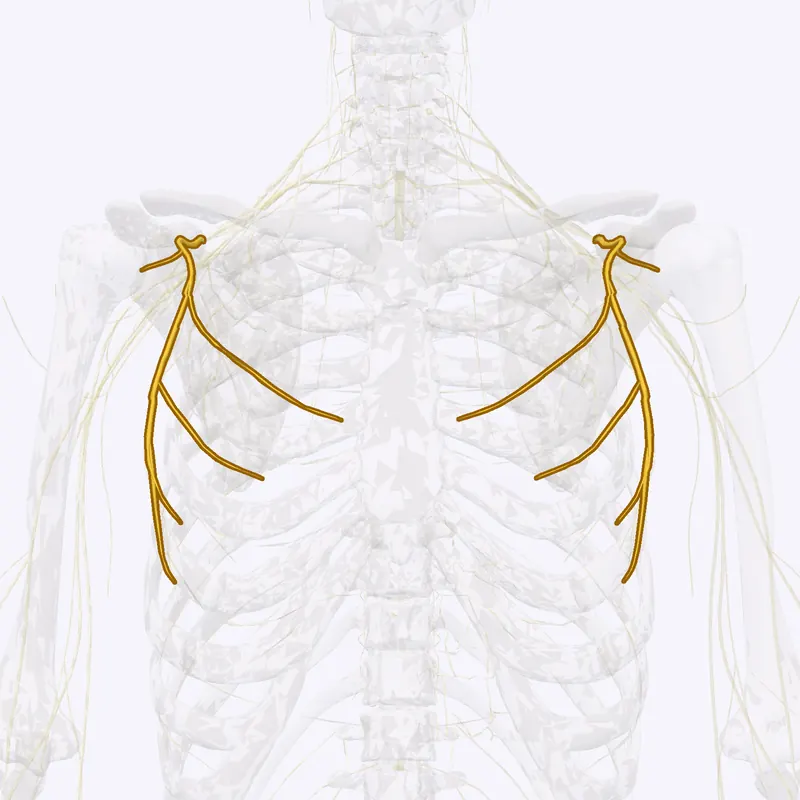
A branch of the lateral cord of the brachial plexus, mainly to pectoralis major.
Quick facts
- Latin name
- Nervus pectoralis lateralis
- Type
- Nerve
- Body area
- Thorax
Lateral pectoral nerve: roots
C5–C7, lateral cord of the brachial plexus.
Lateral pectoral nerve: course
In front of the axillary artery, through the clavipectoral fascia with the thoraco-acromial artery to the deep surface of pectoralis major; a loop to the medial pectoral nerve sends fibres to pectoralis minor.
Lateral pectoral nerve: motor
Pectoralis major (mostly its clavicular and upper sternocostal parts); some fibres to pectoralis minor.
Lateral pectoral nerve: sensory
None to the skin.
Lateral pectoral nerve: injury sign
Weak adduction and medial rotation of the arm with flattening of the upper chest.
3D views
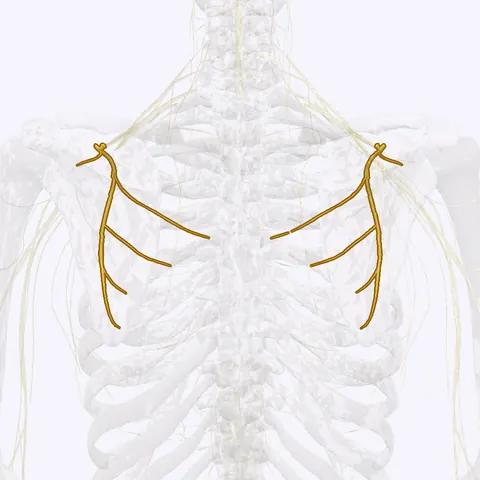
Lateral pectoral nerve: clinical note
Named for its cord, not its position: it lies medial to the medial pectoral nerve. Both are kept in breast surgery to stop pectoralis major wasting.
Questions about the lateral pectoral nerve
What is the lateral pectoral nerve?
A branch of the lateral cord of the brachial plexus, mainly to pectoralis major.
See the lateral pectoral nerve in 3D
Peel the layers, spin the model, quiz yourself on it and stand it on your desk in AR. AnatomyCompass is coming to iPhone, iPad and Mac: get one email when it’s out.

Other nerves: thorax
Spotted something wrong? Tell us and we’ll fix it. This page is a study reference, not medical advice.