Vagus nerve
Nervus vagus · Thorax · Nerve
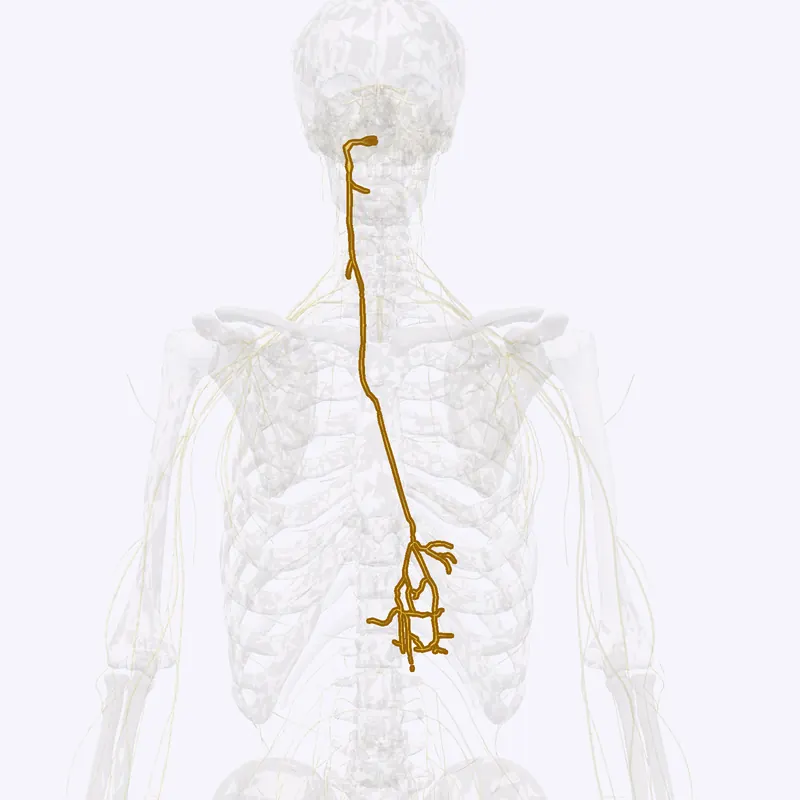
The longest cranial nerve: parasympathetic supply to the thoracic and most abdominal organs; muscles of the palate, pharynx and larynx.
Quick facts
- Latin name
- Nervus vagus
- Also called
- pneumogastric nerve, cranial nerve X
- Type
- Nerve
- Body area
- Thorax
Vagus nerve: roots
Nuclei in the medulla (dorsal motor nucleus, nucleus ambiguus, solitary nucleus).
Vagus nerve: course
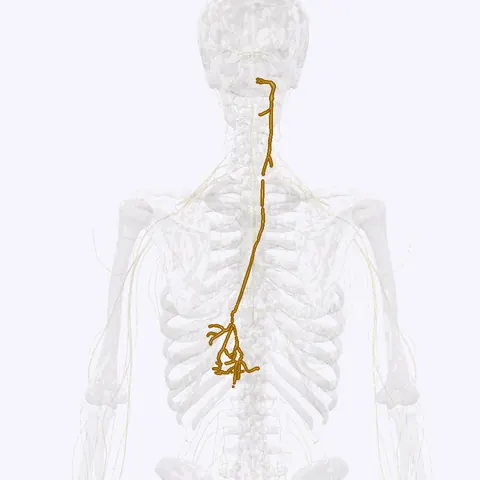
Through the jugular foramen, down in the carotid sheath, through the chest behind the lung roots onto the oesophagus (oesophageal plexus), through the oesophageal hiatus as the anterior and posterior vagal trunks.
Vagus nerve: motor
Palate (except tensor veli palatini), pharynx, larynx (via the superior and recurrent laryngeal nerves); parasympathetic to heart, lungs and gut as far as the splenic flexure.
Vagus nerve: sensory
Larynx, lower pharynx, ear canal, thoracic and abdominal organs (most of its fibres are sensory).
Vagus nerve: injury sign
Uvula deviates away from the affected side; hoarse voice; difficulty swallowing.
3D views
Vagus nerve: clinical note
Vagal stimulation (e.g. carotid sinus massage) slows the heart; vasovagal faints.
Questions about the vagus nerve
What is the vagus nerve?
The longest cranial nerve: parasympathetic supply to the thoracic and most abdominal organs; muscles of the palate, pharynx and larynx.
See the vagus nerve in 3D
Peel the layers, spin the model, quiz yourself on it and stand it on your desk in AR. AnatomyCompass is coming to iPhone, iPad and Mac: get one email when it’s out.
Other nerves: thorax
Spotted something wrong? Tell us and we’ll fix it. This page is a study reference, not medical advice.