 AnatomyCompass
Biceps brachii
M. biceps brachii · Dog · Muscular system · Thoracic limb
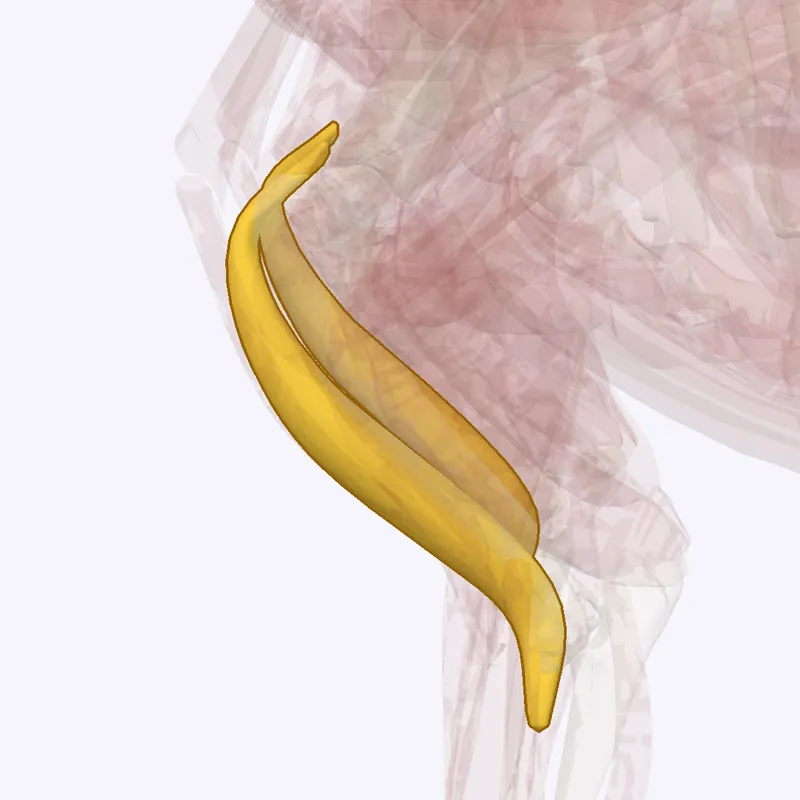
Spindle-shaped muscle on the cranial surface of the arm; flexes the elbow and extends the shoulder.
Key points
- It arises from the supraglenoid tubercle of the scapula.
- Its tendon of origin runs in the intertubercular groove, held by the transverse humeral retinaculum.
- It is supplied by the musculocutaneous nerve.
- Bicipital tenosynovitis is a common cause of forelimb lameness in medium and large breeds.
Overview
Its tendon of origin crosses the shoulder joint and runs in the intertubercular groove of the humerus.
There it is held by the transverse humeral retinaculum and wrapped in an extension of the joint capsule.
Origin
Supraglenoid tubercle of the scapula (tuberculum supraglenoidale).
Insertion
Radial and ulnar tuberosities, on the medial side of the proximal forearm.
Action
Flexes the elbow and extends the shoulder.
Innervation
Musculocutaneous nerve (n. musculocutaneus).
Clinical relevance
Bicipital tenosynovitis is inflammation of the tendon of origin and its sheath in the intertubercular groove. It is a common cause of forelimb lameness in adult medium and large breed dogs.
Diseases
- Bicipital tenosynovitisInflammation of the tendon of origin of the biceps brachii and its synovial sheath in the intertubercular…
Related structures
See it in 3D on your iPhone
Peel the layers, spin the model, quiz yourself on it and stand it on your desk in AR. AnatomyCompass is coming to iPhone, iPad and Mac: get one email when it’s out.
More of the Dog: Muscular system
Text adapted from Vet Atlas (CC BY-SA 4.0). 3D model: Vet Atlas procedural musculature (CC BY-SA 4.0). Sources and licences. This veterinary text has not yet been reviewed by a veterinarian.