 AnatomyCompass
Biceps femoris
M. biceps femoris · Cat · Muscular system · Pelvic limb
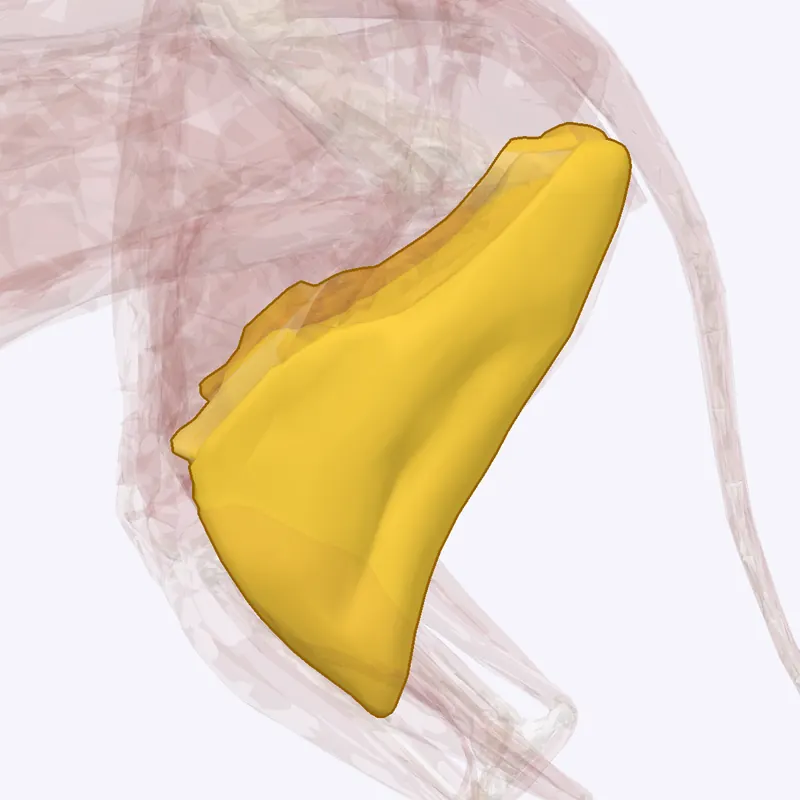
Broad muscle covering most of the lateral surface of the thigh.
Key points
- It arises from the ischiatic tuberosity.
- It extends the hip and abducts the limb; its caudal part flexes the stifle.
- Deep to it run the sciatic nerve and the tenuissimus, a thin muscular band that accompanies it.
- Injections into the caudal thigh can injure the sciatic nerve; the quadriceps or lumbar epaxials are preferred.
Overview
It covers most of the lateral surface of the thigh. Feline anatomy texts describe two muscles next to it that are worth recognising in dissection:
- Caudofemoralis (m. caudofemoralis). Runs from the first caudal vertebrae to the patella, partly covered by the biceps and the gluteus superficialis.
- Tenuissimus (m. abductor cruris caudalis). A very thin band deep to the biceps that accompanies the sciatic nerve.
Origin
Ischiatic tuberosity (tuber ischiadicum).
Insertion
Through a broad aponeurosis continuous with the fascia lata and crural fascia:
- patella
- patellar ligament
- cranial border of the tibia
Action
Extends the hip and abducts the limb. Its caudal part flexes the stifle.
Innervation
Branches of the sciatic nerve (n. ischiadicus).
Clinical relevance
The sciatic nerve runs deep to this muscle.
In the cat, with little muscle mass, intramuscular injections into the caudal thigh can injure it. The quadriceps or the lumbar epaxial muscles are preferred.
Related structures
See it in 3D on your iPhone
Peel the layers, spin the model, quiz yourself on it and stand it on your desk in AR. AnatomyCompass is coming to iPhone, iPad and Mac: get one email when it’s out.
More of the Cat: Muscular system
Text adapted from Vet Atlas (CC BY-SA 4.0). 3D model: "Feline Ecorche Dec" by westerly (Sketchfab) (CC BY 4.0). Sources and licences. This veterinary text has not yet been reviewed by a veterinarian.