 AnatomyCompass
Dorsal and plantar venous arches of the foot
Arcus venosus dorsalis pedis; arcus venosus plantaris · Lower limb · Vein
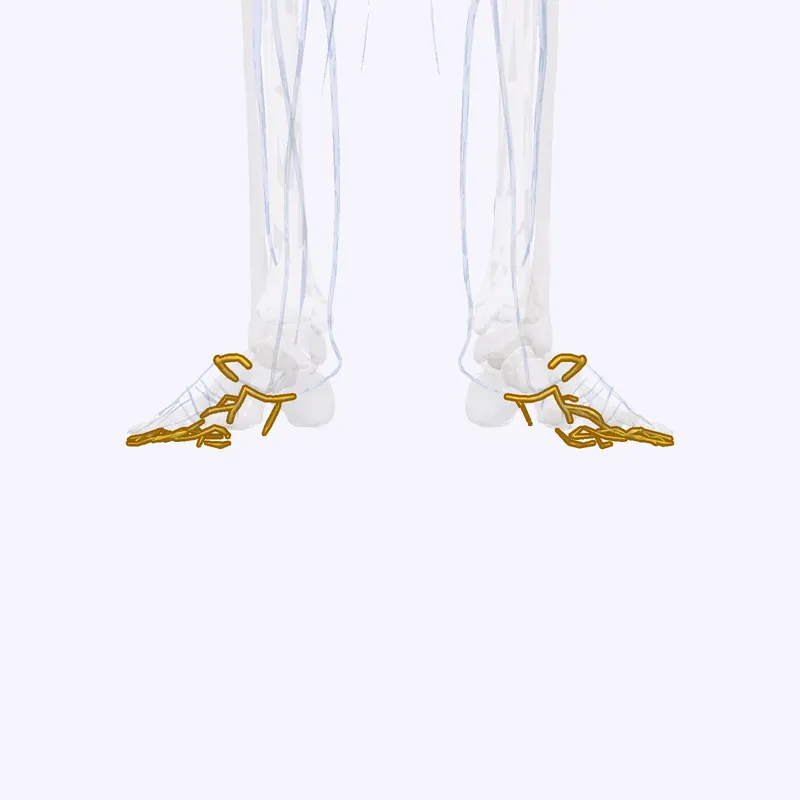
The dorsal venous arch on the top of the foot feeds the saphenous veins; the deep plantar arch feeds the posterior tibial veins.
Quick facts
- Latin name
- Arcus venosus dorsalis pedis; arcus venosus plantaris
- Type
- Vein
- Body area
- Lower limb
Dorsal and plantar venous arches of the foot: drains
Toes and foot.
Dorsal and plantar venous arches of the foot: course
Dorsal arch over the metatarsal heads; plantar arch deep in the sole.
Dorsal and plantar venous arches of the foot: ends in
Great saphenous (medial end) and small saphenous (lateral end) veins; plantar veins to the posterior tibial veins.
Dorsal and plantar venous arches of the foot: relations
Walking squeezes the plantar veins (the foot pump).
3D views

Questions about the dorsal and plantar venous arches of the foot
What is the dorsal and plantar venous arches of the foot?
The dorsal venous arch on the top of the foot feeds the saphenous veins; the deep plantar arch feeds the posterior tibial veins.
See the dorsal and plantar venous arches of the foot in 3D
Peel the layers, spin the model, quiz yourself on it and stand it on your desk in AR. AnatomyCompass is coming to iPhone, iPad and Mac: get one email when it’s out.
Other veins: lower limb
Spotted something wrong? Tell us and we’ll fix it. This page is a study reference, not medical advice.