Stomach
Gaster · Abdomen · Organ
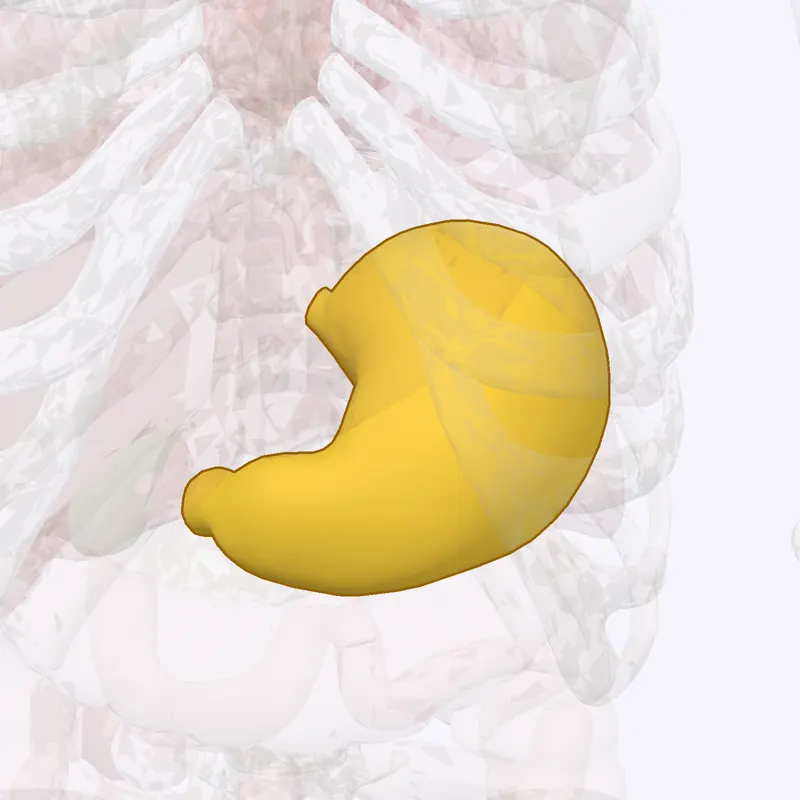
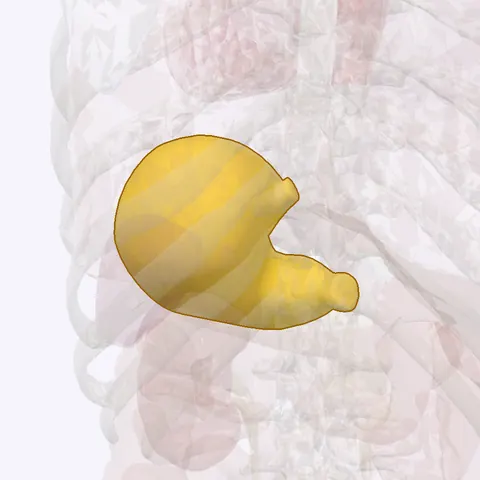
J-shaped muscular sac between the oesophagus and duodenum: cardia, fundus, body, pyloric antrum and pylorus.
Quick facts
- Latin name
- Gaster
- Type
- Organ
- Body area
- Abdomen
Stomach: location
Left upper quadrant and epigastrium; shape and position vary with posture and how full it is.
Stomach: function
Stores food, mixes it with acid and pepsin; makes intrinsic factor for vitamin B12 absorption.
Stomach: blood supply
Left and right gastric, left and right gastro-omental and short gastric arteries, all from the coeliac trunk.
Stomach: nerve supply
Vagal trunks (secretion and motility) and coeliac plexus (sympathetic).
Stomach: relations
Lesser omentum to the liver; greater omentum hangs from the greater curvature; lesser sac, pancreas and left kidney behind.
3D views
Stomach: clinical note
A posterior duodenal or gastric ulcer can erode the gastroduodenal or splenic artery and bleed heavily.
Questions about the stomach
What is the stomach?
J-shaped muscular sac between the oesophagus and duodenum: cardia, fundus, body, pyloric antrum and pylorus.
What does the stomach do?
Stores food, mixes it with acid and pepsin; makes intrinsic factor for vitamin B12 absorption.
Where is the stomach?
Left upper quadrant and epigastrium; shape and position vary with posture and how full it is.
What is the blood supply of the stomach?
Left and right gastric, left and right gastro-omental and short gastric arteries, all from the coeliac trunk.
See the stomach in 3D
Peel the layers, spin the model, quiz yourself on it and stand it on your desk in AR. AnatomyCompass is coming to iPhone, iPad and Mac: get one email when it’s out.
Other organs: abdomen
Spotted something wrong? Tell us and we’ll fix it. This page is a study reference, not medical advice.