Cerebellum
Cerebellum · Head and neck · Organ
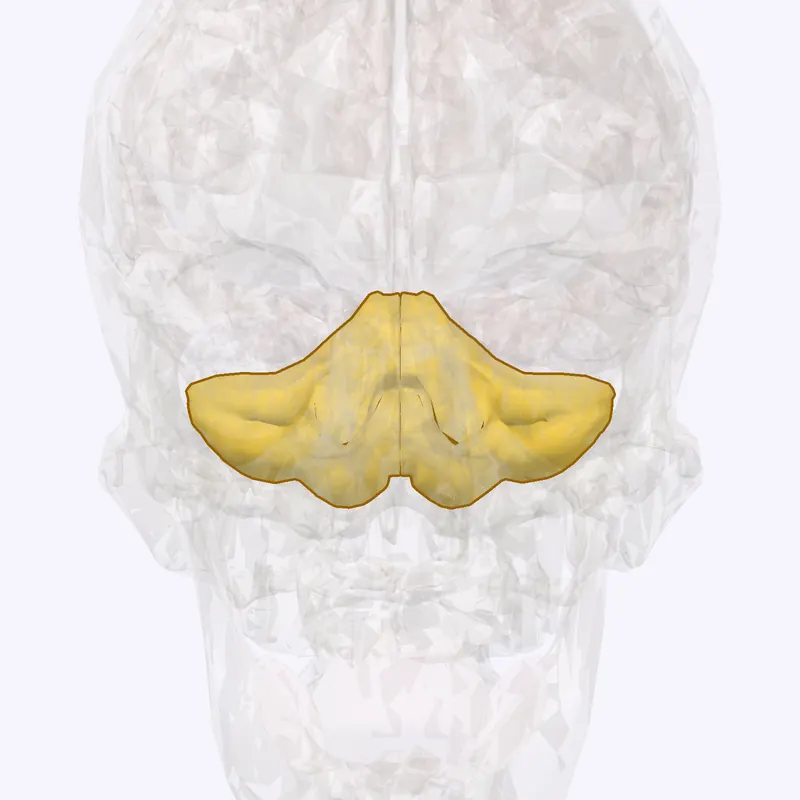
The 'little brain' behind the brainstem that coordinates movement, balance and posture.
Quick facts
- Latin name
- Cerebellum
- Type
- Organ
- Body area
- Head and neck
Cerebellum: location
Posterior cranial fossa, under the tentorium cerebelli.
Cerebellum: function
Coordination, balance, muscle tone and motor learning; each half controls the same side of the body.
Cerebellum: blood supply
Superior, anterior inferior and posterior inferior cerebellar arteries.
Cerebellum: relations
Joined to the brainstem by three pairs of peduncles; roof of the fourth ventricle.
3D views
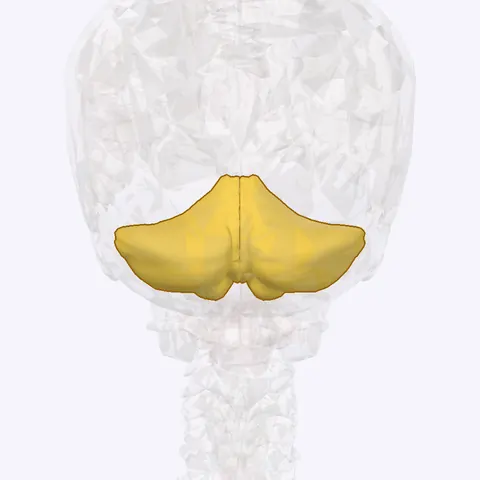
Cerebellum: clinical note
Damage causes ataxia, intention tremor, past-pointing and nystagmus on the same side.
Questions about the cerebellum
What is the cerebellum?
The 'little brain' behind the brainstem that coordinates movement, balance and posture.
What does the cerebellum do?
Coordination, balance, muscle tone and motor learning; each half controls the same side of the body.
Where is the cerebellum?
Posterior cranial fossa, under the tentorium cerebelli.
What is the blood supply of the cerebellum?
Superior, anterior inferior and posterior inferior cerebellar arteries.
See the cerebellum in 3D
Peel the layers, spin the model, quiz yourself on it and stand it on your desk in AR. AnatomyCompass is coming to iPhone, iPad and Mac: get one email when it’s out.
Other organs: head and neck
- Cerebrum
- Precentral gyrus
- Postcentral gyrus
- Corpus callosum
- Fornix and septum pellucidum
- Basal nuclei
- Internal capsule
- Thalamus
- Hypothalamus
- Pituitary gland
- Hippocampus
- Amygdala
- Ventricles of the brain
- Midbrain
- Pons
- Medulla oblongata
- Optic chiasm and tract
- Tentorium cerebelli
- Eyeball
- Cornea
- Iris and ciliary body
- Lens
- Vitreous body
- Lacrimal apparatus
- Eyelids
- Ear
- Nasal cartilages
- Tongue
- Lips
- Gums
- Submandibular and sublingual glands
- Thyroid cartilage
- Cricoid cartilage
- Arytenoid and small laryngeal cartilages
- Epiglottis
Spotted something wrong? Tell us and we’ll fix it. This page is a study reference, not medical advice.