Obturator internus
Musculus obturator internus · Hip and gluteal muscles · Hip and leg
Obturator internus (Musculus obturator internus) is one of the hip and gluteal muscles. Below: its origin and insertion, what it does, its nerve and blood supply, how to find it, a stretch and an exercise, with 3D views.
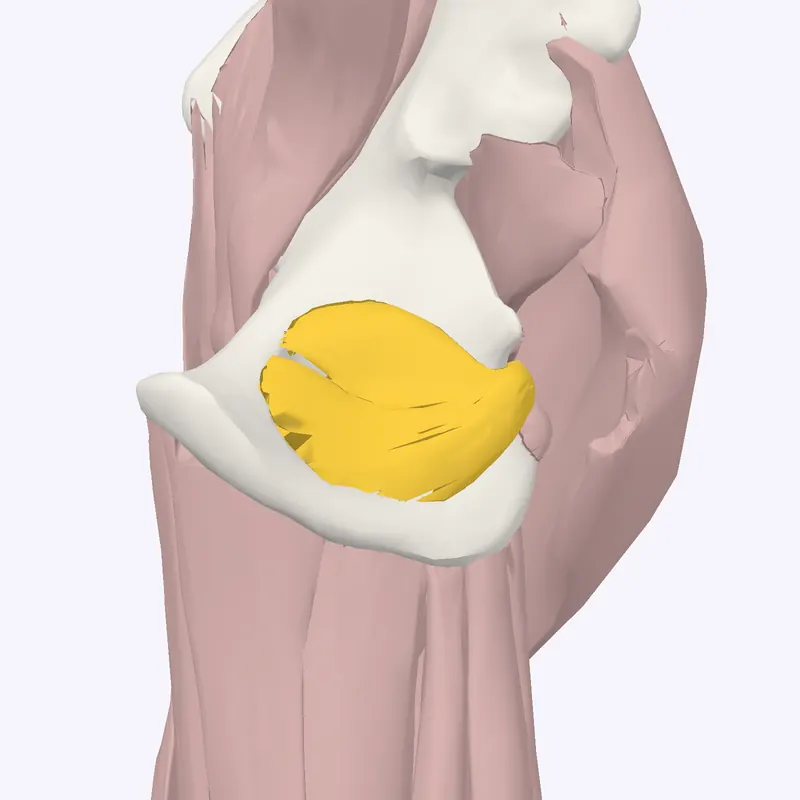
Quick facts
- Latin name
- Musculus obturator internus
- Also called
- Internal obturator muscle
- Muscle group
- Hip and gluteal muscles
- Body region
- Hip and leg
- Movements
- Hip lateral rotation
Obturator internus: function and action
Laterally rotates the extended hip; abducts the flexed hip.
- Hip lateral rotation Prime mover
Obturator internus: nerve supply (innervation)
Nerve to obturator internus (L5–S1).
Obturator internus: origin and insertion
- Origin
- Inner surface of the obturator membrane and surrounding bone.
- Insertion
- Medial surface of the greater trochanter.
Obturator internus: blood supply
Internal pudendal and obturator arteries.
3D views
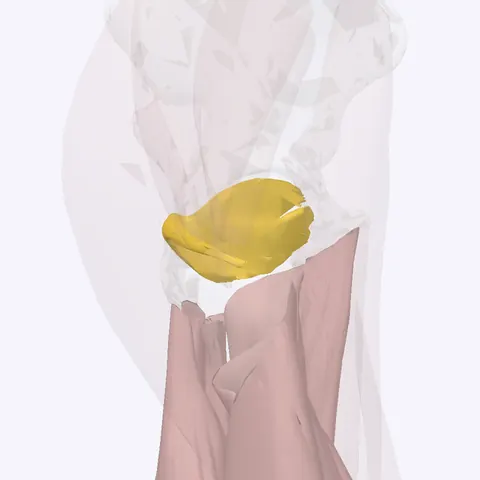
Obturator internus: stretch
Figure-four: lying on your back, ankle on the opposite knee, pull the thigh towards your chest.
Obturator internus: exercises to strengthen it
Clamshells, or banded seated hip external rotation.
Questions about the obturator internus
How do you stretch the obturator internus?
Figure-four: lying on your back, ankle on the opposite knee, pull the thigh towards your chest.
What does the obturator internus do?
Laterally rotates the extended hip; abducts the flexed hip.
Which nerve supplies the obturator internus?
Nerve to obturator internus (L5–S1).
Where does the obturator internus attach?
It arises from: Inner surface of the obturator membrane and surrounding bone. It inserts into: Medial surface of the greater trochanter.
See the obturator internus in 3D
Peel the layers, spin the model, quiz yourself on it and stand it on your desk in AR. AnatomyCompass is coming to iPhone, iPad and Mac: get one email when it’s out.
Other muscles in this group: Hip and gluteal muscles
Spotted something wrong? Tell us and we’ll fix it. This page is a study reference, not medical advice.