 AnatomyCompass
Lumbricals (foot)
Musculi lumbricales pedis · Foot muscles · Hip and leg
Lumbricals (foot) (Musculi lumbricales pedis) is one of the foot muscles. Below: its origin and insertion, what it does, its nerve and blood supply, how to find it, a stretch and an exercise, with 3D views.
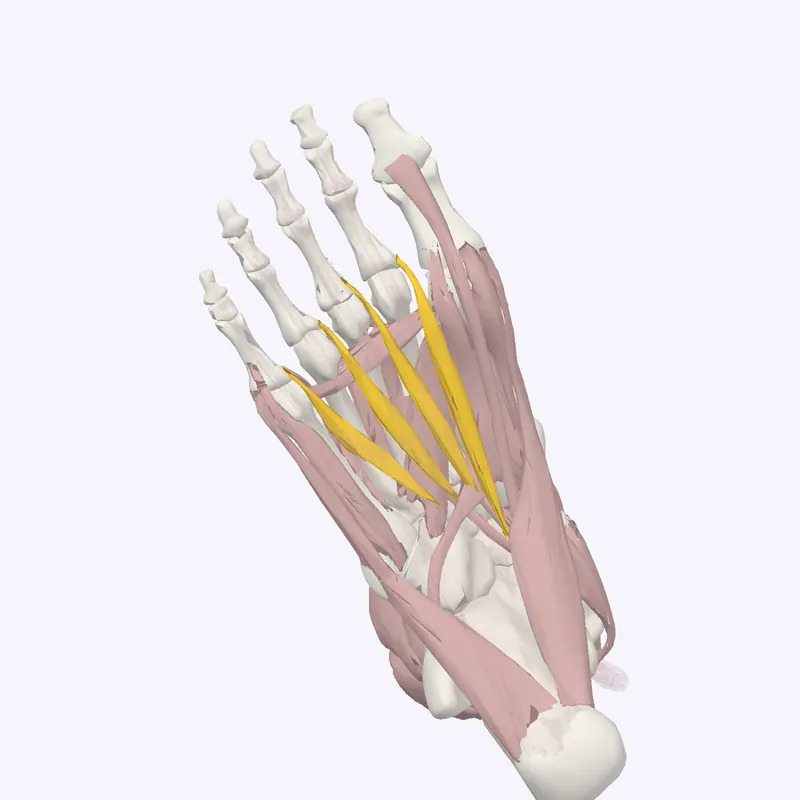
Quick facts
- Latin name
- Musculi lumbricales pedis
- Also called
- lumbricals of the hand, lumbricals muscles, lumbrical muscles of hand
- Muscle group
- Foot muscles
- Body region
- Hip and leg
Lumbricals (foot): function and action
Flex the MTP joints and extend the IP joints of the toes.
Lumbricals (foot): nerve supply (innervation)
First: medial plantar nerve. Second to fourth: lateral plantar nerve (S2–S3).
Lumbricals (foot): origin and insertion
- Origin
- Tendons of flexor digitorum longus.
- Insertion
- Medial sides of the extensor expansions of toes 2–5.
Lumbricals (foot): blood supply
3D views
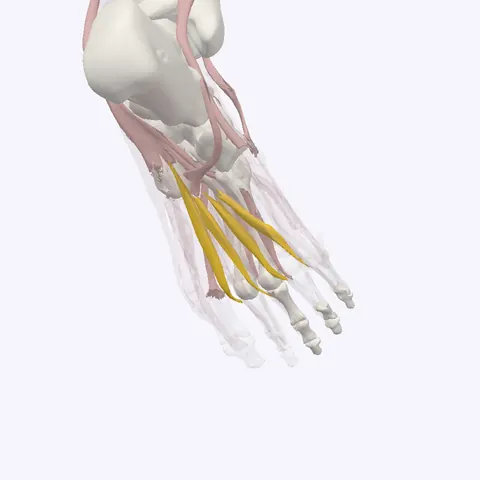
Lumbricals (foot): stretch
Pull the toes up at their bases.
Lumbricals (foot): exercises to strengthen it
Short-foot exercise; toe yoga.
Questions about the lumbricals (foot)
What does the lumbricals (foot) do?
Flex the MTP joints and extend the IP joints of the toes.
Which nerve supplies the lumbricals (foot)?
First: medial plantar nerve. Second to fourth: lateral plantar nerve (S2–S3).
Where does the lumbricals (foot) attach?
It arises from: Tendons of flexor digitorum longus. It inserts into: Medial sides of the extensor expansions of toes 2–5.
How do you stretch the lumbricals (foot)?
Pull the toes up at their bases.
See the lumbricals (foot) in 3D
Peel the layers, spin the model, quiz yourself on it and stand it on your desk in AR. AnatomyCompass is coming to iPhone, iPad and Mac: get one email when it’s out.
Other muscles in this group: Foot muscles
Spotted something wrong? Tell us and we’ll fix it. This page is a study reference, not medical advice.