 AnatomyCompass
Thyrohyoid membrane and ligaments
Membrana thyrohyoidea · Head and neck · Ligament
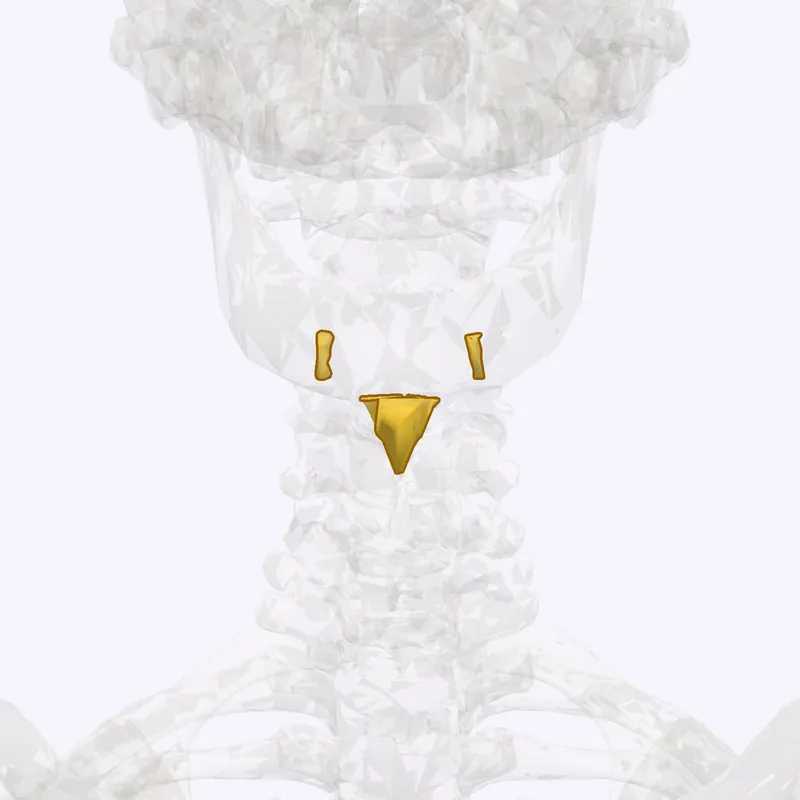
A fibroelastic sheet hanging the larynx from the hyoid, thickened as the median and lateral thyrohyoid ligaments.
Quick facts
- Latin name
- Membrana thyrohyoidea
- Type
- Ligament
- Body area
- Head and neck
Thyrohyoid membrane and ligaments: attachments
Upper border of the thyroid cartilage to the back of the hyoid body and greater horns.
Thyrohyoid membrane and ligaments: function
Suspends the larynx from the hyoid so they rise together in swallowing.
Thyrohyoid membrane and ligaments: relations
Pierced by the internal laryngeal nerve and superior laryngeal vessels.
Thyrohyoid membrane and ligaments: nearby
The lateral ligaments may hold a small triticeal cartilage.
3D views
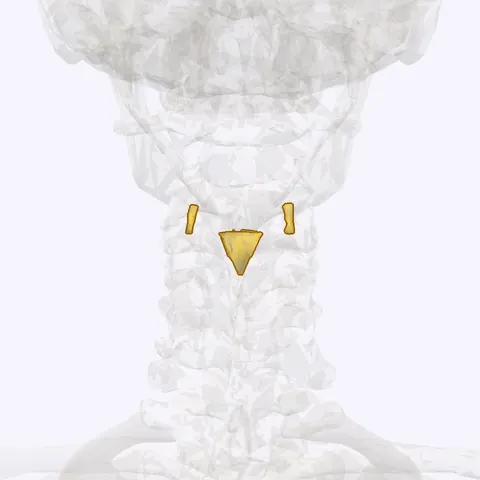
Questions about the thyrohyoid membrane and ligaments
What is the thyrohyoid membrane and ligaments?
A fibroelastic sheet hanging the larynx from the hyoid, thickened as the median and lateral thyrohyoid ligaments.
What does the thyrohyoid membrane and ligaments do?
Suspends the larynx from the hyoid so they rise together in swallowing.
See the thyrohyoid membrane and ligaments in 3D
Peel the layers, spin the model, quiz yourself on it and stand it on your desk in AR. AnatomyCompass is coming to iPhone, iPad and Mac: get one email when it’s out.
Other ligaments: head and neck
Spotted something wrong? Tell us and we’ll fix it. This page is a study reference, not medical advice.