 AnatomyCompass
Posterior tibial artery
Arteria tibialis posterior · Lower limb · Artery
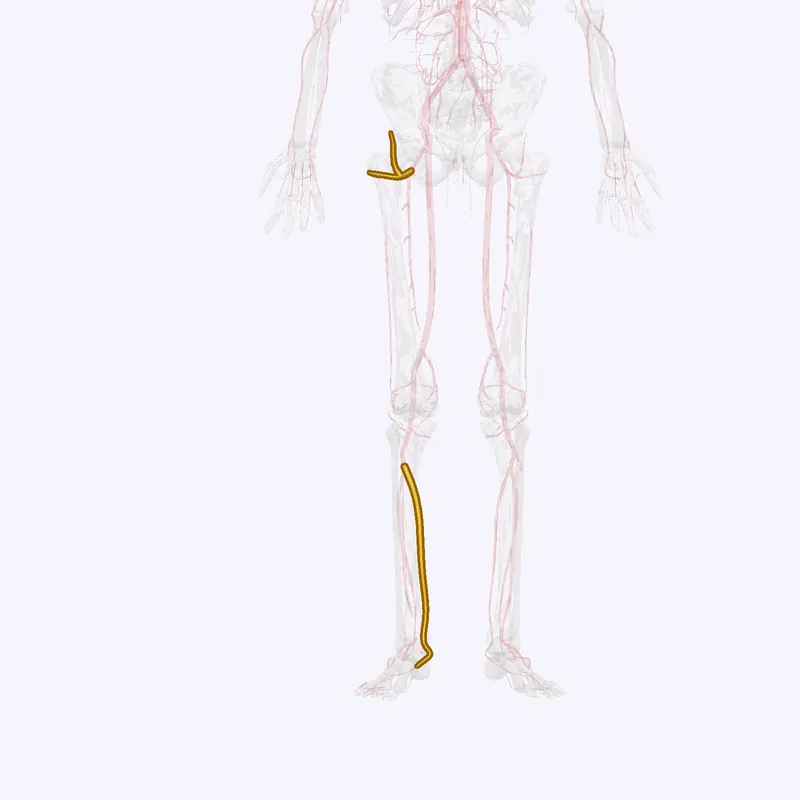
The artery of the back of the leg and the sole.
Quick facts
- Latin name
- Arteria tibialis posterior
- Type
- Artery
- Body area
- Lower limb
Posterior tibial artery: origin
Popliteal artery at the lower border of popliteus.
Posterior tibial artery: course
Down under soleus on tibialis posterior with the tibial nerve; behind the medial malleolus under the flexor retinaculum.
Posterior tibial artery: branches
Fibular (peroneal) artery, nutrient artery of the tibia, muscular and calcaneal branches; ends as the medial and lateral plantar arteries.
Posterior tibial artery: supplies
Posterior compartment, tibia, heel and sole.
3D views
Posterior tibial artery: clinical note
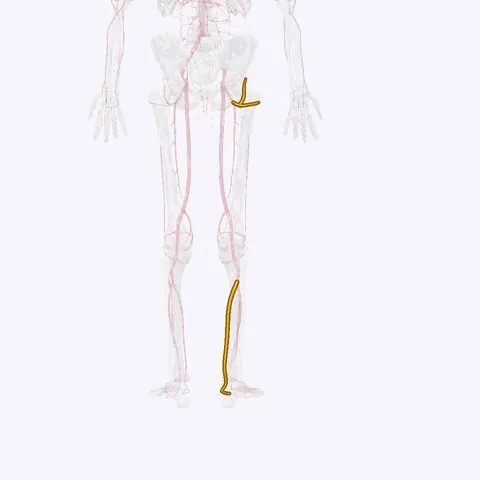
Its pulse is felt halfway between the medial malleolus and the heel.
Muscles fed by the posterior tibial artery
- Tibialis posteriorPosterior tibial artery
- Flexor digitorum longusPosterior tibial artery
Questions about the posterior tibial artery
What is the posterior tibial artery?
The artery of the back of the leg and the sole.
What are the branches of the posterior tibial artery?
Fibular (peroneal) artery, nutrient artery of the tibia, muscular and calcaneal branches; ends as the medial and lateral plantar arteries.
See the posterior tibial artery in 3D
Peel the layers, spin the model, quiz yourself on it and stand it on your desk in AR. AnatomyCompass is coming to iPhone, iPad and Mac: get one email when it’s out.
Other arteries: lower limb
Spotted something wrong? Tell us and we’ll fix it. This page is a study reference, not medical advice.