 AnatomyCompass
Ophthalmic artery
Arteria ophthalmica · Head and neck · Artery
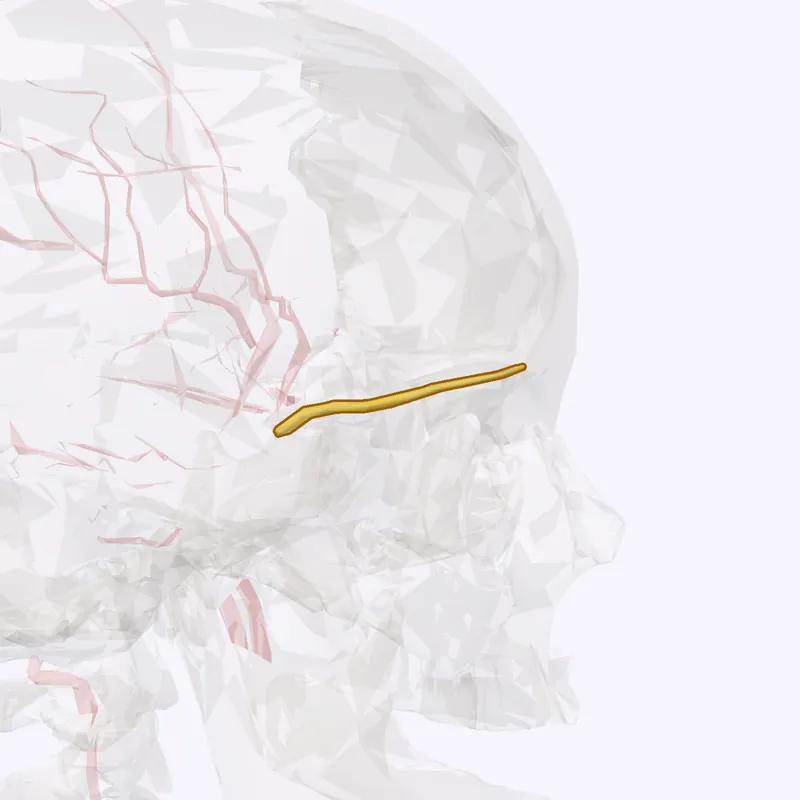
The first branch of the internal carotid inside the skull, supplying the orbit and eye.
Quick facts
- Latin name
- Arteria ophthalmica
- Also called
- ophthalmic arteries
- Type
- Artery
- Body area
- Head and neck
Ophthalmic artery: origin
Internal carotid artery as it leaves the cavernous sinus.
Ophthalmic artery: course
Through the optic canal below the optic nerve, then crosses over it to the medial orbit.
Ophthalmic artery: branches
Central retinal artery, ciliary arteries, lacrimal, supraorbital, supratrochlear, ethmoidal and muscular branches.
Ophthalmic artery: supplies
Eye and retina, extraocular muscles, lacrimal gland, forehead and upper nose.
3D views
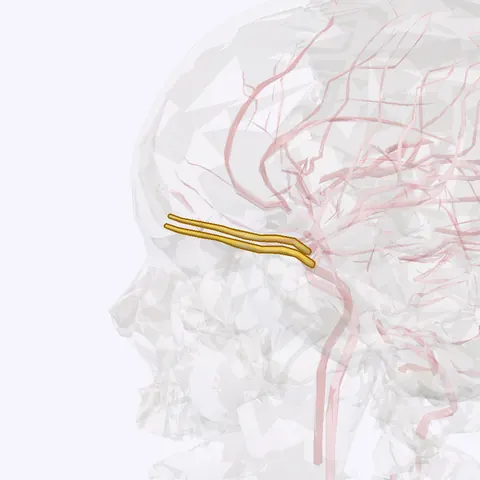
Ophthalmic artery: clinical note
Central retinal artery occlusion causes sudden painless visual loss in one eye.
Muscles fed by the ophthalmic artery
- Superior rectusMuscular branches of the ophthalmic artery
- Medial rectusMuscular branches of the ophthalmic artery
- Superior obliqueMuscular branches of the ophthalmic artery
- Levator palpebrae superiorisMuscular branches of the ophthalmic artery
Questions about the ophthalmic artery
What is the ophthalmic artery?
The first branch of the internal carotid inside the skull, supplying the orbit and eye.
What are the branches of the ophthalmic artery?
Central retinal artery, ciliary arteries, lacrimal, supraorbital, supratrochlear, ethmoidal and muscular branches.
See the ophthalmic artery in 3D
Peel the layers, spin the model, quiz yourself on it and stand it on your desk in AR. AnatomyCompass is coming to iPhone, iPad and Mac: get one email when it’s out.
Other arteries: head and neck
Spotted something wrong? Tell us and we’ll fix it. This page is a study reference, not medical advice.