 AnatomyCompass
Urolithiasis
Metabolic · Dog, Cat
Formation of stones (uroliths) in the urinary tract, most often in the bladder. In dogs struvite and calcium oxalate predominate; stones cause cystitis signs and can obstruct the urethra.
Key points
- In dogs, struvite is usually infection-induced by urease-producing bacteria.
- Calcium oxalate cannot be dissolved and has to be removed.
- Urate and cystine stones are often radiolucent, and ultrasound detects them.
- The Dalmatian forms urate stones from a genetic defect in uric acid transport.
- In cats, calcium oxalate ureteroliths are common and obstruct the ureter.
What it is
Uroliths form when urine becomes supersaturated with stone-forming minerals that precipitate as crystals and grow into stones.
The type depends on urine composition and pH, diet, genetics and infection.
Types
- Struvite (magnesium ammonium phosphate) in dogs is usually infection-induced, by urease-producing bacteria (Staphylococcus, Proteus) that alkalinise the urine. It can be dissolved medically.
- Calcium oxalate occurs in middle-aged to older dogs, mainly of small breeds. It cannot be dissolved.
- Urate occurs in Dalmatians, some bulldogs and other breeds with a genetic defect in uric acid transport, and in dogs with portosystemic shunts.
- Cystine occurs in dogs with inherited cystinuria, mainly intact males of certain breeds.
- Calcium phosphate, silica and xanthine are less common, xanthine for example after allopurinol.
Who it affects
- Struvite: dogs with urinary tract infection by urease-producing bacteria.
- Calcium oxalate: miniature schnauzer, Lhasa apso, Yorkshire terrier, bichon frise, shih tzu, Chihuahua and other small breeds.
- Urate: Dalmatian, English bulldog, Black Russian terrier, and dogs with portosystemic shunts.
- Cystine: English and French bulldog, Newfoundland, mastiffs and others.
Anatomy involved
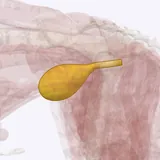
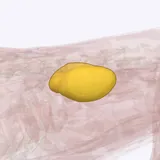
The urinary bladder is the most common site (cystolithiasis). Stones irritate the mucosa and predispose to infection.
Stones can lodge in the urethra, especially in males, and cause obstruction.
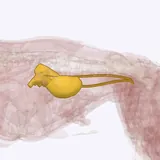
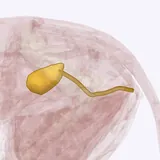
Nephroliths and ureteroliths are less common in dogs. They can obstruct the ureter and cause hydronephrosis and pyelonephritis.
Clinical signs
- haematuria, pollakiuria, stranguria and dysuria
- urination in inappropriate places
Some stones are found incidentally.
Urethral obstruction is an emergency. There is unproductive straining and a large, painful bladder. After about 24 hours, post-renal azotaemia, hyperkalaemia, vomiting and depression follow.
Diagnosis
- Abdominal radiographs must include the whole urethra. Struvite, calcium oxalate and calcium phosphate stones are radiopaque; urate and cystine stones are often radiolucent.
- Ultrasound detects radiolucent stones and evaluates the kidneys and ureters.
- Urinalysis and urine culture show pH, crystals and infection. Crystals suggest the stone type but do not confirm it.
- Quantitative stone analysis of a retrieved urolith is the only way to know its composition.
Treatment
Urethral obstruction is relieved first, by retrograde urohydropropulsion of the stone back into the bladder or catheterisation, while correcting fluid and electrolyte disorders.
Following the ACVIM consensus, medical dissolution is attempted for:
- struvite, with a calculolytic diet plus antibiotics when infection is present
- urate
- cystine
Stones that cannot be dissolved are removed by the least invasive method available:
- voiding urohydropropulsion
- cystoscopic basket retrieval or laser lithotripsy
- percutaneous cystolithotomy
- cystotomy, if none of these is available
Prevention depends on stone type: diet, increased water intake, urine pH management and regular monitoring.
In the cat
In the cat the two main types are also struvite and calcium oxalate, but with important differences.
Types
- Unlike in the dog, feline struvite is usually sterile, related to concentrated, alkaline urine rather than infection. It can be dissolved with a calculolytic diet, usually within a few weeks.
- Calcium oxalate makes up about half of feline uroliths. Longhaired cats are predisposed and hypercalcaemia is a risk factor. It cannot be dissolved. It makes up most nephroliths.
- Urate makes up about 6% of feline uroliths. It is occasionally linked to portovascular anomalies, but the cause is usually unknown.
- Solidified blood calculi are occasionally reported.
Ureteral obstruction
Ureteral obstruction by calcium oxalate ureteroliths is an important problem in cats. Ureteral strictures are also found in more than 25% of obstructed cats. It can cause hydronephrosis and acute kidney injury.
It is diagnosed with ultrasound together with radiographs. It is treated with fluid diuresis for 24–72 hours and, if it does not resolve, with ureteral stents, a subcutaneous ureteral bypass device or surgery.
Urethral obstruction and prevention
In male cats, small uroliths and urethral plugs cause urethral obstruction.
Prevention relies mainly on increasing water intake, with wet food and fountains, and on diets suited to the stone type.
Key studies
- ACVIM consensus on uroliths in dogs and cats (Lulich et al., 2016). Recommendations for treating and preventing uroliths by type. It covers medical dissolution of struvite and minimally invasive removal of stones that do not dissolve.
- iCatCare consensus (Taylor et al., 2025). The current guideline for feline lower urinary tract diseases, uroliths included.
Structures affected
References
- Lulich JP, Berent AC, Adams LG, et al. ACVIM small animal consensus recommendations on the treatment and prevention of uroliths in dogs and cats. J Vet Intern Med 30:1564-1574 (2016)
- Fossum TW. Small Animal Surgery, 5th ed. Elsevier (2018)
- Berent AC. Ureteral obstructions in dogs and cats: a review of traditional and new interventional diagnostic and therapeutic options. J Vet Emerg Crit Care 21:86-103 (2011)
- Taylor S, Boysen S, Buffington T, et al. 2025 iCatCare consensus guidelines on the diagnosis and management of lower urinary tract diseases in cats. J Feline Med Surg 27(2):1098612X241309176 (2025)
- Merck Veterinary Manual: Urolithiasis in Dogs
- Merck Veterinary Manual: Urolithiasis in Cats
- Merck Veterinary Manual: Overview of Urolithiasis in Small Animals
- Merck Veterinary Manual: Urethral Obstruction in Small Animals
See it in 3D on your iPhone
Peel the layers, spin the model, quiz yourself on it and stand it on your desk in AR. AnatomyCompass is coming to iPhone, iPad and Mac: get one email when it’s out.
Text adapted from Vet Atlas (CC BY-SA 4.0). Sources and licences. This veterinary text has not yet been reviewed by a veterinarian.