 AnatomyCompass
Feline urethral obstruction
Inflammatory · Cat
Blockage of the male cat's urethra by urethral plugs, uroliths or spasm that prevents urination. Within one or two days it causes post-renal kidney failure and life-threatening hyperkalaemia; it is a veterinary emergency.
Key points
- The penile urethra is the narrowest part and a common site of obstruction.
- Hyperkalaemia causes bradycardia, arrhythmias and death.
- Stabilise first with fluids and calcium gluconate to protect the heart.
- Owners often mistake straining in the litter box for constipation.
- The proven risk factor is body condition, not early neutering.
What it is
Urethral obstruction is the inability to empty the bladder because of a blockage in the urethra. In the cat it almost always affects males.
Its main causes are:
- urethral plugs, soft masses of protein matrix, inflammatory cells and often struvite crystals, which form in the setting of feline idiopathic cystitis
- small uroliths of calcium oxalate or struvite passing down from the bladder
- functional or idiopathic obstruction, with urethral spasm, oedema and inflammation without identifiable obstructive material
- less often, urethral stricture, for example after catheterisation or trauma, or neoplasia
Because urine cannot leave, bladder pressure is transmitted to the ureters and kidneys, and glomerular filtration falls. Urea, creatinine, potassium and acids accumulate, producing post-renal azotaemia, hyperkalaemia and metabolic acidosis.
Hyperkalaemia disturbs cardiac conduction and can cause bradycardia, arrhythmias and death.
The overdistended bladder can rupture or lose its contractility through detrusor atony.
Who it affects
Male cats, neutered or intact, usually young to middle-aged. The typical profile is an overweight, indoor, sedentary cat fed dry food.
Stress and season have been associated with episodes. Recurrence is common.
Anatomy involved
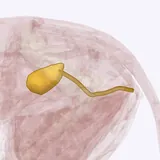
The male feline urethra is long, with a diameter that decreases distally. The penile part is the narrowest and a common site of obstruction.
The bladder is large, firm and painful on palpation. Its wall can become ischaemic from overdistension.
The kidneys suffer post-renal acute kidney injury, usually reversible if the obstruction is relieved quickly.
Clinical signs
- repeated, unproductive straining in the litter box, often mistaken by owners for constipation
- vocalisation and licking of the genital area
- haematuria and dribbling of urine
If the obstruction persists, vomiting, anorexia, lethargy and dehydration appear. Severe cases show collapse, hypothermia and bradycardia from hyperkalaemia.
The bladder feels large, hard and painful.
Diagnosis
- On abdominal palpation, the bladder is large, firm and cannot be expressed.
- Emergency blood work includes potassium, urea, creatinine, venous blood gas, ionised calcium, often low, and glucose.
- In severe hyperkalaemia, the electrocardiogram shows bradycardia, tall T waves, flattened or absent P waves and wide QRS complexes.
- After stabilisation, urinalysis and urine culture, radiographs of the whole urethra and ultrasound look for uroliths and assess the bladder and kidneys.
Treatment
Stabilisation
- intravenous fluids
- treatment of hyperkalaemia, with calcium gluconate to protect the heart, and insulin with glucose or bicarbonate to shift potassium into cells
- analgesia
Decompressive cystocentesis, which is controversial, can relieve the bladder while catheterisation is prepared.
Relieving the obstruction
Under sedation or anaesthesia the urethra is unblocked with a catheter and retrograde flushing. An indwelling urethral catheter with a closed collection system is usually left for 24–36 hours, longer if the cat is azotaemic.
The post-obstructive diuresis, which can be marked, must be monitored.
Treating the cause
- idiopathic cystitis, with increased water intake and environmental enrichment
- uroliths, by dissolution or removal
- infection, if present
Cats with repeated obstructions or a stricture of the penile urethra undergo perineal urethrostomy. It widens the outlet but increases the later risk of urinary tract infection.
Most cats treated in time survive, but the risk of recurrence is high.
Key studies
Early neutering and urethral diameter
It is a widespread belief that early neutering narrows the urethra, but the available evidence does not support it. No study has shown that neutering a male cat early, before or around 6 months, stops the urethra from growing or raises the risk of obstruction.
- Root et al. (1996). Controlled experimental study with 6 cats per group. Males neutered at 7 weeks, neutered at 7 months or left intact had their urethra measured by voiding cystourethrography at 22 months. The penile urethral diameter did not differ between groups. What did change was the penis: it could be fully extruded in 6 of 6 intact cats, 3 of 5 cats neutered at 7 months and 0 of 6 cats neutered at 7 weeks. This is probably the source of the confusion between an infantile-looking penis and a narrow urethra. It is a small study with little statistical power.
- Porters et al. (2015). Randomised trial of 800 kittens neutered at 8–12 weeks or at 6–8 months. There was no difference in lower urinary tract disease or urethral obstruction up to 24 months. Follow-up is short for a disease that peaks at 2–4 years.
- Spain et al. (2004). Retrospective cohort of 1660 cats followed for up to 11 years. Neutering before 5.5 months did not increase any of the serious conditions studied, urinary ones included. Howe et al. (2000) reached the same conclusion in 263 shelter cats. Both relied on owner-reported data.
- Lee et al. (2025). Ultrasound of 302 cats. Urethral wall thickness was the same in neutered and intact males, although age at neutering was not recorded and there were only 13 intact males.
What is associated with obstruction is body condition. In a case-control study of 195 obstructed cats and 195 controls, each extra point of body condition score multiplied the rate of obstruction by 1.6, and the rate peaked at 2 to 4 years of age (Jukes et al., 2019). Neutering promotes weight gain, so the risk has more to do with weight control than with the age at which the cat is neutered.
Management and recurrence
- iCatCare consensus (Taylor et al., 2025). The current reference guideline for diagnosing and treating feline lower urinary tract diseases, obstruction included.
- Prazosin. Two blinded trials have not shown that it reduces re-obstruction. In Reineke et al. (2017, 47 cats) it was 37% with prazosin and 31% with placebo at 6 months; in Hanson et al. (2021, 65 cats), 30% versus 18% at 30 days.
- Meloxicam. Added to treatment, it did not change the re-obstruction rate in a randomised trial of 51 cats (Nivy et al., 2019). Cumulative re-obstruction was 16% at 6 months.
- Azotaemia. In 601 cats from several centres, azotaemia on admission lengthened catheterisation and resolved within 48 hours in 70% of cases. Cats with recurrent obstruction did not do worse (Skinner et al., 2026).
Structures affected
References
- Lee JA, Drobatz KJ. Characterization of the clinical characteristics, electrolytes, acid-base, and renal parameters in male cats with urethral obstruction. J Vet Emerg Crit Care 13:227-233 (2003)
- Segev G, Livne H, Ranen E, Lavy E. Urethral obstruction in cats: predisposing factors, clinical, clinicopathological characteristics and prognosis. J Feline Med Surg 13:101-108 (2011)
- Cooper ES. Controversies in the management of feline urethral obstruction. J Vet Emerg Crit Care 25:130-137 (2015)
- Fossum TW. Small Animal Surgery, 5th ed. Elsevier (2018)
- Root MV, Johnston SD, Johnston GR, Olson PN. The effect of prepuberal and postpuberal gonadectomy on penile extrusion and urethral diameter in the domestic cat. Vet Radiol Ultrasound 37:363-366 (1996)
- Howe LM, Slater MR, Boothe HW, et al. Long-term outcome of gonadectomy performed at an early age or traditional age in cats. JAVMA 217:1661-1665 (2000)
- Spain CV, Scarlett JM, Houpt KA. Long-term risks and benefits of early-age gonadectomy in cats. JAVMA 224:372-379 (2004)
- Porters N, Polis I, Moons CP, et al. Relationship between age at gonadectomy and health problems in kittens adopted from shelters. Vet Rec 176:572 (2015)
- Lee S, An Y, Choi Y, et al. Evaluation of total urethral thickness using ultrasonography in cats. Front Vet Sci 12:1655498 (2025)
- Jukes A, Lui M, Morton JM, et al. Associations between increased body condition score, bodyweight, age and breed with urethral obstruction in male castrated cats. Vet J 244:7-12 (2019)
- Taylor S, Boysen S, Buffington T, et al. 2025 iCatCare consensus guidelines on the diagnosis and management of lower urinary tract diseases in cats. J Feline Med Surg 27(2):1098612X241309176 (2025)
- Reineke EL, Thomas EK, Syring RS, et al. The effect of prazosin on outcome in feline urethral obstruction. J Vet Emerg Crit Care 27:387-396 (2017)
- Hanson KR, Rudloff E, Yuan L, et al. Effect of prazosin on feline recurrent urethral obstruction. J Feline Med Surg 23:1176-1182 (2021)
- Nivy R, Segev G, Rimer D, et al. A prospective randomized study of efficacy of 2 treatment protocols in preventing recurrence of clinical signs in 51 male cats with obstructive idiopathic cystitis. J Vet Intern Med 33:2117-2123 (2019)
- Skinner VJ, Zhong M, Hall EJ, et al. Azotaemia and outcomes in male cats with initial and recurrent urethral obstruction: a multicentre, retrospective study of 601 cats (2020-2024). J Feline Med Surg 28:1098612X261457846 (2026)
- Merck Veterinary Manual: Nutrition in Disease Management in Small Animals
- He C, Fan K, Hao Z, et al. Prevalence, Risk Factors, Pathophysiology, Potential Biomarkers and Management of Feline Idiopathic Cystitis: An Update Review. Front Vet Sci 9:900847 (2022)
See it in 3D on your iPhone
Peel the layers, spin the model, quiz yourself on it and stand it on your desk in AR. AnatomyCompass is coming to iPhone, iPad and Mac: get one email when it’s out.
Text adapted from Vet Atlas (CC BY-SA 4.0). Sources and licences. This veterinary text has not yet been reviewed by a veterinarian.