 AnatomyCompass
Traumatic reticuloperitonitis
Traumatic · Cow
Perforation of the reticular wall by a metallic foreign body swallowed with the feed, causing local or diffuse peritonitis. If the object crosses the diaphragm it can reach the pericardium and cause traumatic pericarditis, which carries a very poor prognosis.
Key points
- Swallowed nails and wire fall into the reticulum, and its contractions drive them into the wall.
- Positive foreign body tests are suggestive but also occur in healthy cows.
- Radiography shows the metallic foreign body and whether it is attached to a magnet.
- Treatment starts with an oral magnet and antimicrobials; rumenotomy if the object does not attach.
- Pericarditis causes jugular distension, muffled heart sounds and brisket oedema.
What it is
Traumatic reticuloperitonitis (TRP), known as "hardware disease" or foreign body disease, occurs when a sharp ingested object perforates the wall of the reticulum. It is usually a nail or a piece of wire.
Swallowed metallic objects fall directly into the reticulum, the most cranial and ventral compartment, and its contractions drive them into its wall.
Perforation causes peritonitis that is:
- local, usually walled off by fibrinous adhesions between the reticulum, diaphragm and abdominal wall
- diffuse, if it is not contained
The object can keep advancing and:
- form abscesses in the liver or spleen
- cross the diaphragm and cause pleuritis
- enter the pericardial sac and produce septic traumatic pericarditis, with fibrinopurulent exudate that compresses the heart and prevents its filling
Adhesions and abscesses can damage the vagus nerve and cause vagal indigestion.
Who it affects
Mainly adult cows, particularly dairy cows fed chopped forage or mixed rations. In these, wire debris from fences or from tyres used to cover silage is shredded and mixed into the feed.
It is much less common in goats and sheep, which are more discriminating eaters.
Anatomy involved
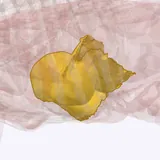
The reticulum lies against the abdominal surface of the diaphragm. Heavy objects collect in it.
The diaphragm is the only thing separating the reticulum from the thoracic cavity. A foreign body that crosses it reaches the pleural space and the pericardium. Adhesions can fix the reticulum to the diaphragm.
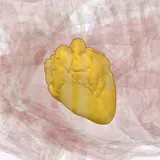
The heart lies on the other side of the diaphragm. In traumatic pericarditis the pericardial sac fills with fluid and fibrin, and compression of the heart produces right-sided heart failure, with venous congestion and oedema.
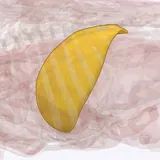
The liver and the spleen can develop abscesses, and the vagus nerve can be involved in the adhesions.
Clinical signs
Acute form
Signs begin suddenly:
- anorexia and a drop in milk yield
- fever
- ruminal hypomotility or atony, sometimes with mild bloat
- an arched back, reluctance to move and a tense abdomen
- grunting, spontaneously or on movement
Foreign body pain tests (back grip, pole test or percussion over the reticulum) aim to elicit that grunt.
Chronic form
The signs are vague: erratic appetite, weight loss, low yield and poorly digested faeces.
Traumatic pericarditis
There is tachycardia, muffled heart sounds, abnormal heart sounds, jugular vein distension and submandibular, brisket and ventral abdominal oedema.
Diagnosis
- Pain tests and general signs are suggestive but not conclusive. The main differential diagnosis is abomasal ulceration.
- Laboratory markers of inflammation rise: fibrinogen, total protein and leucocytes. Coagulation time shortens in the glutaraldehyde test. Pericarditis also raises liver enzymes because of hepatic congestion.
- Ultrasonography of the reticulum through the ventral abdominal wall shows fibrin deposits, adhesions, abscesses and reticular contractions of reduced amplitude and frequency.
- Radiography of the reticulum shows metallic foreign bodies, their position and whether they are attached to a magnet.
- In pericarditis, ultrasonography is the method of choice to see pericardial effusion, fibrin on the epicardium and compression of the ventricles.
Treatment and prevention
Conservative treatment
A magnet is given orally, which lodges in the reticulum and holds the object, together with antimicrobials, anti-inflammatory drugs and, if needed, fluid therapy. If the animal does not improve within 3 to 5 days, it is re-evaluated, ideally radiographically.
Surgery
Left flank rumenotomy removes the foreign body from inside the reticulum and drains accessible abscesses. It is reserved for cases in which the object does not attach to the magnet or there is no response to medical treatment.
Traumatic pericarditis
The prognosis is very poor. Pericardiocentesis and pericardiotomy rarely resolve it, so euthanasia or slaughter is indicated in most cases.
Prevention
- passing feed over magnets
- avoiding baling wire
- removing old fences and buildings
- giving prophylactic magnets to cattle at about 1 year of age
Drug use in food animals is subject to each country's regulations and to withdrawal periods for milk and meat.
Key studies
The available evidence comes mainly from one large retrospective series from a single hospital. There are no controlled treatment trials.
- Braun et al. (2018, clinical findings). Retrospective study of 503 cattle with TRP. The most common findings were abnormal demeanour and general condition (87%), decreased rumen motility (72%), poorly digested faeces (57%), fever (43%) and tachycardia (26%). At least one of the three foreign body tests was positive in 58%, and all three were negative in 42%. Fibrinogen was increased in 69% and total protein in 64%; the glutaraldehyde test coagulated within 6 minutes in 75%. No single finding is enough for the diagnosis.
- Braun et al. (2018, imaging). Same series. Ultrasonography showed changes consistent with peritonitis in 83% and reduced or absent reticular motility in 37%. Radiographs showed foreign bodies in 96% and a magnet in 64%; 64 of the 300 foreign bodies not attached to a magnet had perforated the reticulum.
- Braun et al. (2018, treatment). Same series. 232 animals were treated conservatively, 206 underwent surgery and 61 were slaughtered or euthanased. 90% of the operated and 82% of the medically treated cattle were discharged. Treatment was assigned by radiographic findings rather than at random, so the comparison between groups is biased. The authors recommend starting with a magnet and antibiotics and reserving surgery for when the object does not attach to the magnet.
- Braun et al. (2020). Comparison of 503 cows with TRP, cows with type 1 to 5 abomasal ulcers and 182 healthy cows. Many signs, such as mild fever, scleral vessel congestion and positive foreign body tests, also occurred in healthy cows, and no single sign distinguished TRP from abomasal ulcer. Although the pain tests are taught as the key to diagnosis, on their own they are not reliable.
- Braun (2009). Narrative review of traumatic pericarditis. It summarises that the glutaraldehyde test is positive in more than 90% of affected cattle, that ultrasonography is the method of choice for pericardial effusion and that the prognosis is poor, with euthanasia indicated.
Structures affected
References
- Constable PD, Hinchcliff KW, Done SH, et al. Veterinary Medicine: A Textbook of the Diseases of Cattle, Horses, Sheep, Pigs, and Goats, 11th ed. Elsevier (2017)
- Braun U, Warislohner S, Torgerson P, et al. Clinical and laboratory findings in 503 cattle with traumatic reticuloperitonitis. BMC Vet Res 14:66 (2018)
- Braun U, Gerspach C, Warislohner S, et al. Ultrasonographic and radiographic findings in 503 cattle with traumatic reticuloperitonitis. Res Vet Sci 119:154-161 (2018)
- Braun U, Warislohner S, Gerspach C, et al. Treatment of 503 cattle with traumatic reticuloperitonitis. Acta Vet Scand 60:55 (2018)
- Braun U, Nuss K, Warislohner S, et al. Diagnostic reliability of clinical signs in cows with traumatic reticuloperitonitis and abomasal ulcers. BMC Vet Res 16:359 (2020)
- Braun U. Traumatic pericarditis in cattle: clinical, radiographic and ultrasonographic findings. Vet J 182:176-86 (2009)
- Merck Veterinary Manual: Traumatic Reticuloperitonitis in Cattle
See it in 3D on your iPhone
Peel the layers, spin the model, quiz yourself on it and stand it on your desk in AR. AnatomyCompass is coming to iPhone, iPad and Mac: get one email when it’s out.
Text adapted from Vet Atlas (CC BY-SA 4.0). Sources and licences. This veterinary text has not yet been reviewed by a veterinarian.