 AnatomyCompass
Tracheal collapse
Degenerative · Dog
Progressive weakening of the tracheal cartilages in toy and small breeds. The rings flatten dorsoventrally and the dorsal membrane sags into the lumen, causing a typical "goose-honk" cough and airway obstruction.
Key points
- It affects middle-aged toy and small breeds, such as the Yorkshire terrier and Pomeranian.
- Gentle tracheal palpation readily elicits the cough.
- Collapse is dynamic; the cervical trachea tends to close on inspiration and the intrathoracic on expiration.
- Radiographs have limited sensitivity; tracheobronchoscopy confirms and grades the collapse.
- Most dogs are managed medically, with weight loss and a harness instead of a collar.
What it is
Tracheal collapse is a degenerative disease of the tracheal cartilage. The cartilage loses glycosaminoglycans, chondroitin and water, and becomes soft.
The C-shaped rings flatten. The dorsal tracheal membrane, made of the trachealis muscle and its covering, becomes lax and protrudes into the lumen.
Collapse is dynamic. The cervical trachea tends to collapse during inspiration, and the intrathoracic trachea during expiration and coughing.
It often coexists with bronchomalacia, chronic bronchitis, obesity and heart disease, which worsen the cough.
Who it affects
Toy and small breeds, usually middle-aged: Yorkshire terrier, Pomeranian, Chihuahua, poodle, Maltese and pug.
Anatomy involved
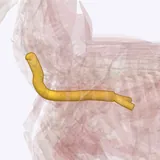
It can affect the cervical, thoracic inlet and intrathoracic segments of the trachea, alone or together. The carina and principal bronchi may also collapse.
The lax, redundant dorsal tracheal membrane sags into the lumen and narrows it.
The disease is graded I to IV according to the loss of lumen, from about 25% reduction of the diameter to a completely flattened cartilage with the lumen essentially obliterated.
Clinical signs
A dry, harsh, paroxysmal cough that sounds like a goose honk. It is triggered by excitement, pressure on the neck from a collar or tracheal palpation.
There may also be:
- exercise intolerance
- inspiratory or expiratory stridor
- in severe cases, respiratory distress, cyanosis and syncope
Heat, stress and obesity aggravate it.
Diagnosis
- On physical examination, gentle tracheal palpation readily elicits the cough.
- Inspiratory and expiratory cervical and thoracic radiographs may show narrowing and are useful for screening. Their sensitivity is limited because collapse is dynamic, and they underestimate collapse at the carina.
- Fluoroscopy shows the dynamic collapse during breathing and coughing.
- Tracheobronchoscopy confirms and grades the collapse, and assesses the bronchi. It requires anaesthesia.
Treatment
Most dogs are managed medically:
- weight loss
- a harness instead of a collar
- avoiding heat and smoke
- antitussives, for example butorphanol or codeine
- short courses of corticosteroids for airway inflammation
- treating concurrent disease
Dogs with severe collapse that does not respond can be treated with an extraluminal tracheal prosthesis or an intraluminal self-expanding stent. Both have specific complications, such as laryngeal paralysis or recurrence of collapse.
Structures affected
References
- Fossum TW. Small Animal Surgery, 5th ed. Elsevier (2018)
- Ettinger SJ, Feldman EC, Côté E. Textbook of Veterinary Internal Medicine, 8th ed. Elsevier (2017)
- Merck Veterinary Manual (pet owner version): Tracheal Collapse in Dogs
- Kim MR, Kim SH, Ryu MO, et al. A retrospective study of tracheal collapse in small-breed dogs: 110 cases (2022-2024). Front Vet Sci (2024)
- Yangwanitset W, Huaijantug S, Tansakul M, Sakcamduang W. The agreement between radiography and fluoroscopy as diagnostic tools for tracheal collapse in dogs. Animals (Basel) (2023)
- Talavera-López J, Sáez-Mengual O, Fernández-del-Palacio MJ. Comparative study of inhaled fluticasone versus oral prednisone in 30 dogs with cough and tracheal collapse. Vet Sci (2023)
- Suematsu M, Minamoto T, Suematsu H, et al. Long-term outcomes of dogs with W-shaped or traditional tracheal collapse treated with a continuous extraluminal tracheal prosthesis: a retrospective study. Vet Surg 55:118-130 (2026)
See it in 3D on your iPhone
Peel the layers, spin the model, quiz yourself on it and stand it on your desk in AR. AnatomyCompass is coming to iPhone, iPad and Mac: get one email when it’s out.
Text adapted from Vet Atlas (CC BY-SA 4.0). Sources and licences. This veterinary text has not yet been reviewed by a veterinarian.