 AnatomyCompass
Subacute ruminal acidosis
Metabolic · Cow
Repeated drops in ruminal pH for several hours a day caused by excess rapidly fermentable carbohydrate and too little effective fibre. A herd problem with subtle signs.
Key points
- It is diagnosed by rumenocentesis at group level; a single sample does not diagnose a cow.
- The group counts as affected if 3 or more of 12 cows have a pH below 5.5.
- Liver abscesses form from rumen bacteria that reach the liver through the portal vein.
- Milk fat depression is a poor, insensitive indicator.
- Its link with claw lesions is less well proven than is usually claimed.
What it is
Subacute ruminal acidosis (SARA) is a fermentation disorder. Rumen pH falls below physiological values for several hours a day.
It occurs when the volatile fatty acids produced from starch and sugars exceed the rumen's capacity to absorb them and to neutralise them with saliva. Saliva production depends on chewing and therefore on the physically effective fibre in the ration.
In field practice, a rumen fluid sample obtained by rumenocentesis with a pH of 5.5 or less is usually considered low.
Acute ruminal acidosis
This is the severe form, grain overload. After sudden ingestion of a large amount of grain:
- Streptococcus bovis and lactobacilli proliferate
- lactic acid accumulates and pH falls much further
- the rumen stops and fills with fluid
- the rise in osmolality draws water from the blood
The animal develops dehydration, metabolic acidosis and chemical rumenitis, and can die quickly.
Consequences of repeated acidity
- Rumenitis. The rumen epithelium becomes inflamed, eroded or ulcerated and loses its barrier function.
- Liver abscesses. Rumen bacteria cross the damaged wall and reach the liver through the portal vein. It is almost always Fusobacterium necrophorum, sometimes with Trueperella pyogenes and others. An abscess that erodes the caudal vena cava can cause caudal vena cava thrombosis, with septic emboli in the lung.
- Laminitis and claw lesions. SARA has traditionally been associated with claw horn lesions, attributed to subacute laminitis. This mechanism has not been experimentally reproduced, and the link is less well proven than is usually claimed.
Who it affects
- High-yielding dairy cows, in the transition to a concentrate-rich ration after calving and at peak lactation.
- Cows in their first and second lactation.
- Herds that feed concentrate separately in few meals, with mixed rations that cows can sort or with forage chopped too finely.
- Feedlot cattle on grain-rich diets.
Acute acidosis occurs in any bovine that suddenly gains access to grain or to feeds rich in starch or sugars.
Anatomy involved
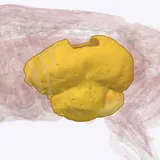
Rumen
Its mucosa has papillae that absorb volatile fatty acids. They lengthen as the diet becomes richer in grain, an adaptation that takes several weeks.
Low pH causes rumenitis, impairs motility and fibre-digesting microbes, and opens the way for bacteria.
Liver
It receives blood from the rumen through the portal vein. It is therefore the first filter for bacteria crossing the rumen wall and the site where abscesses form.
Hooves
The claw horn lesions historically attributed to SARA cause lameness, although the link is uncertain.
Clinical signs
SARA
The signs are herd-level, delayed and non-specific:
- reduced or cyclic intake
- lower milk yield
- poor body condition despite adequate feed
- unexplained diarrhoea
- high culling rates
- liver abscesses found at slaughter
Milk fat depression is a poor, insensitive indicator.
Acute acidosis
- anorexia and depression
- ruminal atony, with a fluid-filled rumen (splashing sound)
- foul-smelling diarrhoea
- dehydration and tachycardia
- ataxia, recumbency and death in severe cases
Survivors can develop mycotic rumenitis, liver abscesses or laminitis.
Diagnosis
SARA
Rumenocentesis is puncture of the ventral sac of the rumen through the left flank. pH is measured in a group of at-risk cows, in early or peak lactation depending on the feeding system.
A single sample does not diagnose an individual cow; the result is interpreted at group level.
The ration and management are also assessed:
- starch and effective fibre content
- particle size
- feed sorting at the bunk
- feeding frequency and bunk space
- abrupt diet changes
Milk fat, faecal consistency, body condition and liver abscesses at slaughter are indirect indicators. None is specific.
Acute acidosis
It rests on a history of access to grain, very low rumen fluid pH, absence of live protozoa and haemoconcentration with metabolic acidosis.
Treatment and prevention
SARA
The ration and management must be corrected:
- enough physically effective fibre
- a limit on starch
- gradual adaptation to concentrate before and after calving
- frequent delivery of a well-mixed ration that cannot be sorted
- enough bunk space
Buffers, such as sodium bicarbonate, and other additives help, but do not make up for poor management.
Acute acidosis
The first step is to remove the grain.
- In mild cases, oral alkalinising agents (magnesium hydroxide) and good-quality hay.
- In severe cases, intravenous fluid therapy with correction of the acidosis and emptying of the rumen by lavage or rumenotomy.
Liver abscesses
They are rarely diagnosed in the live animal, because signs are usually absent. In feedlots they are controlled through diet management and, in some countries, with in-feed antimicrobials such as tylosin, whose use there is pressure to reduce.
Drug use in food animals is subject to each country's regulations and to withdrawal periods for milk and meat.
Key studies
- Garrett et al. (1999). Experimental study that set up the field diagnosis. The pH of fluid obtained by rumenocentesis was 0.28 units lower than that obtained through a rumen cannula. To distinguish groups fed more or less forage, it proposed sampling 12 cows and considering the group affected if 3 or more had a pH below 5.5. It was based on few animals, but it is the criterion used in field studies.
- Kleen et al. (2013). Cross-sectional study of 26 German dairy farms with 315 cows sampled by rumenocentesis. 20% of cows had a pH of 5.5 or less, and 11 of the 26 farms met the SARA criterion; these tended to be larger and to offer less lying space. Cows with low pH had poorer body condition, but there was no clear trend in lameness. It is a single measurement per cow.
- Khorrami et al. (2021). Meta-analysis of published studies and of 5 of the authors' own experiments. The physically effective fibre content (particles longer than 8 mm) and the starch content of the ration were enough to predict mean rumen pH. It proposes a safe range of 15–18% of this fibre with 20–25% starch on a dry matter basis. Cows in their first and second lactation had a mean pH 0.2 units lower and twice as much time below pH 5.8 as cows with three or more parities.
- Passos et al. (2023). Systematic review of the relationship between ruminal acidosis and laminitis: of 339 articles only 16 were included. There was an association between diets rich in rapidly fermented carbohydrate, acidosis and acute laminitis, mostly in short-term experimental induction protocols. Two studies that induced acidosis with oligofructose did not observe clinical signs of laminitis, and the mechanism remains unclear. The widespread idea that field SARA causes chronic claw lesions is not well supported by strong studies.
- Young et al. (2026). Network meta-analysis of 32 controlled studies (72,086 animals) together with a randomised trial in more than 16,000 feedlot cattle. The meta-analysis indicated that in-feed tylosin reduces liver abscesses compared with no treatment, and that withdrawing it before the end of finishing is not equally effective. In the trial, the reduction in severe abscesses with continuous tylosin was not conclusive on its own (OR 0.75; 95% CI 0.51–1.11). The data come from feedlots, not dairy cows.
Structures affected


References
- Constable PD, Hinchcliff KW, Done SH, et al. Veterinary Medicine: A Textbook of the Diseases of Cattle, Horses, Sheep, Pigs, and Goats, 11th ed. Elsevier (2017)
- Garrett EF, Pereira MN, Nordlund KV, et al. Diagnostic methods for the detection of subacute ruminal acidosis in dairy cows. J Dairy Sci 82:1170-8 (1999)
- Kleen JL, Upgang L, Rehage J. Prevalence and consequences of subacute ruminal acidosis in German dairy herds. Acta Vet Scand 55:48 (2013)
- Khorrami B, Khiaosa-Ard R, Zebeli Q. Models to predict the risk of subacute ruminal acidosis in dairy cows based on dietary and cow factors: A meta-analysis. J Dairy Sci 104:7761-7780 (2021)
- Passos LT, Bettencourt AF, Ritt LA, et al. Systematic review of the relationship between rumen acidosis and laminitis in cattle. Res Vet Sci 161:110-117 (2023)
- Young JD, Morris P, Bryant TC, et al. Efficacy of tylosin phosphate for liver abscess control in feedlot cattle, by treatment duration: a Bayesian network meta-analysis supported by a randomized trial. J Vet Intern Med 40:aalaf048 (2026)
- Merck Veterinary Manual: Subacute Ruminal Acidosis in Cattle and Sheep
- Merck Veterinary Manual: Grain Overload in Ruminants
- Merck Veterinary Manual: Liver Abscesses in Cattle
See it in 3D on your iPhone
Peel the layers, spin the model, quiz yourself on it and stand it on your desk in AR. AnatomyCompass is coming to iPhone, iPad and Mac: get one email when it’s out.
Text adapted from Vet Atlas (CC BY-SA 4.0). Sources and licences. This veterinary text has not yet been reviewed by a veterinarian.