 AnatomyCompass
Parturient hypocalcaemia (milk fever)
Metabolic · Cow
A fall in blood calcium around calving, when colostrum and milk production outpace the cow's ability to mobilise calcium. The clinical form causes weakness and recumbency; the far more common subclinical form has no signs and is associated with other postpartum diseases.
Key points
- Milk fever does not cause fever; body temperature is usually normal or low.
- It mainly affects high-producing multiparous cows within 72 hours after calving.
- It progresses through three stages, standing, sternal recumbency with an S-shaped neck, and lateral recumbency.
- Intravenous calcium is given slowly with cardiac auscultation, because of the risk of arrhythmias.
- Prevention relies on prepartum diets with a negative DCAD, checked through urine pH.
What it is
At the onset of lactation the mammary gland draws a large amount of calcium from the blood for colostrum and milk. The cow compensates with more bone resorption and more intestinal absorption of calcium, under the control of parathyroid hormone and active vitamin D (1,25-dihydroxyvitamin D).
These mechanisms take several days to come into play. If they do not respond in time, blood calcium falls in the hours or days around calving.
There are two forms:
- Clinical hypocalcaemia, also called milk fever or parturient paresis. Calcium falls far enough to impair muscle contraction and nerve function, and the cow weakens until she becomes recumbent. Despite its name, it does not cause fever: body temperature is usually normal or low.
- Subclinical hypocalcaemia. Calcium is below normal, but there are no visible signs. It is far more common than the clinical form and is associated with other postpartum diseases, although not every transient fall has consequences.
Acid-base balance is a key factor. Prepartum diets rich in potassium and sodium, such as high-potassium forages, cause a metabolic alkalosis that reduces tissue responsiveness to parathyroid hormone. Prevention with diets of negative dietary cation-anion difference (DCAD) is based on this.
Who it affects
Mainly high-producing multiparous dairy cows, within 72 hours after calving. The risk rises with the number of lactations.
- Jersey cows are more susceptible than Holsteins.
- First-calf heifers rarely develop the clinical form, although they can have subclinical hypocalcaemia.
- Prepartum diets high in potassium, calcium or phosphorus, or low in magnesium, increase the risk.
Anatomy involved
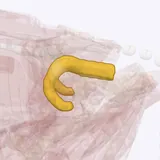
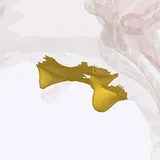
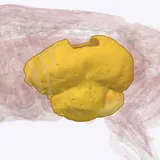
- Udder. Colostrum secretion is the cause of the fall in calcium. Hypocalcaemia is also associated with mastitis.
- Uterus. Uterine smooth muscle needs calcium to contract. Hypocalcaemia is associated with uterine inertia and dystocia, retained fetal membranes, metritis and uterine prolapse.
- Rumen. The forestomach musculature loses strength, and ruminal hypomotility or atony and bloat appear. Bloat is worse in a cow in lateral recumbency, which cannot eructate. Reduced feed intake worsens energy balance and the dietary supply of calcium.
Clinical signs
Clinical hypocalcaemia progresses through three stages:
- Stage 1, standing. Excitability, hypersensitivity, muscle tremors, stiff hind limbs and a staggering gait. The cow stops eating.
- Stage 2, sternal recumbency. The cow cannot rise and often rests her head on her flank, with an S-shaped neck. There is depression, cold extremities, a dry muzzle, tachycardia with weak heart sounds, ruminal stasis, constipation and low body temperature.
- Stage 3, lateral recumbency. Complete muscle flaccidity, bloat, stupor and coma. Without treatment, the cow dies.
A cow that stays recumbent for a long time can suffer compressive muscle and nerve damage. She then becomes a downer cow, which does not rise even after calcium is corrected.
Subclinical hypocalcaemia has no signs of its own.
Diagnosis
- The typical picture in a freshly calved cow and a rapid response to calcium support the diagnosis.
- Blood calcium confirms hypocalcaemia. The sample is best taken before treatment. Hypomagnesaemia or hypophosphataemia can occur at the same time.
- Subclinical hypocalcaemia is detected only by measuring calcium. A transient fall after calving is normal, so the course over the first days of lactation matters more than a single value.
Differential diagnosis of the downer cow
- calving injuries, such as obturator nerve paralysis, fractures or hip luxation
- toxic mastitis or metritis
- compartment syndrome
- hypomagnesaemia and hypophosphataemia
- other causes
Treatment and prevention
Recumbent cow
Intravenous calcium is given slowly with cardiac auscultation, because a rapid infusion can cause severe arrhythmias.
About 25–40% of cows that rise relapse, usually within 12–24 hours. Oral calcium, once the cow stands and swallows well, reduces that risk.
Standing cow or mild hypocalcaemia
Calcium is given orally. It should not be given by mouth to a cow that is recumbent or does not swallow well, because of the risk of aspiration.
Herd-level prevention
- prepartum diets with a negative DCAD (anionic salts) in the last weeks of gestation, checking their effect through urine pH
- avoiding excess calcium, phosphorus and potassium in the prepartum diet and ensuring adequate magnesium
- oral calcium around calving in the cows at highest risk
Drug use in food-producing animals is subject to each country's regulations and to withdrawal periods for milk and meat.
Key studies
- Lean et al. (2006). Meta-analysis of 137 trials with 2545 calvings. It confirmed that a higher prepartum DCAD increases the risk of milk fever, and that the only DCAD equation with statistical support was (Na + K) − (Cl + S). Jersey cows had 2.25 times the risk of Holsteins. More magnesium in the prepartum diet reduced the risk and more phosphorus increased it. Risk peaked at 1.35% calcium in the prepartum diet.
- Santos et al. (2019). Meta-analysis of 42 randomised experiments with 1803 cows. According to the model, reducing DCAD from +200 to −100 mEq/kg would raise total blood calcium on the day of calving from 1.86 to 2.04 mM, and in multiparous cows would increase postpartum intake by 1.0 kg/d and milk by 1.7 kg/d. Lowering DCAD reduced the risk of milk fever in multiparous cows, and that of retained placenta and metritis. In heifers it did not improve production, and experiments with them were few.
- Reinhardt et al. (2011). National sampling of 1462 cows from US herds within 48 hours after calving. Subclinical hypocalcaemia (below 2.0 mM) increased with the number of lactations: 25% in first-lactation cows and 41%, 49%, 51%, 54% and 42% from the second to the sixth lactation. It is a cross-sectional study with a single sample per cow, which did not assess whether hypocalcaemia caused other diseases.
- McArt and Neves (2020). Prospective cohort of 407 Holstein cows from 2 herds. Transient subclinical hypocalcaemia, only on the first day, did not clearly increase the risk of disease or removal from the herd, and those cows produced more milk. In contrast, persistent hypocalcaemia multiplied the risk by 4.1 in first-lactation and 1.8 in multiparous cows, and delayed hypocalcaemia by 3.2 and 1.9. A single low value just after calving does not by itself indicate a problem. It is an observational study in only two herds.
- Oetzel and Miller (2012). Randomised trial in 927 cows in their second or later lactation, from 2 large herds already fed anionic diets. Oral calcium boluses after calving did not change mean ionised calcium, and clinical milk fever was rare (0.6% of calvings). Benefit was seen only in subgroups: lame cows had 0.34 fewer health events in the first 30 days, and cows with higher previous production gave 2.9 kg more milk at the first test. As these are subgroup analyses, the evidence does not support giving oral calcium to all cows alike.
Structures affected
References
- Lean IJ, DeGaris PJ, McNeil DM, et al. Hypocalcemia in dairy cows: meta-analysis and dietary cation anion difference theory revisited. J Dairy Sci 89:669-84 (2006)
- Santos JEP, Lean IJ, Golder H, et al. Meta-analysis of the effects of prepartum dietary cation-anion difference on performance and health of dairy cows. J Dairy Sci 102:2134-2154 (2019)
- Reinhardt TA, Lippolis JD, McCluskey BJ, et al. Prevalence of subclinical hypocalcemia in dairy herds. Vet J 188:122-4 (2011)
- McArt JAA, Neves RC. Association of transient, persistent, or delayed subclinical hypocalcemia with early lactation disease, removal, and milk yield in Holstein cows. J Dairy Sci 103:690-701 (2020)
- Oetzel GR, Miller BE. Effect of oral calcium bolus supplementation on early-lactation health and milk yield in commercial dairy herds. J Dairy Sci 95:7051-65 (2012)
- Constable PD, Hinchcliff KW, Done SH, Grünberg W. Veterinary Medicine: A Textbook of the Diseases of Cattle, Horses, Sheep, Pigs, and Goats, 11th ed. Elsevier (2017)
- Merck Veterinary Manual: Parturient Paresis in Cows
See it in 3D on your iPhone
Peel the layers, spin the model, quiz yourself on it and stand it on your desk in AR. AnatomyCompass is coming to iPhone, iPad and Mac: get one email when it’s out.
Text adapted from Vet Atlas (CC BY-SA 4.0). Sources and licences. This veterinary text has not yet been reviewed by a veterinarian.