 AnatomyCompass
Feline megacolon
Degenerative · Cat
Permanent dilation of the colon with loss of motility, causing severe, recurrent constipation (obstipation). In most cats it is idiopathic; it can also result from narrowing of the pelvic canal or from injury to the sacral nerves.
Key points
- The idiopathic form is due to generalised smooth muscle dysfunction of the colon.
- Malunited pelvic fractures narrow the pelvic canal and cause hypertrophic megacolon.
- A colonic diameter to L5 length ratio above 1.48 indicates megacolon.
- Sodium phosphate enemas must not be used in cats.
- Subtotal colectomy is the treatment for refractory idiopathic megacolon.
What it is
Megacolon is the end stage of chronic faecal retention. The colon becomes permanently dilated, full of dry, hard faeces, and can no longer propel them.
Two mechanisms are recognised.
Dilated megacolon
The more common. In the idiopathic form, which makes up most cases, there is generalised dysfunction of colonic smooth muscle, which contracts weakly to normal stimuli.
Content is retained, the colon absorbs more and more water from the faeces, and they harden and accumulate.
Hypertrophic megacolon
It is secondary to an obstruction to the passage of faeces, mainly narrowing of the pelvic canal from malunited pelvic fractures.
The colon hypertrophies trying to overcome the obstacle and eventually dilates. If the obstruction is corrected early, it may be reversible.
Other causes
- neurological lesions affecting the pelvic nerves and sacral plexus: sacrocaudal luxation, sacral malformations of the Manx cat, spinal cord trauma
- dysautonomia
- masses compressing the colon
- chronic dehydration, for example from kidney disease
Who it affects
Mainly middle-aged and older cats, although any cat can be affected. Older, overweight cats and cats with chronic kidney disease are more prone to constipation.
Secondary megacolon occurs in cats with old pelvic fractures or injuries of the sacrocaudal region.
Anatomy involved
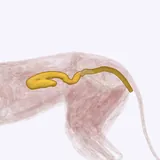
The colon is markedly dilated and full of hard faeces.
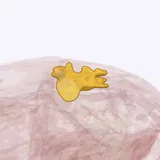
The pelvic canal is bounded by the sacrum dorsally, the ilia laterally and the pubis and ischium ventrally. A reduction in its diameter prevents faeces from passing.
The pelvic nerves arise from the sacral spinal cord and take part in the neuromuscular control of the colon and rectum. Their injury causes faecal retention.
Clinical signs
- prolonged, unproductive tenesmus
- small, hard, dry stools, or no defecation for days
- in prolonged cases, anorexia, vomiting, dehydration, lethargy and abdominal discomfort
Abdominal palpation reveals a colon full of hard faeces.
Diagnosis
- Abdominal palpation and rectal examination show a colon distended by firm faeces, and masses or a narrowed pelvic canal.
- Abdominal radiographs show a dilated colon full of faeces. They also show old pelvic fractures, the pelvic canal and the lumbosacral and caudal spine. Comparing colonic diameter with the length of the fifth lumbar vertebral body has been proposed as an indicator of megacolon.
- Neurological examination of the tail, perineum and bladder.
- Blood work looks for dehydration, electrolyte disorders (hypokalaemia reduces motility), kidney disease, hypercalcaemia and hypothyroidism.
Treatment
Obstipation
Rehydration, warm water or lactulose enemas and often manual extraction of faeces under anaesthesia.
Sodium phosphate enemas must not be used in cats, because they cause severe electrolyte disorders.
Maintenance
- osmotic laxatives such as lactulose or polyethylene glycol 3350
- prokinetics such as cisapride
- a fibre-supplemented diet
- plenty of water
- correction of hypokalaemia
Refractory idiopathic megacolon
Subtotal colectomy gives good long-term results in most cats. Faeces stay softer for weeks or permanently.
Pelvic stenosis
If the colon has not yet lost function, a pelvic osteotomy widens the canal. If it has, colectomy.
Key studies
- Washabau and Stalis (1996). In vitro comparison of colonic smooth muscle from cats with idiopathic megacolon and from healthy cats. Contraction in response to acetylcholine, substance P, cholecystokinin, potassium chloride and electrical stimulation was reduced in longitudinal and circular muscle of both the proximal and distal colon. There were few histological changes in the muscle cells or enteric neurons. This supports a generalised dysfunction of colonic smooth muscle.
- Trevail et al. (2011). Radiographs of 50 normal cats, 13 constipated cats and 26 cats with megacolon. The ratio of maximal colonic diameter to the length of L5 was the most repeatable and accurate measurement. Below 1.28 it strongly indicates a normal colon (sensitivity 96%, specificity 87%), and above 1.48 it is a good indicator of megacolon (sensitivity 77%, specificity 85%).
- Benjamin and Drobatz (2020). Case-control study of 189 cats treated in an emergency service for constipation and 99 controls. Older age, overweight, chronic kidney disease and previous episodes of constipation were associated with constipation. Cats that were painful on abdominal palpation were less likely to defecate after an enema.
- Rochon et al. (2026). Randomised, blinded 6-month trial in 49 cats with chronic constipation, comparing a gastrointestinal diet with 6% psyllium against a similar diet with 0.5%. Diet failure was 27% with the psyllium diet and 73% with the control diet, and stool consistency improved more with psyllium. Cats could switch diets during the study, and it was carried out by the diet's manufacturer.
- Grossman et al. (2021). Multicentre retrospective cohort of 166 cats treated by subtotal colectomy for idiopathic megacolon. Major perioperative complications occurred in 9.9% and median survival was not reached. Constipation recurred in 32% (24 of 74) at a median of 344 days. Removing the ileocaecocolic junction did not change recurrence but was associated with long-term liquid faeces and a worse outcome as judged by owners.
Structures affected
References
- Washabau RJ, Holt D. Pathogenesis, diagnosis, and therapy of feline idiopathic megacolon. Vet Clin North Am Small Anim Pract 29:589-603 (1999)
- Washabau RJ, Stalis IH. Alterations in colonic smooth muscle function in cats with idiopathic megacolon. Am J Vet Res 57:580-587 (1996)
- Rosin E, Walshaw R, Mehlhaff C, et al. Subtotal colectomy for treatment of chronic constipation associated with idiopathic megacolon in cats: 38 cases (1979-1985). J Am Vet Med Assoc 193:850-853 (1988)
- Washabau RJ, Day MJ. Canine and Feline Gastroenterology. Elsevier (2013)
- Trevail T, Gunn-Moore D, Carrera I, et al. Radiographic diameter of the colon in normal and constipated cats and in cats with megacolon. Vet Radiol Ultrasound 52:516-520 (2011)
- Benjamin SE, Drobatz KJ. Retrospective evaluation of risk factors and treatment outcome predictors in cats presenting to the emergency room for constipation. J Feline Med Surg 22:153-160 (2020)
- Rochon J, Charles H, Biourge V, et al. A psyllium-supplemented gastrointestinal diet is effective for the management of chronic constipation in cats: a 6-month controlled clinical trial. J Feline Med Surg 28:1098612X261420519 (2026)
- Grossman RM, Sumner JP, Lopez DJ, et al. Evaluation of outcomes following subtotal colectomy for the treatment of idiopathic megacolon in cats. J Am Vet Med Assoc 259:1292-1299 (2021)
- Merck Veterinary Manual: Constipation, Obstipation, and Megacolon in Small Animals
- Merck Veterinary Manual: Disorders of Micturition in Dogs and Cats
- WikiVet: Pelvis - Anatomy & Physiology
See it in 3D on your iPhone
Peel the layers, spin the model, quiz yourself on it and stand it on your desk in AR. AnatomyCompass is coming to iPhone, iPad and Mac: get one email when it’s out.
Text adapted from Vet Atlas (CC BY-SA 4.0). Sources and licences. This veterinary text has not yet been reviewed by a veterinarian.