 AnatomyCompass
Feline infectious peritonitis
Infectious · Cat
Immune-mediated, systemic disease caused by a mutated variant of feline enteric coronavirus, with effusions (wet form) or granulomas in organs (dry form). Once almost always fatal, it is now cured in most treated cats with current antivirals.
Key points
- The coronavirus mutates within the cat and replicates in monocytes and macrophages.
- The underlying lesion is pyogranulomatous vasculitis.
- The effusion is yellow, viscous, with high protein and low cellularity.
- A low albumin:globulin ratio supports the diagnosis; antibody titres only show exposure.
- Oral GS-441524 achieves lasting remission in most treated cats.
What it is
Feline infectious peritonitis (FIP) is caused by feline coronavirus (FCoV).
Infection with the enteric form is very common. The virus replicates in the intestinal epithelium, is shed in faeces and spreads through the litter box, usually causing nothing more than mild diarrhoea.
In a small proportion of infected cats the virus mutates within the cat. It gains the ability to replicate in monocytes and macrophages, which spread it throughout the body.
The cat's immune response shapes the disease. Infected macrophages accumulate around blood vessels and cause pyogranulomatous vasculitis.
The mutated FIP-causing virus does not usually spread from cat to cat.
Clinical forms
Two presentations are described, which often overlap:
- In the effusive or "wet" form, vasculitis increases vascular permeability and protein-rich fluid accumulates in the abdomen, thorax or pericardium.
- In the non-effusive or "dry" form, pyogranulomas form in organs such as the kidneys, liver, mesenteric lymph nodes, intestinal wall, eyes and central nervous system.
Who it affects
Mainly young cats, usually under 2 years old, from catteries, shelters or multi-cat households, where exposure to coronavirus is high.
Stress often precedes the disease: rehoming, neutering, vaccination or other illness.
Some pedigree breeds appear more predisposed. It is also seen in older cats.
Anatomy involved
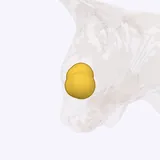
- In the peritoneum and pleura, the serosal surfaces carry fibrinous plaques and pyogranulomas, with a yellow, viscous, protein-rich effusion.
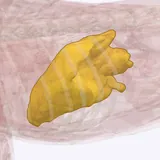
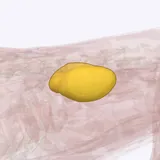
- The liver and kidneys have whitish pyogranulomatous nodules on the surface and in the parenchyma. The kidneys may feel large and irregular.
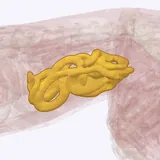
- The small and large intestine show focal granulomatous thickening of the wall, often at the ileocaecocolic junction, and enlarged mesenteric lymph nodes.
- The eyes develop anterior or posterior uveitis, with keratic precipitates, iris changes, hyphaema, chorioretinitis and retinal perivascular cuffing.
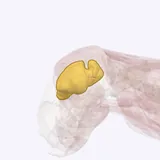
- The central nervous system shows meningoencephalitis and ependymitis, with secondary hydrocephalus in some cases.
Clinical signs
- persistent fever that does not respond to antibiotics
- lethargy, loss of appetite and weight
- stunted growth in kittens
- jaundice
In the effusive form there is abdominal distension with a fluid wave, or dyspnoea from pleural effusion.
In the non-effusive form, signs depend on the organ affected: abdominal masses, uveitis, ataxia, seizures, nystagmus or behavioural changes.
Diagnosis
There is no single definitive test short of histology, so the findings are combined:
- Compatible history and signs in a young cat from a multi-cat environment.
- Blood work shows lymphopenia, anaemia, hyperglobulinaemia with a low albumin:globulin ratio, and hyperbilirubinaemia.
- The effusion is yellow and viscous, with high protein and low to moderate cellularity of macrophages and non-degenerate neutrophils. Detection of FCoV RNA by RT-PCR or immunostaining of antigen in effusion macrophages strongly supports the diagnosis.
- Ultrasound shows effusion, enlarged mesenteric lymph nodes, kidneys with irregular margins and intestinal thickening.
- In neurological or ocular forms, cerebrospinal fluid or aqueous humour is analysed.
Serum coronavirus antibody titres only indicate exposure and cannot diagnose FIP on their own.
Histopathology with immunohistochemistry of lesions confirms the diagnosis.
Treatment
For decades FIP was considered fatal.
Today nucleoside analogue antivirals achieve lasting remission in most treated cats:
- GS-441524, given orally
- remdesivir, its prodrug, given by injection
- molnupiravir, used mainly in resistant cases
Courses usually last about 12 weeks. Doses are increased for ocular and neurological forms. The legal availability of these drugs varies by country.
Supportive care is added:
- drainage of effusions that compromise breathing
- fluids and nutrition
- topical treatment of uveitis
Response is monitored with body weight, temperature, the albumin:globulin ratio and the effusions. Relapses are possible, especially in neurological forms.
In multi-cat settings the coronavirus load is reduced with enough clean litter boxes, one more than the number of cats.
Key studies
- AAFP/EveryCat guidelines (Thayer et al., 2022). The reference guide for diagnosing FIP. No sign or laboratory change is pathognomonic, especially when there is no effusion, so the diagnosis is built by combining history, examination and tests whose sensitivity and specificity are understood.
- Ritz et al. (2007). Placebo-controlled, double-blind trial in 37 cats with confirmed FIP, before the antiviral era. Feline interferon-omega did not prolong survival or improve quality of life; median survival was 9 days and only 1 cat lived longer than 3 months. It shows what the disease was like without specific treatment.
- Pedersen et al. (2019). Field trial of GS-441524 in 31 cats (26 with effusive disease; severe neurological and ocular forms were excluded). Four cats died in the first 2–5 days and another at 26 days. Of the 26 that completed at least 12 weeks, 18 stayed healthy after one course and 8 relapsed; retreatment at the higher dose of 4 mg/kg a day brought the total to 25 long-term survivors. There was no control group, and two authors worked for the drug's manufacturer.
- Zuzzi-Krebitz et al. (2024). Randomised trial in 40 cats with effusive FIP given oral GS-441524 (15 mg/kg a day) for 42 or 84 days. Two cats died during treatment; the other 38 (19 per group) recovered, and every cat that completed the short course was still in remission at day 168. Only the effusive form was studied.
- Brostoff et al. (2026). Randomised, double-blind non-inferiority trial in 20 cats with non-effusive FIP treated for 84 days with oral remdesivir or oral GS-441524. At week 16, 9 of 10 and 7 of 10 cats were alive and in remission; all deaths occurred in the first 11 days, and remdesivir met the criteria for non-inferiority. The groups were small, and four cats showed signs suggesting a late relapse 1.5–2 years later.
- ABCD guidelines (Tasker et al., 2026). Updated treatment recommendations. GS-441524 is the most studied antiviral, with success rates often above 90%. Injectable remdesivir is mainly reserved for cats too ill for oral medication and replaced by oral treatment as soon as possible, and 42-day courses appear to be as effective as the classic 84-day ones.
Structures affected
References
- Thayer V, Gogolski S, Felten S, et al. 2022 AAFP/EveryCat Feline Infectious Peritonitis Diagnosis Guidelines. J Feline Med Surg 24:905-933 (2022)
- Tasker S, Addie DD, Egberink H, et al. Feline Infectious Peritonitis: European Advisory Board on Cat Diseases Guidelines. Viruses 15:1847 (2023)
- Pedersen NC, Perron M, Bannasch M, et al. Efficacy and safety of the nucleoside analog GS-441524 for treatment of cats with naturally occurring feline infectious peritonitis. J Feline Med Surg 21:271-281 (2019)
- Ritz S, Egberink H, Hartmann K. Effect of feline interferon-omega on the survival time and quality of life of cats with feline infectious peritonitis. J Vet Intern Med 21:1193-1197 (2007)
- Zuzzi-Krebitz AM, Buchta K, Bergmann M, et al. Short treatment of 42 days with oral GS-441524 results in equal efficacy as the recommended 84-day treatment in cats suffering from feline infectious peritonitis with effusion: a prospective randomized controlled study. Viruses 16:1144 (2024)
- Brostoff T, Pires J, Rose A, et al. Treatment of non-effusive feline infectious peritonitis using oral remdesivir or GS-441524: a randomized, double-blind, non-inferiority trial. J Feline Med Surg 28:1098612X261433057 (2026)
- Tasker S, Spiri AM, Hartmann K, et al. Update on treatment of feline infectious peritonitis: European Advisory Board on Cat Diseases (ABCD) guidelines. Viruses 18:452 (2026)
- Merck Veterinary Manual: Feline Infectious Peritonitis
See it in 3D on your iPhone
Peel the layers, spin the model, quiz yourself on it and stand it on your desk in AR. AnatomyCompass is coming to iPhone, iPad and Mac: get one email when it’s out.
Text adapted from Vet Atlas (CC BY-SA 4.0). Sources and licences. This veterinary text has not yet been reviewed by a veterinarian.