 AnatomyCompass
Feline idiopathic cystitis
Inflammatory · Cat
Sterile inflammation of the bladder with no identifiable cause, linked to stress and an altered neuroendocrine response. The most common cause of lower urinary tract signs in young and middle-aged cats, and it tends to recur.
Key points
- It is a diagnosis of exclusion, with no uroliths, infection or neoplasia.
- Bacterial urinary tract infection is uncommon in young cats.
- A male straining without passing urine may have urethral obstruction, an emergency.
- Recurrence is prevented with environmental modification (MEMO) and more water intake.
- Antibiotics are not indicated without proven infection.
What it is
Feline idiopathic cystitis (FIC) is a diagnosis of exclusion. The cat shows signs of feline lower urinary tract disease (FLUTD) with no uroliths, infection, neoplasia or other demonstrable cause.
It is the most common cause of these signs in cats under about 10 years of age. Bacterial urinary tract infection, by contrast, is uncommon in young cats and more typical of older cats with chronic kidney disease, diabetes or hyperthyroidism.
It is now considered a systemic syndrome rather than a disease of the bladder alone. It resembles human interstitial cystitis, or bladder pain syndrome.
Affected cats show:
- an altered stress response, with sympathetic nervous system activation without a proportionate adrenal response
- a defective urothelium, with a thinner glycosaminoglycan layer and increased permeability
- neurogenic inflammation: sensory fibres in the bladder release neuropeptides that cause oedema, submucosal haemorrhage and pain
Other digestive, skin or behavioural problems often coexist.
Who it affects
Cats of roughly 2 to 10 years, with this profile:
- kept indoors, overweight and inactive
- eating mainly dry food and drinking little
- living in stressful environments: conflict with other cats, changes in the household, dirty or too few litter boxes
Most studies find a higher risk in males. In males FIC can be complicated by urethral obstruction.
Anatomy involved
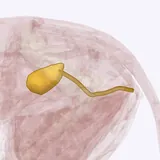
The bladder shows submucosal oedema, petechial submucosal haemorrhages, seen as glomerulations on cystoscopy, and loss of the protective glycosaminoglycan layer.
The male urethra is long and narrow, especially its penile part. Urethral plugs of protein matrix and crystals, or urethral spasm, can obstruct it.
Clinical signs
- pollakiuria
- stranguria and dysuria
- haematuria
- urinating outside the litter box (periuria)
- licking of the genital area
Episodes usually resolve on their own within a few days to a week, but they frequently recur, often after stressful events.
A male cat straining without passing urine may be obstructed and is an emergency.
Diagnosis
It is made by excluding other causes:
- Complete urinalysis. Many cases show haematuria without bacteria. Struvite crystalluria may be present and does not on its own indicate disease.
- Urine culture by cystocentesis.
- Abdominal radiographs including the whole urethra, and ultrasound, to rule out uroliths, plugs, polyps or neoplasia.
- In recurrent cases, contrast cystourethrography or cystoscopy.
In a male cat with stranguria the bladder must always be palpated to rule out obstruction.
Treatment
Acute episode
- analgesia with opioids such as buprenorphine; non-steroidal anti-inflammatories only in well-hydrated cats with normal kidney function
- stress reduction
Antibiotics are not indicated without proven infection.
Preventing recurrence
It relies on multimodal environmental modification (MEMO):
- enough clean litter boxes in quiet places
- separate resources in multi-cat households
- scratching posts and elevated areas
- play and predictable routines
And on increasing water intake, with wet food or water fountains.
Therapeutic urinary diets and synthetic feline facial pheromones have been used, with variable evidence. Amitriptyline has been used in severe, refractory cases.
The prognosis for each episode is good, but many cats relapse.
Key studies
- iCatCare consensus (Taylor et al., 2025). The current reference guideline for diagnosing and treating idiopathic cystitis and the other feline lower urinary tract diseases.
- Systematic review of the management of recurrent idiopathic cystitis (Macleod et al., 2025). It covers 22 studies. Only two measures are supported: multimodal environmental modification (MEMO) and therapeutic urinary diets, wet ones in particular. The authors found no evidence for non-steroidal anti-inflammatory drugs, glycosaminoglycans, prazosin, short-term amitriptyline or intravesical lidocaine. They warn that primary studies are few and of low quality.
- Kruger et al. (2015). A randomised, masked trial of 31 cats fed a therapeutic diet or a control diet. The therapeutic diet led to fewer episodes with several clinical signs (0.7 versus 5.4 per 1000 cat-days). The proportion of cats with any recurrence did not differ (4 of 11 versus 9 of 14). It is a small trial.
Structures affected
References
- Buffington CAT. Idiopathic cystitis in domestic cats—beyond the lower urinary tract. J Vet Intern Med 25:784-796 (2011)
- Forrester SD, Towell TL. Feline idiopathic cystitis. Vet Clin North Am Small Anim Pract 45:783-806 (2015)
- Ettinger SJ, Feldman EC, Côté E. Textbook of Veterinary Internal Medicine, 8th ed. Elsevier (2017)
- Taylor S, Boysen S, Buffington T, et al. 2025 iCatCare consensus guidelines on the diagnosis and management of lower urinary tract diseases in cats. J Feline Med Surg 27(2):1098612X241309176 (2025)
- Macleod B, Laven LJ, Laven RA, et al. Understanding the current evidence base for the commonly recommended management strategies for recurrent feline idiopathic cystitis: a systematic review. N Z Vet J 73:233-245 (2025)
- Kruger JM, Lulich JP, MacLeay J, et al. Comparison of foods with differing nutritional profiles for long-term management of acute nonobstructive idiopathic cystitis in cats. JAVMA 247:508-517 (2015)
- Merck Veterinary Manual: Lower Urinary Tract Disease in Cats
- He C, Fan K, Hao Z, et al. Prevalence, Risk Factors, Pathophysiology, Potential Biomarkers and Management of Feline Idiopathic Cystitis: An Update Review. Front Vet Sci 9:900847 (2022)
See it in 3D on your iPhone
Peel the layers, spin the model, quiz yourself on it and stand it on your desk in AR. AnatomyCompass is coming to iPhone, iPad and Mac: get one email when it’s out.
Text adapted from Vet Atlas (CC BY-SA 4.0). Sources and licences. This veterinary text has not yet been reviewed by a veterinarian.