 AnatomyCompass
Feline chronic gingivostomatitis
Inflammatory · Cat
Chronic, severe and very painful inflammation of the gingiva and oral mucosa, especially of the caudal mouth, caused by an exaggerated immune response to dental plaque. The main treatment is tooth extraction.
Key points
- Inflammation of the caudal oral mucosa, lateral to the palatoglossal folds, is characteristic.
- It is frequently associated with feline calicivirus, but no single cause has been identified.
- A biopsy rules out squamous cell carcinoma, especially in asymmetrical or mass-like lesions.
- It is essential not to leave root remnants, and to confirm this on postoperative radiographs.
- About two-thirds of cats improve markedly or are cured after extractions.
What it is
Feline chronic gingivostomatitis (FCGS) is an immune-mediated inflammatory disease of the mouth.
The inflammation extends beyond the gingiva to the alveolar and buccal mucosa and, characteristically, to the caudal oral mucosa, lateral to the palatoglossal folds (the area formerly called the "fauces").
Lesions are infiltrated by lymphocytes, plasma cells and neutrophils.
The cat is thought to respond disproportionately to antigens of the bacterial plaque on tooth surfaces. The disease is frequently associated with feline calicivirus. Other proposed factors are:
- feline herpesvirus
- retroviruses (FIV, FeLV)
- Bartonella
- food allergies
No single cause has been identified.
Who it affects
Cats, with a reported prevalence of 0.7% to 12%.
It often coexists with tooth resorption and periodontal disease, although some affected cats have no dental disease.
Anatomy involved
The gingiva and alveolar mucosa are red, proliferative and ulcerated around the teeth, especially the premolars and molars.
The caudal oral mucosa has proliferative, ulcerated lesions on both sides of the entrance to the oropharynx, which bleed easily.
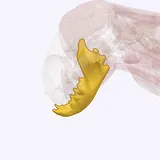
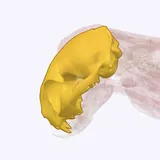
In the mandible and maxilla, the dental alveoli and the bone around the roots are where extraction takes place. The associated periodontitis causes alveolar bone loss.
The mandibular lymph nodes may be enlarged.
Clinical signs
There is severe oral pain, with reduced appetite and weight loss. Also:
- halitosis
- drooling
- an unkempt coat, because the cat grooms less
- behavioural changes: withdrawal, irritability, reduced activity
Diagnosis
- Oral examination, often only possible under anaesthesia, shows inflammation of the gingiva and caudal oral mucosa. Diagnosis rests mainly on these clinical findings.
- Full-mouth dental radiographs show tooth resorption, retained roots and periodontitis, which determine the extraction plan.
- Biopsy of lesions, especially if asymmetrical or mass-like, rules out squamous cell carcinoma and other oral tumours.
- General blood work, where hyperglobulinaemia is common, and FIV and FeLV tests, which have prognostic value.
Treatment
The treatment of choice is tooth extraction:
- of all premolars and molars (partial-mouth extraction)
- or of all teeth (full-mouth extraction), when the canines and incisors are also surrounded by inflammation
It is essential not to leave root remnants and to confirm this with postoperative radiographs.
About two-thirds of cats improve markedly or are cured after extractions, although many still need medical treatment for a time.
For cases that do not respond, ciclosporin, feline interferon omega and, in studies, autologous or allogeneic mesenchymal stem cells are used.
Analgesia (opioids such as buprenorphine, gabapentin) and anti-inflammatories, with caution, are also given.
Corticosteroids give short-term relief, but their efficacy wanes over time and they have adverse effects, such as diabetes. So they are not recommended as long-term treatment in place of extractions.
Key studies
- Winer et al. (2016), systematic review. It analysed published studies on the medical and surgical treatment of FCGS and found the data too inconsistent to compare results reliably. It recommended common scoring systems and longer follow-up.
- FelineVMA guidelines (Lobprise et al., 2025). They consider surgery the most effective treatment, with two options, extraction of the premolars and molars or of the whole dentition, both with removal of retained roots and alveoloplasty. They warn that many cats still need medical treatment afterwards.
Tooth extraction
- Jennings et al. (2015). Retrospective study of 95 cats treated with extractions and followed for a median of 231 days. 28.4% were cured and 39.0% improved substantially; 26.3% improved little and 6.3% not at all. Of the cats that responded, 68.8% needed medical treatment for a period. Full-mouth extraction did not give better results than partial-mouth extraction.
Cats that do not respond to extractions
- Lommer (2013), ciclosporin. Randomised, double-blind, placebo-controlled trial of 16 cats still affected after extractions. 77.8% of treated cats improved by more than 40% within 6 weeks, compared with 14.3% on placebo. Absorption was highly variable and improvement was greater with blood concentrations above 300 ng/ml. It is a very small study.
- Hennet et al. (2011), feline interferon omega. Randomised, double-blind trial of 39 calicivirus-positive cats. Oromucosal interferon improved lesions and pain over 90 days and prednisolone did not do so significantly, although the difference between the two groups was significant only for pain at days 60 and 90. It was funded by the manufacturer.
- Williams et al. (2025), mesenchymal stem cells. Prospective multicentre trial of 46 cats that did not respond to extractions. Two intravenous doses of allogeneic uterine-derived stem cells were associated at 90 days with better owner-rated quality of life in 78.8% and veterinarian-assessed lesion improvement in 45.5%. There was no placebo group and the study was run by the company developing the product.
Structures affected
References
- Winer JN, Arzi B, Verstraete FJM. Therapeutic management of feline chronic gingivostomatitis: a systematic review of the literature. Front Vet Sci 3:54 (2016)
- Jennings MW, Lewis JR, Soltero-Rivera MM, Brown DC, Reiter AM. Effect of tooth extraction on stomatitis in cats: 95 cases (2000-2013). J Am Vet Med Assoc 246:654-660 (2015)
- Lommer MJ. Efficacy of cyclosporine for chronic, refractory stomatitis in cats: a randomized, placebo-controlled, double-blinded clinical study. J Vet Dent 30:8-17 (2013)
- Verstraete FJM, Lommer MJ, Arzi B. Oral and Maxillofacial Surgery in Dogs and Cats, 2nd ed. Elsevier (2020)
- Lobprise H, St Denis K, Anderson JG, et al. 2025 FelineVMA feline oral health and dental care guidelines. J Feline Med Surg 27(11):1098612X251398793 (2025)
- Hennet PR, Camy GA, McGahie DM, et al. Comparative efficacy of a recombinant feline interferon omega in refractory cases of calicivirus-positive cats with caudal stomatitis: a randomised, multi-centre, controlled, double-blind study in 39 cats. J Feline Med Surg 13:577-587 (2011)
- Williams VS, Schneider JL, Parrish RS, et al. Clinical field study evaluating the safety and efficacy of allogeneic uterine-derived mesenchymal stem cells for refractory feline chronic gingivostomatitis. J Feline Med Surg 27(11):1098612X251385852 (2025)
See it in 3D on your iPhone
Peel the layers, spin the model, quiz yourself on it and stand it on your desk in AR. AnatomyCompass is coming to iPhone, iPad and Mac: get one email when it’s out.
Text adapted from Vet Atlas (CC BY-SA 4.0). Sources and licences. This veterinary text has not yet been reviewed by a veterinarian.