 AnatomyCompass
Dilated cardiomyopathy
Degenerative · Dog, Cat
Primary disease of the myocardium with dilation of the ventricles and loss of systolic function. Typical of large and giant breeds, especially the Dobermann; it causes congestive heart failure, arrhythmias and sudden death.
Key points
- In the Dobermann, with a very high prevalence, sudden death can be the first event.
- Echocardiography is the key test and shows a dilated left ventricle with reduced fractional shortening.
- A 24-hour Holter detects the ventricular arrhythmias of the occult phase.
- In the occult phase, pimobendan delays heart failure in Dobermanns.
- In the cat it was mostly due to taurine deficiency and is now uncommon.
What it is
Dilated cardiomyopathy (DCM) is a disease of the heart muscle in which the ventricles, above all the left, dilate and lose systolic function.
It has two phases:
- a long preclinical or occult phase, in which the only changes are ventricular arrhythmias or mild dilation
- an overt phase, with congestive heart failure
In most breeds it is considered hereditary.
Secondary forms with a similar picture exist:
- taurine deficiency, described in some breeds and associated with certain diets
- tachycardia-induced cardiomyopathy
- doxorubicin toxicity
Who it affects
Large and giant breeds, usually middle-aged to older:
- Dobermann, with a very high prevalence
- Great Dane
- Irish wolfhound
- boxer, in which ventricular arrhythmias dominate
- Newfoundland and others
Cocker spaniels and some retrievers can develop taurine-responsive forms.
Anatomy involved
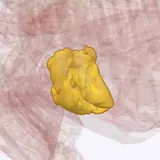
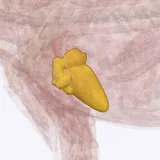
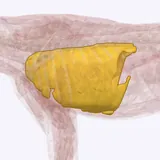
- Ventricles. Thin walls and dilated chambers, left more than right. The atria dilate secondarily.
- Atrioventricular valves. The stretched annulus prevents the leaflets from closing. This causes functional mitral and tricuspid regurgitation, without primary valve lesions.
- Conduction system. Ventricular premature complexes and ventricular tachycardia in Dobermanns and boxers, or atrial fibrillation in giant breeds.
- Lungs and serosal cavities. Left-sided failure causes pulmonary oedema; right-sided failure causes ascites and pleural effusion.
Clinical signs
In the occult phase there may be no signs, or only syncope. Sudden death can be the first event, especially in Dobermanns.
In the overt phase:
- exercise intolerance and weakness
- tachypnoea, cough and dyspnoea
- abdominal distension from ascites
- weak and irregular pulse
- soft systolic murmur or gallop sound
Diagnosis
- Echocardiography. The key test: it shows a dilated left ventricle with reduced fractional shortening and ejection fraction.
- 24-hour Holter monitoring. Detects ventricular arrhythmias in the occult phase. Together with annual echocardiography, it is the screening method for Dobermanns.
- Electrocardiogram. Atrial fibrillation or ventricular premature complexes.
- Thoracic radiographs. Generalised cardiomegaly and signs of congestion, such as pulmonary oedema or pleural effusion.
- Biomarkers. NT-proBNP and cardiac troponin I support screening.
Plasma or whole-blood taurine is measured when diet or breed suggests deficiency.
Treatment
In the occult phase:
- pimobendan delays the onset of heart failure in Dobermanns
- significant ventricular arrhythmias are treated with sotalol, mexiletine or amiodarone
In heart failure:
- pimobendan, furosemide, an ACE inhibitor and spironolactone
- heart rate control in atrial fibrillation, with diltiazem or digoxin
Dietary change and taurine supplementation can improve taurine-related cases.
The long-term prognosis of overt hereditary DCM is poor.
In the cat
History
Until the late 1980s DCM was a common heart disease in cats. In 1987 most cases were shown to be caused by taurine deficiency, an amino acid that cats need in their diet, and supplementation reversed the disease.
Since commercial cat foods have been supplemented with taurine, feline DCM has been uncommon. Today it is seen mainly as an idiopathic form that does not respond to taurine, and occasionally in cats on taurine-deficient home-made or vegetarian diets.
Signs and diagnosis
The signs are those of feline heart failure:
- tachypnoea
- dyspnoea from pleural effusion or pulmonary oedema
- lethargy and anorexia
- hypothermia
It can also present with arterial thromboembolism.
Echocardiography shows a dilated, hypokinetic left ventricle with large atria.
Treatment
Heart failure is treated with furosemide, pimobendan, an ACE inhibitor and thromboprophylaxis with clopidogrel. In addition, taurine is measured and supplemented while results are awaited.
Cats with taurine deficiency can improve within weeks. In idiopathic forms the prognosis is poor.
Key studies in the cat
- Pion et al. (1987). Found low plasma taurine with echocardiographic myocardial failure in 21 cats fed commercial foods and in 2 of 11 cats fed a diet marginally low in taurine for 4 years. Taurine supplementation normalised left ventricular function in both groups. This study established the link between taurine deficiency and feline DCM.
- Pion et al. (1992). Prospective study of 37 cats with DCM. Most had low plasma taurine and a diet history compatible with deficiency, and their findings matched those of 33 earlier cases reviewed retrospectively. With taurine supplementation 38% died in the first 30 days, but 59% improved markedly, clinically and on echocardiography, and stayed stable after the other drugs were withdrawn. One-year survival was 58%, compared with 13% in the historical group.
- Hambrook and Bennett (2012). Retrospective study of 32 cats with DCM that did not respond to taurine, all on furosemide, taurine and an ACE inhibitor. Median survival was 49 days with pimobendan and 12 days without. Hypothermia and fractional shortening below 20% indicated a poor prognosis. It is small and not randomised.
Structures affected
References
- Wess G, Domenech O, Dukes-McEwan J, Häggström J, Gordon S. European Society of Veterinary Cardiology screening guidelines for dilated cardiomyopathy in Doberman Pinschers. J Vet Cardiol 19:405-415 (2017)
- Ettinger SJ, Feldman EC, Côté E. Textbook of Veterinary Internal Medicine, 8th ed. Elsevier (2017)
- Pion PD, Kittleson MD, Rogers QR, et al. Myocardial failure in cats associated with low plasma taurine: a reversible cardiomyopathy. Science 237:764-768 (1987)
- Luis Fuentes V, Abbott J, Chetboul V, et al. ACVIM consensus statement guidelines for the classification, diagnosis, and management of cardiomyopathies in cats. J Vet Intern Med 34:1062-1077 (2020)
- Pion PD, Kittleson MD, Thomas WP, et al. Clinical findings in cats with dilated cardiomyopathy and relationship of findings to taurine deficiency. J Am Vet Med Assoc 201:267-274 (1992)
- Pion PD, Kittleson MD, Thomas WP, et al. Response of cats with dilated cardiomyopathy to taurine supplementation. J Am Vet Med Assoc 201:275-284 (1992)
- Hambrook LE, Bennett PF. Effect of pimobendan on the clinical outcome and survival of cats with non-taurine responsive dilated cardiomyopathy. J Feline Med Surg 14:233-239 (2012)
- Merck Veterinary Manual: Dilated Cardiomyopathy in Dogs and Cats
- Merck Veterinary Manual: Heart Failure in Dogs and Cats
- Summerfield NJ, Boswood A, O'Grady MR, et al. Efficacy of pimobendan in the prevention of congestive heart failure or sudden death in Doberman Pinschers with preclinical dilated cardiomyopathy (the PROTECT Study). J Vet Intern Med 26:1337-49 (2012)
- Mornard L, Brasileiro ACM, Marcondes-Santos M. Role of Diet as a Predisposing Factor for Dilated Cardiomyopathy in Dogs: A Narrative Review. Vet Sci 12 (2025)
See it in 3D on your iPhone
Peel the layers, spin the model, quiz yourself on it and stand it on your desk in AR. AnatomyCompass is coming to iPhone, iPad and Mac: get one email when it’s out.
Text adapted from Vet Atlas (CC BY-SA 4.0). Sources and licences. This veterinary text has not yet been reviewed by a veterinarian.