 AnatomyCompass
Chronic kidney disease
Degenerative · Dog, Cat
Progressive, irreversible loss of nephrons over months to years. It is common in older dogs and, above all, in older cats.
Key points
- Signs appear late, once most of the renal mass is lost.
- It starts with polyuria and polydipsia; uraemia, anaemia and hypertension follow.
- SDMA rises earlier than creatinine.
- IRIS stages it by creatinine and SDMA, sub-staged by proteinuria and blood pressure.
- There is no cure; a renal diet is the mainstay of treatment in dogs and cats.
What it is
Chronic kidney disease (CKD) is structural or functional damage to one or both kidneys present for at least three months. Whatever the initial cause, nephrons are lost and replaced by interstitial fibrosis, and the disease tends to progress.
Clinical signs appear only when most of the renal mass is lost.
In the dog, the cause can be:
- chronic glomerular disease (protein-losing nephropathy)
- pyelonephritis
- obstructive uropathy
- amyloidosis
- familial renal dysplasia
- the after-effects of acute kidney injury
End-stage kidneys look alike whatever the cause, so it often can no longer be identified.
Who it affects
Mainly older dogs, and older cats even more (see "In the cat").
Familial nephropathies cause it in young dogs of certain breeds:
- juvenile renal dysplasia in the shih tzu and Lhasa apso
- hereditary nephritis in the English cocker spaniel and Samoyed
- familial glomerulopathies in the soft-coated wheaten terrier and Bernese mountain dog
Anatomy involved
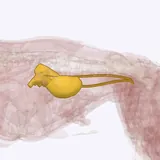
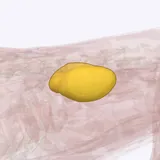
The kidneys are usually small, irregular and firm. Histology shows interstitial inflammation and fibrosis, with tubular loss.
Outside the kidney, CKD causes:
- renal secondary hyperparathyroidism, with "rubber jaw" in severe juvenile cases
- non-regenerative anaemia, from reduced erythropoietin
- systemic hypertension, which damages the eyes, heart and brain
- nausea, vomiting and oral ulcers from uraemia
Clinical signs
Early on, polyuria and polydipsia. Later, weight loss, decreased appetite, vomiting, lethargy, poor coat, pale mucous membranes, uraemic breath and oral ulcers.
Hypertensive retinal detachment can cause sudden blindness.
Diagnosis
- Blood work shows raised creatinine, urea and SDMA, which rises earlier than creatinine. Advanced stages add hyperphosphataemia and non-regenerative anaemia.
- Urine specific gravity is inappropriately low. The urine protein:creatinine ratio detects proteinuria, and urine is cultured.
- Blood pressure is measured.
- Ultrasound and radiographs show small, irregular kidneys and detect stones, cysts or obstruction.
In a stable, hydrated patient, fasting creatinine and SDMA place the disease in one of four IRIS stages. Proteinuria and blood pressure set the sub-stages.
Treatment
There is no cure. Treatment aims to slow progression and control signs, and is adjusted to the IRIS stage.
The mainstay is a renal diet, with restricted phosphorus and modest amounts of high-quality protein. It prolongs survival in dogs with azotaemia. Depending on the case, add:
- phosphate binders when phosphorus stays high
- ACE inhibitors or angiotensin receptor blockers for proteinuria and hypertension, with amlodipine when needed
- antiemetics and appetite stimulants
- fluid therapy to correct dehydration
- erythropoiesis-stimulating agents for severe anaemia
The prognosis depends on the stage and on proteinuria.
In the cat
CKD is one of the most common diseases of older cats, and its prevalence rises steeply with age.
Causes
The most frequent lesion is chronic tubulointerstitial nephritis, often of unknown cause. Other causes are polycystic kidney disease (Persian and related breeds), pyelonephritis, calcium oxalate ureteroliths, renal lymphoma, feline infectious peritonitis and amyloidosis (Abyssinian, Oriental).
Concurrent hyperthyroidism increases glomerular filtration and can mask CKD.
Signs
Besides polyuria, polydipsia and weight loss, muscle wasting and constipation, from dehydration or hypokalaemia, are common. Hypokalaemia can also cause weakness and ventroflexion of the neck.
Systemic hypertension is frequent and can cause retinal detachment and sudden blindness.
Diagnosis
IRIS uses creatinine and SDMA thresholds specific to the cat, and proteinuria counts as significant at lower urine protein:creatinine ratios than in the dog. The recommended work-up includes total T4.
Treatment
A renal diet is the treatment of choice; in stable CKD it reduces uraemic crises and renal deaths. Depending on the case, add:
- potassium for hypokalaemia
- amlodipine (or telmisartan) for hypertension
- telmisartan or benazepril for proteinuria
- phosphate binders
- home subcutaneous fluid therapy for cats that become dehydrated
- antiemetics and appetite stimulants such as transdermal mirtazapine
- erythropoiesis-stimulating agents for severe anaemia
In advanced stages, an oesophagostomy tube makes feeding, hydration and medication easier. In the early stages, many cats live for years with a good quality of life.
Key studies in the cat
- iCatCare consensus (Taylor et al., 2026). The current reference guideline for the diagnosis, IRIS staging and medical and nutritional management of feline CKD, including complications such as hypertension, proteinuria, anaemia and hypercalcaemia.
- Boyd et al. (2008). Retrospective study of 211 cats with CKD. Stage at diagnosis was strongly associated with survival, with a median of 1151 days in late stage 2 (IIb), 778 days in stage 3 and 103 days in stage 4.
- Syme et al. (2006). In 136 cats, most of them azotaemic, hypertensive or both, proteinuria was closely related to survival. Compared with a urine protein:creatinine ratio below 0.2, the risk of death was 2.9 times higher with a ratio of 0.2–0.4 and 4.0 times higher above 0.4. Even the low-grade proteinuria typical of feline CKD has prognostic value.
- Ross et al. (2006). Double-masked randomised trial in 45 cats with stage 2 or 3 CKD fed a renal or a maintenance diet for up to 24 months. Uraemic crises occurred in 26% of cats on the maintenance diet and in none on the renal diet, and renal deaths were fewer; deaths from all causes did not differ.
- King et al. (2006). Double-blind, randomised, placebo-controlled trial of benazepril in 192 cats with CKD. Benazepril reduced proteinuria but did not significantly prolong renal survival (mean 637 versus 520 days).
- Sent et al. (2015). Blinded randomised non-inferiority trial in 224 cats with CKD. Telmisartan was non-inferior to benazepril in controlling proteinuria, and only telmisartan significantly lowered the urine protein:creatinine ratio from baseline.
Structures affected
References
- International Renal Interest Society (IRIS). IRIS Staging of CKD (2023)
- Ettinger SJ, Feldman EC, Côté E. Textbook of Veterinary Internal Medicine, 8th ed. Elsevier (2017)
- Sparkes AH, Caney S, Chalhoub S, et al. ISFM consensus guidelines on the diagnosis and management of feline chronic kidney disease. J Feline Med Surg 18:219-239 (2016)
- Ross SJ, Osborne CA, Kirk CA, et al. Clinical evaluation of dietary modification for treatment of spontaneous chronic kidney disease in cats. J Am Vet Med Assoc 229:949-957 (2006)
- Taylor S, Finch N, Caney S, et al. 2026 iCatCare consensus guidelines on the diagnosis and management of chronic kidney disease in cats. J Feline Med Surg 28:1098612X261466553 (2026)
- Boyd LM, Langston C, Thompson K, et al. Survival in cats with naturally occurring chronic kidney disease (2000-2002). J Vet Intern Med 22:1111-1117 (2008)
- Syme HM, Markwell PJ, Pfeiffer D, et al. Survival of cats with naturally occurring chronic renal failure is related to severity of proteinuria. J Vet Intern Med 20:528-535 (2006)
- King JN, Gunn-Moore DA, Tasker S, et al. Tolerability and efficacy of benazepril in cats with chronic kidney disease. J Vet Intern Med 20:1054-1064 (2006)
- Sent U, Gössl R, Elliott J, et al. Comparison of Efficacy of Long-term Oral Treatment with Telmisartan and Benazepril in Cats with Chronic Kidney Disease. J Vet Intern Med 29:1479-1487 (2015)
- Merck Veterinary Manual: Renal Dysfunction in Dogs and Cats
- Merck Veterinary Manual: Renal Anomalies in Animals
See it in 3D on your iPhone
Peel the layers, spin the model, quiz yourself on it and stand it on your desk in AR. AnatomyCompass is coming to iPhone, iPad and Mac: get one email when it’s out.
Text adapted from Vet Atlas (CC BY-SA 4.0). Sources and licences. This veterinary text has not yet been reviewed by a veterinarian.