 AnatomyCompass
Actinomycosis
Infectious · Cow
Chronic pyogranulomatous osteomyelitis of the mandible or maxilla caused by Actinomyces bovis, which enters through wounds in the oral mucosa. It is known as lumpy jaw.
Key points
- It produces a hard, immovable swelling of the mandible at the level of the premolars and molars.
- Pus from the sinus tracts carries yellowish granules, the so-called "sulphur granules".
- It must be told apart from actinobacillosis, which affects soft tissues and responds better.
- Early lesions are treated with intravenous sodium iodide, antimicrobials and debridement.
- Bone that is already deformed does not regain its shape; treatment only halts progression.
What it is
Bovine actinomycosis is a chronic bone infection caused by Actinomyces bovis, a Gram-positive, filamentous, anaerobic bacterium that normally lives in the oral cavity.
It enters the tissues through wounds in the mucosa caused by coarse forage, grass awns or foreign bodies such as sticks, thorns or wire.
In bone it causes osteomyelitis. It destroys bone and at the same time stimulates periosteal new bone formation, so the bone becomes thickened.
The lesions are pyogranulomas. Their pus contains small yellowish granules, the so-called "sulphur granules", which are clusters of bacteria and inflammatory cells.
It must be distinguished from actinobacillosis, or wooden tongue, caused by Actinobacillus lignieresii. This mainly affects soft tissues such as the tongue and lymph nodes, and responds better to treatment.
Who it affects
It affects cattle sporadically, especially animals eating coarse or fibrous forage. This happens, for example, in winter or drought, when good-quality feed is short.
It is not transmitted between animals. When several cases occur in a herd, it is because they share the same risk factor, coarse feed.
Anatomy involved
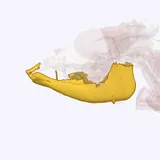
The most common site is the body of the mandible, at the level of the cheek teeth and around their roots. The bone swells, the teeth loosen or become misaligned and chewing becomes difficult.
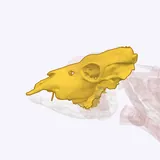
The maxilla and other facial bones are affected less often. The lesion can extend into the nasal cavity and cause breathing difficulty.
Clinical signs
The typical sign is a hard, immovable swelling of the mandible or maxilla that grows slowly.
In some cases it ulcerates and sinus tracts open, draining pus with yellowish granules.
The face becomes deformed, the affected teeth loosen or become misaligned and the animal chews with difficulty. Less often, swelling into the nasal cavity causes dyspnoea.
Diagnosis
- The location and appearance of the swelling are very characteristic.
- Radiography shows bone destruction with multiloculated radiolucent areas and periosteal new bone formation. It also shows involvement of the alveoli and teeth. Computed tomography is used in referral centres.
- Gram stain of the pus or of an aspirate shows branching Gram-positive filaments. Anaerobic culture can confirm the agent, but it is often negative.
- A biopsy, taken for example with a trephine, can be examined histologically.
- The main differential diagnosis is actinobacillosis.
Treatment
The aim is to halt progression of the lesion. Bone that is already deformed does not regain its shape.
In early lesions, treatment combines:
- intravenous sodium iodide, sometimes repeated
- antimicrobials such as penicillin
- surgical debridement and drainage of the sinus tracts
Signs of iodism must be monitored: lacrimation, skin scaling, coughing and loss of appetite.
In advanced lesions the response is poor. When the animal cannot eat properly, slaughter is usually recommended.
Drug use in food animals is subject to national regulations and withdrawal periods, and not all these products are authorised in every country.
Key studies
The evidence is very limited. No systematic reviews, controlled trials or cohort studies on bovine actinomycosis were found in PubMed. Textbook recommendations for diagnosis and treatment rest on clinical experience and small case series. The best available sources are cited, with that caveat.
- Silva et al. (2004). Uncontrolled series of 12 cattle and 2 horses treated locally with metacresolsulfonic acid and streptomycin. 87% of the animals were considered clinically cured, with no relapse at 6 months. It is a small series, without a control group and with mixed species.
- Christener et al. (2026). Series of 5 cattle referred to a ruminant clinic. The disease was often detected late, when it was already too advanced to treat: slaughter was recommended in 2 cases, and 2 cases detected early could be treated. Radiological imaging was the method of choice for diagnosis in the live animal, and in one case it was confirmed with computed tomography. It is a very small descriptive series.
Structures affected
References
- Constable PD, Hinchcliff KW, Done SH, et al. Veterinary Medicine: A textbook of the diseases of cattle, horses, sheep, pigs, and goats, 11th ed. Elsevier (2017)
- Fubini SL, Ducharme NG. Farm Animal Surgery, 2nd ed. Elsevier (2017)
- Silva LA, Fioravanti MC, Oliveira KS, et al. Local utilization of metacresolsulfonic acid combined with streptomycin in the treatment of actinomycosis. Ann N Y Acad Sci 1026:273-276 (2004)
- Christener N, Van der Vekens E, Gurtner C, et al. [Actinomycosis in cattle - Five clinical cases]. Schweiz Arch Tierheilkd 168:88-95 (2026)
- Merck Veterinary Manual: Actinomycosis in Cattle and Other Animals
- Merck Veterinary Manual: Actinobacillosis in Animals
See it in 3D on your iPhone
Peel the layers, spin the model, quiz yourself on it and stand it on your desk in AR. AnatomyCompass is coming to iPhone, iPad and Mac: get one email when it’s out.
Text adapted from Vet Atlas (CC BY-SA 4.0). Sources and licences. This veterinary text has not yet been reviewed by a veterinarian.